·amura·
46
compás int • int compass
Península de Istria
Empieza entonces mi recorrido por la costa
este de la península de Istria, cargada de una his-
toria que viene desde el imperio romano, con sus
pueblos y colinas que caen al mar. Opatija conserva
las arrogantes residencias del siglo XIX, cuando era
el concurrido lugar de veraneo del imperio austro-
húngaro; los bosques de pinos llegan al mar verde
cristalino. Disfruto el majestuoso recorrido por la
costa del golfo de Kvarner, hasta que la carretera
se interna en las montañas, donde descubro unos
pueblos encantadores, hasta llegar a Pula, la anti-
gua Polensium romana. Misteriosa e intricada por
sus callejones y sus vestigios romanos, Pula vive al
ritmo de su pasado. Unos novios se toman fotos en
el grandioso coliseo mientras los invitados cantan
y beben a su salud. Mientras esto pasa, la ciuda-
dela vigila desde la colina los restos de la muralla
romana, el arco del triunfo de Sergius, el templo de
Augustus y la Catedral del siglo V, con su sarcófago
romano en lugar de altar. Una lluvia fina cae sobre
el pavimento mientras recorro los callejones. La
ciudad se adormece en el frío mientras imagino la
animación en tiempo de los romanos y el tumulto
de turistas en el verano.
The Istria Peninsula
It is here that I begin my tour of the east coast
of the Istrian peninsula. It is loaded with history
that dates back to the Roman Empire, and with vil-
lages and hills falling into the sea. Opatija retains
the arrogant nineteenth century residences, which
at that time; it was the busy summer resort of the
Austro-Hungarian Empire. Here, the pine forests
seem to reach the green crystalline sea. I also en-
joyed the majestic tour of the Kvarner Gulf Coast.
The road now takes me into the mountains, where
I discovered charming villages. I am now in Pula,
the ancient Roman Polensium. It is mysterious and
intricate, with alleys and Roman ruins. Pula lives to
the rhythm of its past. A bride and groom are tak-
ing pictures in the great coliseumwhile guests sing
and drink to their health. As this happens, I can see
the citadel on the hill which seems to be watching
the remains of the Roman wall, the triumphal arch
of Sergius, the temple of Augustus and the V cen-
tury Cathedral, with Roman sarcophagus instead of
an altar. A fine rain begins falling on the pavement
as I walk the alleys. The city goes to sleep in the cold
while I imagine the animation in the time of the Ro-
mans and the tumult of tourists in the summer.
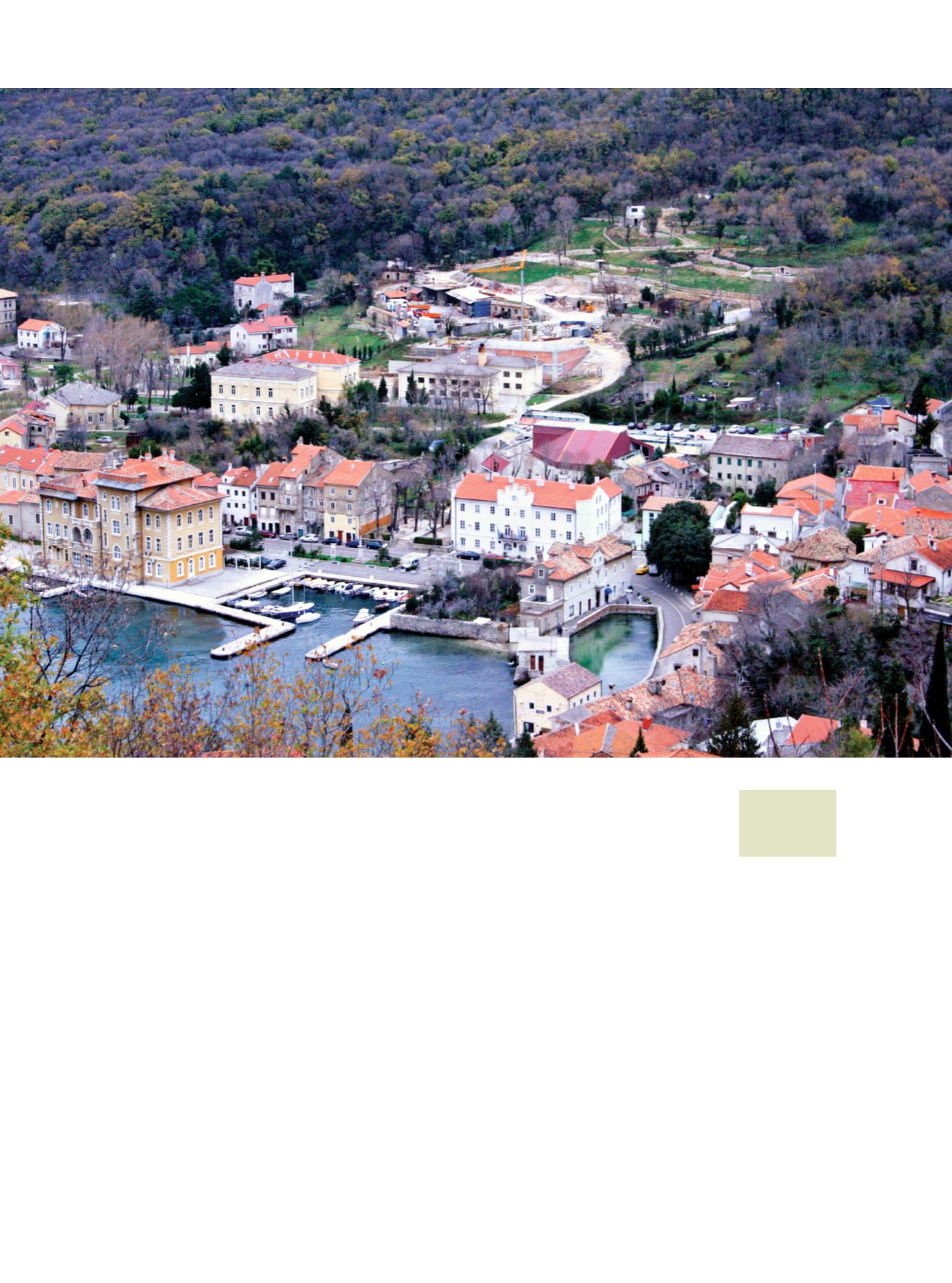
10. Golfo de Kravner
/ Gulf of Kvaner
10


