49
compás int •
compass int
·amura·
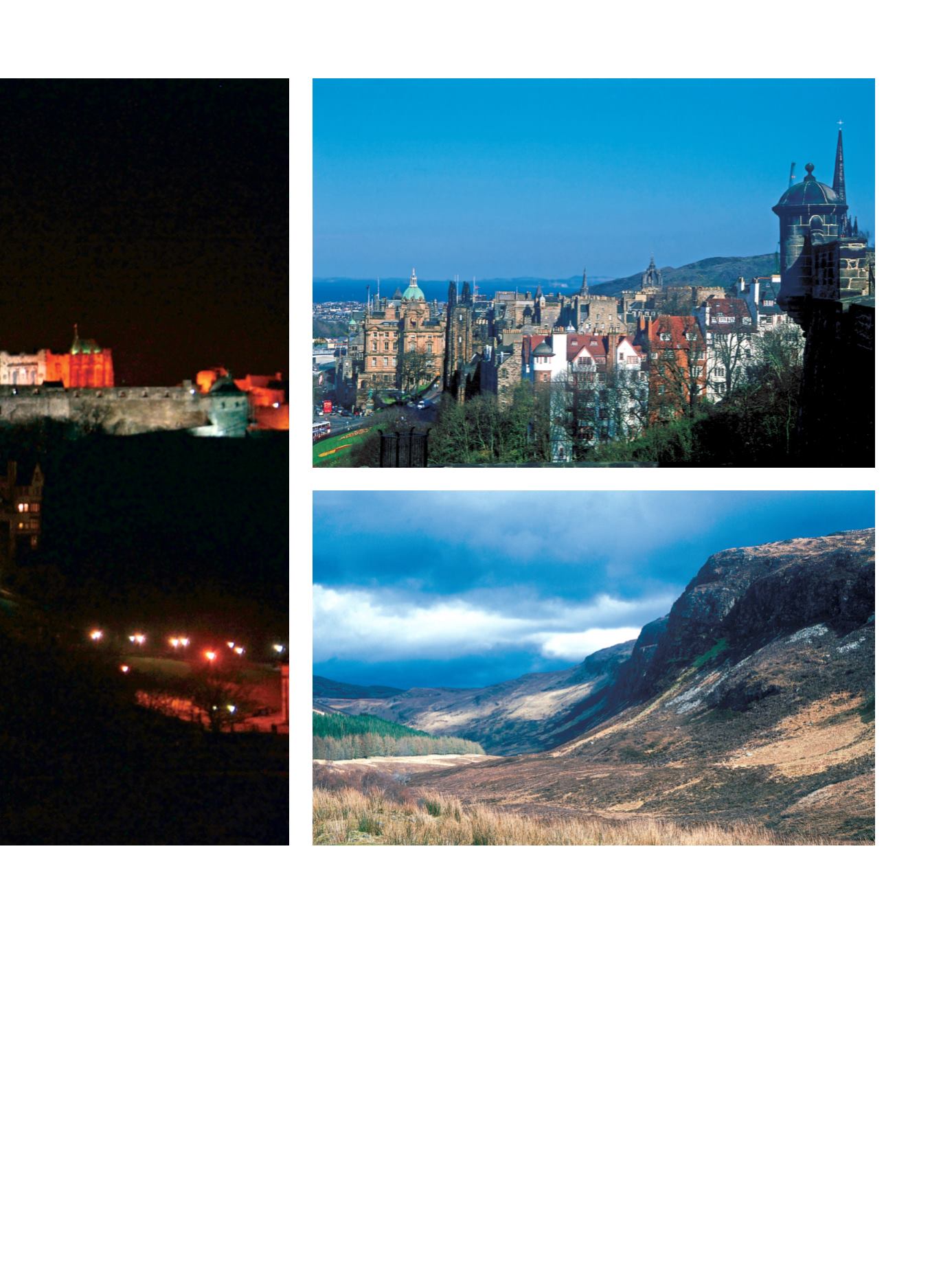
se extiende al pie del peñón que alberga el castillo,
alzando las flechas góticas de las iglesias para titilar
en el cielo que se pinta de azul.
Alojados en el Balmoral, hotel de leyenda, cuyas
piedras cuentan la tradición y la elegancia, dedica-
mos apacibles días soleados a visitar la ciudad. El
amenazante castillo domina con sus piedras oscuras
y encierra las imágenes de un pasado intrigante. En
sus habitaciones, Mary Stuart dio luz a su hijo Jacobo
VI, en una pequeña sala encontramos los “Honours of
Scotland”: la corona, la espada y el cetro, que datan
de los siglos XV y XVI, llamados también “Crown
Jewels”, utilizados en la coronación de los monarcas
escoceses, desde Mary I en 1543 hasta Charles II en
1651, y que aparecen sobre el blasón llevados por el
león rojo.
También admiramos la “Piedra del Destino” o
“Coronation Stone”, un bloque de arenisca donde
fueron consagrados los reyes escoceses e ingleses,
era. The elegant city extends from the foot of the rocky
hill protecting the castle, shooting heavenward the
gothic spires of the churches to tremble in the blue
painted sky.
Lodged in the legendary Balmoral hotel, whose very
stones speak o tradition and elegance, we spend peaceful
sunny days visiting the city. The threatening castle domi-
nates the skyline with its dark stones and conjures up
imagesof an intriguingpast. Within itswalls,MaryStuart
gave birth to her son James VI, and in a small chamber we
find the “Honors of Scotland”: the crown, sword of state
and scepter, dating from the fifteenth and sixteenth cen-
turies. Also known as the “Crown Jewels”, they were used
in the coronation ceremonies of the Scottish monarchs
fromMary I in 1543 until Charles II in 1651 and appear on
the heraldry, borne by the red lion.
We also admire the Stone of Destiny, or the corona-
tion stone, a block of sandstone used as a traditional
coronation seat for Scottish and English kings, that


