compás int • int compass
Historia de los Estados Generales
El nombre oficial del parlamento holandés es los
Estados Generales. Desde la modificación constitucio-
nal de 1815, que introdujo un sistema de dos cámaras,
los Estados Generales están formados por el Congreso
y el Senado.
El nombre “Estados Generales” proviene del siglo
XV. En 1464, Felipe III de Borgoña (Felipe el Bueno)
convocó por primera vez a los Estados. La asamblea
tuvo lugar en Brujas, que entonces formaba parte del
Condado de Flandes. En los Estados había represen-
tantes de las 17 provincias borgoñonas de los Países
Bajos, que era como entonces se conocía al territorio
que ahora denominamos Bélgica y los Países Bajos.
Más tarde, en los siglos XV y XVI, la sede de las
asambleas pasó a ser Bruselas, en el Ducado de Bra-
bante. Las reuniones de los Estados Generales solían
ser aprovechadas por los delegados de las diecisiete
provincias para exigir nuevos privilegios, razón por
la cual los gobernantes de los Países Bajos preferían
evitarlas y se dirigían primero a los Estados de cada
provincia por separado.
Durante la dominación española en tiempos de
Felipe II, se prohibió que se reunieran los Estados sin
permiso del monarca.
History of the General States
The official name of the Dutch parliament
is the General States. Since the constitutional
amendment of 1815, which introduced a system of
two chambers, the General Sstates are constituted
by Congress and Senate.
The name “General States” comes from the XV
century. In 1464, Philip III of Burgundy (Philip the
Good) convened for the first time toward the States.
The assembly was held in Bruges, which was then
part of the County of Flanders. The States had rep-
resentatives of the 17 provinces of the Burgundian
Netherlands, which was then known as the terri-
tory we now call Belgium and the Netherlands.
Later, in the fifteenth and sixteenth centuries,
the seat of the assemblies made room to Brussels,
in the Duchy of Brabant. The meetings of the Gen-
eral States were often exploited by the delegates of
the seventeen provinces to demand new privileg-
es, which is why the rulers of the Netherlands pre-
ferred to avoid them and headed first to the States
of each province separately.
During the Spanish domination under Philip
II, it was forbidden to meet States without permis-
sion of the monarch.
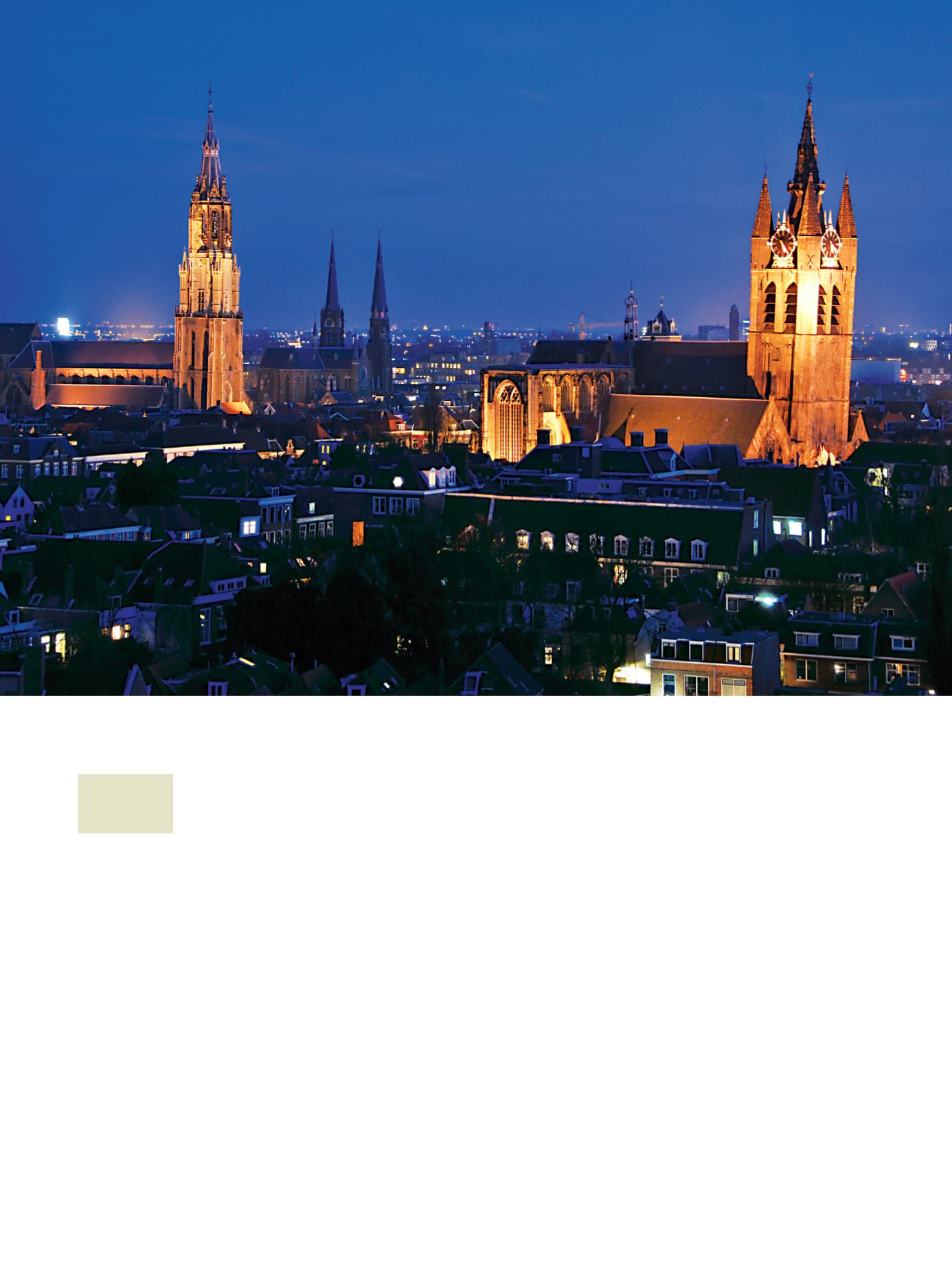
6. Vista de la ciudad
de Delft.
/ Skyline
Delft.
6
·amura·
36


