41
compás int •
compass int
·amura·
La ciudad vivió tiempos más favorables bajo el
reinado de Iván III, también conocido como Iván el
Grande. Durante estos años, el territorio Ruso se
extendía desde Nóvgorod en el norte, hasta Tula en
el sur y los Urales en el este, y Moscú era ya el centro
político del naciente Imperio. Para conmemorar la
expansión de su territorio, Iván III recurrió a arqui-
tectos italianos para construir catedrales y renovar
la base de su reinado, que desde ese entonces se
localizaba en el Kremlin.
Desde su fundación la ciudad mantuvo su esta-
tus de capital hasta que en 1714 el Emperador Pedro
I de Rusia decidió trasladar la sede del estado a San
Petersburgo. Más tarde, la ciudad fue foco de conflic-
to durante principios del s. XIX, cuando las Guerras
Patrióticas contra Napoleón causaron grandes
daños. La capital volvió a Moscú en 1918 con los
comunistas, después de la revolución y la expulsión
de la monarquía. Al final de la Segunda Guerra
Mundial, la ciudad necesitó un tiempo para recupe-
rarse de las heridas causadas por los ataques alema-
nes.
En 1980 Moscú fue la sede de los Juegos
Olímpicos y aprovechó la ocasión para poner de
manifiesto la superioridad Soviética. El proceso de
democratización empezó en 1991, después de la
disolución de la Unión Soviética y, desde entonces,
las elecciones democráticas han formado parte del
progreso político.
The city lived better times under the reign of
Ivan III, also known as Ivan the Great. During
these years, the Russian territory extended from
Novgorod in the north, to Tula in the south and
the Urals in the east, and Moscow already was
the political center of the raising Empire. To com-
memorate the expansion of its territory, Ivan III
turned to Italian architects to built cathedrals
and renovates the base of its reign, that since
then it was located in the Kremlin.
Since its foundation the city kept its capital
status until in 1714 the Emperor Peter I of Russia
decided to move the seat of the state to Saint
Petersburg. Later on, the city was the center of
conflict during the beginnings of the XIX th cen-
tury, when the Patriotic Wars against Napoleon
caused great damages. The capital returned to
Moscow in 1918 with the communists, after the
revolution and the expulsion of the monarchy.
At the end of the Second World War, the city
needed a time to recover from the wounds
caused by the German attacks.
In 1980 Moscow was the venue of the
Olympic Games and seized the opportunity to
declare the Soviet superiority. The process of
democratization started in 1991, after the disso-
lution of the Soviet Union and, since then, the
democratic elections have been part of the poli-
tical progress.
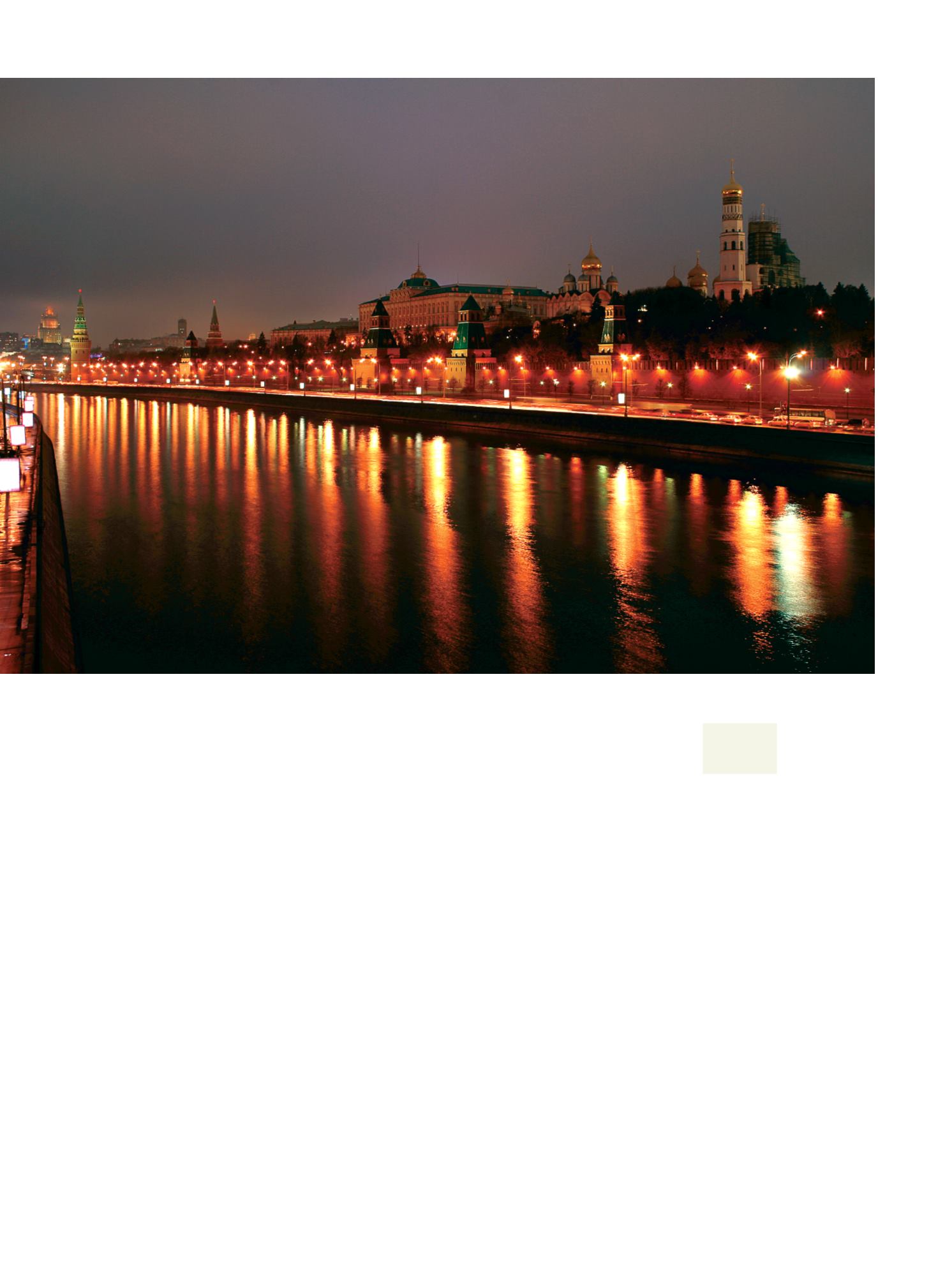
Vista del Kremlin desde el
río Moskva.
Kremlin’s View from
Moskva River


