compás int •
compass int
46
·amura·
varias ocasiones. La primera vez que la iglesia se vio
amenazada fue durante la invasión napoleónica. Se
dice que Napoleón estaba tan embelesado con la
construcción que insistió en llevársela a París con él.
Al ver que sus deseos no podían cumplirse, ordenó la
destrucción del edificio. Los franceses colocaron
explosivos para destruirla, pero una lluvia repentina,
milagrosa logró apagar las mechas de los explosivos
antes de que pudieran causar algún daño.
A principios del s. XX, la Catedral estuvo a punto
de ser destruida nuevamente. En dos ocasiones las
autoridades comunistas contemplaron derrumbar el
edificio para tener más espacio en la Plaza Roja para
los desfiles militares. Afortunadamente, estas inicia-
tivas tampoco fructificaron.
La Plaza Roja
Con sus 695metros de longitud y 130metros de ancho,
esta es la tercera plaza más grande del mundo. En ella
se encuentran varios sitios de interés y monumentos
importantes, incluyendo la Catedral de San Basilio.
Uno de los sitios más representativos de la plaza es
el Mausoleo de Lenin. Después de morir repentinamen-
te de un infarto cerebral, los líderes comunistas decidie-
ron colocar el cadáver de Lenin en la Plaza Roja para que
los miles de ciudadanos entristecidos por su muerte
pudieran rendirle respeto. Al ver que el cuerpo atrajo
cantidades de visitantes en muy poco tiempo, algunos
políticos divisaron la oportunidad demejorar su imagen
ante el pueblo y decidieron construir un mausoleo para
el héroe de la revolución. En 1924 se edificó el llamado
Mausoleo de Lenin junto a los muros del Kremlin. Aquí
several occasions. The first time that the church was
threatened was during the Napoleonic invasion. It is
said that Napoleon was so fascinated with the
construction that he insisted in taking it to Paris
withhim. Whenhe realized that hiswisheswouldnot
be fulfilled, he ordered the destruction of the build-
ing. The French placed explosives to destroy it, but a
sudden rain, miraculously put out the streaks of the
explosives before they could cause any harm.
At the beginning of the XXth century, the
Cathedralwas on thepoint of beingdestroyedagain. In
two occasions the communist authorities considered
knocking down the building to havemore space in the
Red Square for themilitary parades. Fortunately, these
initiatives neither were fruitful.
The Red Square
With its 695 meters long and 130 meters wide, this
is the third biggest square in the world. In it there
are several interesting places and important monu-
ments, including the Cathedral of Saint Basil.
Oneof themost representativeplaces of the square
is theMausoleumof Lenin. After his sudden death of a
brain stroke, the communist leaders decided to place
Lenin’s corpse in the Red Square so the thousands of
citizens saddened for his death could pay him their
respect. When they realized that the corpse attracted
large quantities of visitors in a short time, some politi-
cians saw the opportunity to enhance their image
before the people and decided to build a mausoleum
for the hero of the revolution. In 1924 was built the
Mausoleum of Lenin next to the walls of the Kremlin.
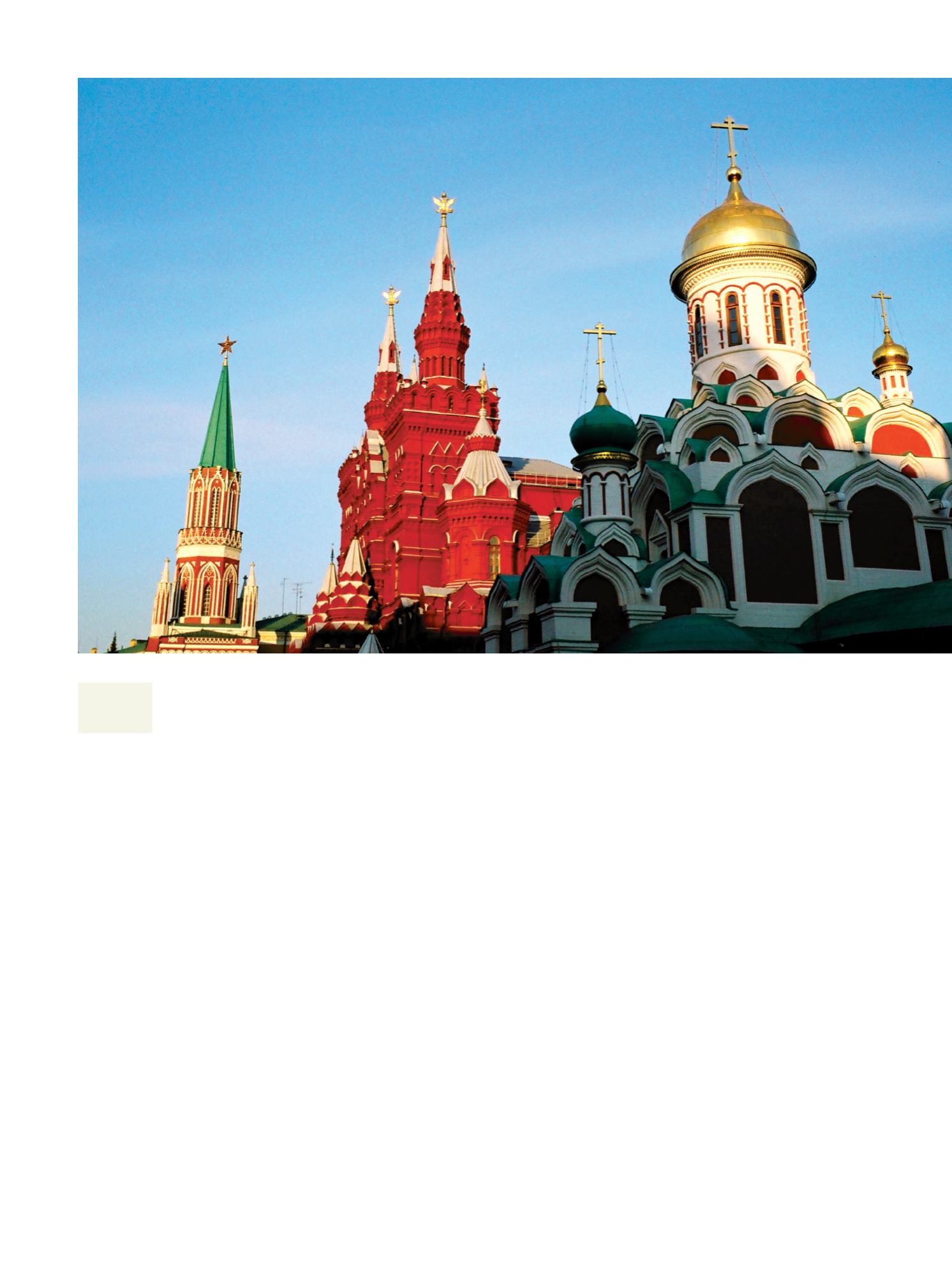
Vista de la Catedral de
Nuestra Señora de Kazan
afuera del Kremlin en Moscú.
View of the Cathedral of Our
Lady of Kazan outside of the
Kremlin inMoscow.


