43
·amura·
compás int •
compass int
para almacenar las barricas de encino, donde enveje-
cen el vino, y ahora se agrandaron para tener dos
kilómetros de extensión. El vino Ksara es famoso,
producido por cepas sembradas desde el siglo XVIII.
Zahlé, pequeña ciudad escondida en un cañón
donde corre el torrente que baja del Monte Líbano, es
famosa por sus restaurantes, sus fiestas, sus ele-
gantes casas y la concurrencia de muchos visitantes
de fin de semana o vacaciones.
Baalbeck fue sin duda la gran ciudad del valle.
Creada por los fenicios, conquistada por Alejandro
Magno, que la llamó Heliópolis (Ciudad del Sol), fue-
ron los romanos quienes edificaron su belleza a par-
tir del 60 a. C. Y cuando el cristianismo se impuso, en
el siglo III, la ciudad seguía embelleciéndose. Más
tarde sus inmensas columnas se desmantelaron y
sirvieron para la construcción de Santa Sofía en
Constantinopla. Finalmente, los musulmanes utiliza-
ron sus piedras para edificar una ciudadela. Las ele-
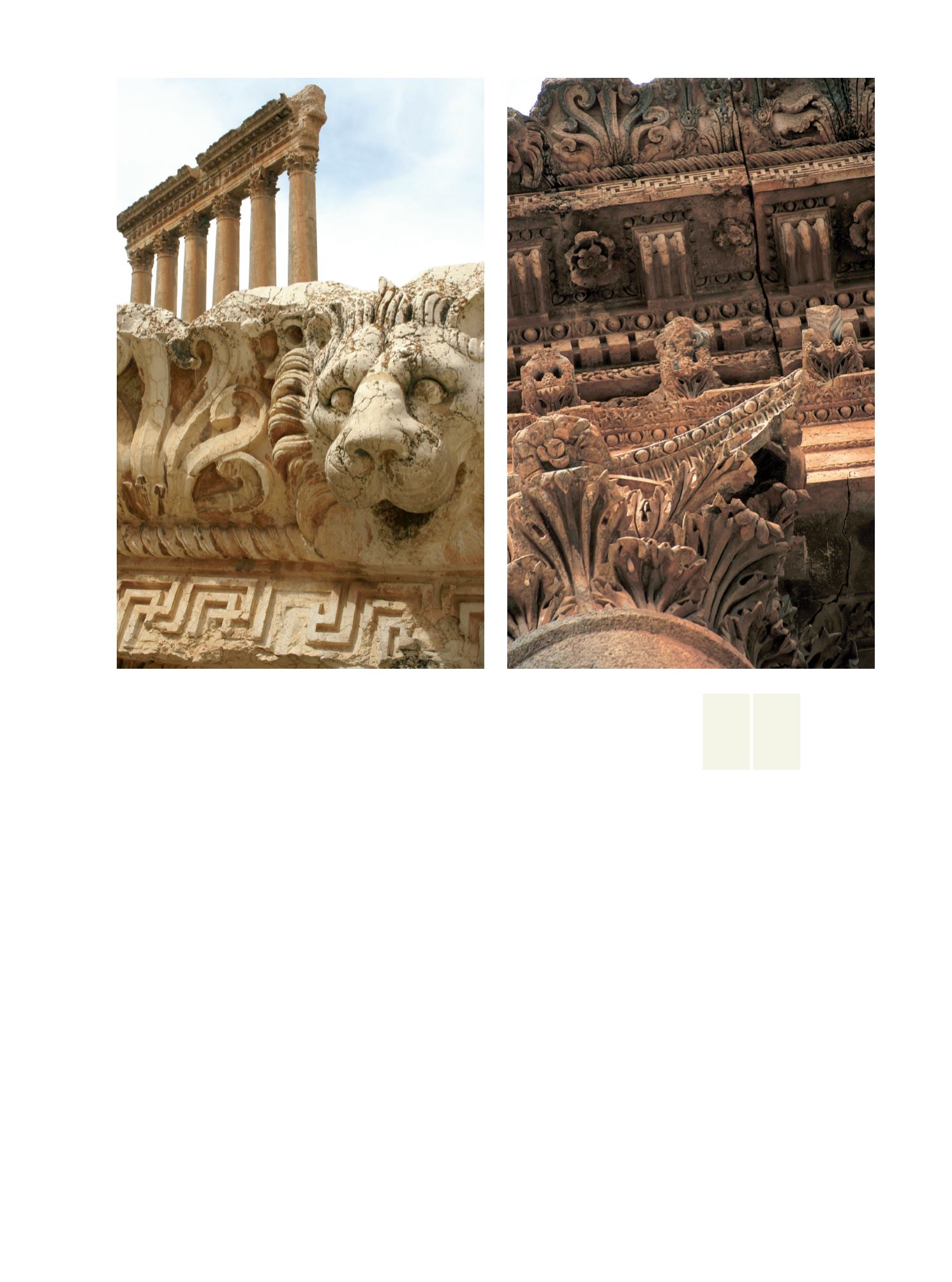
gantes columnas sostenían unos techos adornados
de capiteles, de frisos, unos dinteles con cabezas de
leones como gárgolas, unos nichos con elegantes
estatuas, y las fuentes eran el toque final de la ele-
gancia de esa hermosa ciudad. El impresionante
templo de Júpiter la domina, tenía entonces 54
columnas de 22.9 metros de altura, las más grandes
del mundo, y hoy en día sobreviven sólo seis, como
desafiando al tiempo, sobre las cuales descansan los
bloques de piedra esculpida que formaban el techo.
El extraordinario templo de Bacchus era efecti-
vamente dedicado a Venus y alza su pórtico con 15
to store the live oak barrels where they matured
the wine and now they have been enlarged and are
two kilometers (1.24 miles) long. The Ksara wine is
well known and is produced by vines planted since
the 18th century.
Zahle, a small city hidden in a gorge where the
torrent that descends from Mount Lebanon runs,
is renowned for its restaurants, parties, elegant
houses and the crowds of people who arrive for the
weekend or to spend vacations.
No doubt, Baalbeck was the great city of the val-
ley. Created by the Phoenicians and conquered by
Alexander the Great, who called it Heliopolis (the City
of the Sun), it was the Romans who built this beauty
beginning in 60 B.C. In the third century, when
Christianity became more important, the city con-
tinued to become even more striking. Later on its
immense columns were taken apart and used in the
construction of Saint Sophia in Constantinople.
Finally, the Muslims used its stones to build a
citadel. The elegant columns held up roofs adorned
with capitals, friezes, and lintels with lion heads
akin to gargoyles, niches with elegant statues and
the fountains where the crowning touch of this gor-
geous city. The impressive temple of Jupiter over-
looks it. It had 54 columns 22.9meters (75 feet) high,
the tallest in the world. Today only six survive, as if
defying time, and on them rest the blocks of carved
stone that were part of the roof.
The extraordinary temple of Bacchus was dedi-
cated to Venus and it raises its portico with 15
1
2
1. Los leones eran las gárgolas
que adornaban los techos del
gran templo de Júpiter
The lions were that gargoyles
that adorned the rooftops of
the great temple of Jupiter
2. Las columnas del templo de
Júpiter de Baalbek se adornaban
con fabulosos detalles
decorativos
The columns of the temple
of Jupiter in Baalbek were
adorned with fabulous
decorative details


