compás int •
compass int
60
·amura·
It was difficult to leave the Four Seasons
Tented Camp, where we were pampered with an
essence of luxury and the elegance, sharing every
moment with elephants. Before we leaved we
crossed the lands were the wheat fields moved
their tips by the rhythm of the breeze. We visited
the white temple decorated by shapes of warriors,
gods or dragons, filled with small mirrors. We
strolled thru hills filled by trees, sulfurous
waters, and traditional small towns before arriving
to Chiang Mai.
Chiang Mai
Located next to the Ping River, Chiang Mai is the
cultural capital of the north, on the foothills of
the mountains. Founded in 1296 by the King
Mengrai, it was a strategic pint for the Lanna
Kingdom in the commerce route which had a great
wall and pit. It suffered Birmanian and Thais inva-
sions; however thanks to its important temples
it maintained being famous and height now
becoming the second favorite city for travelers
after Bangkok.
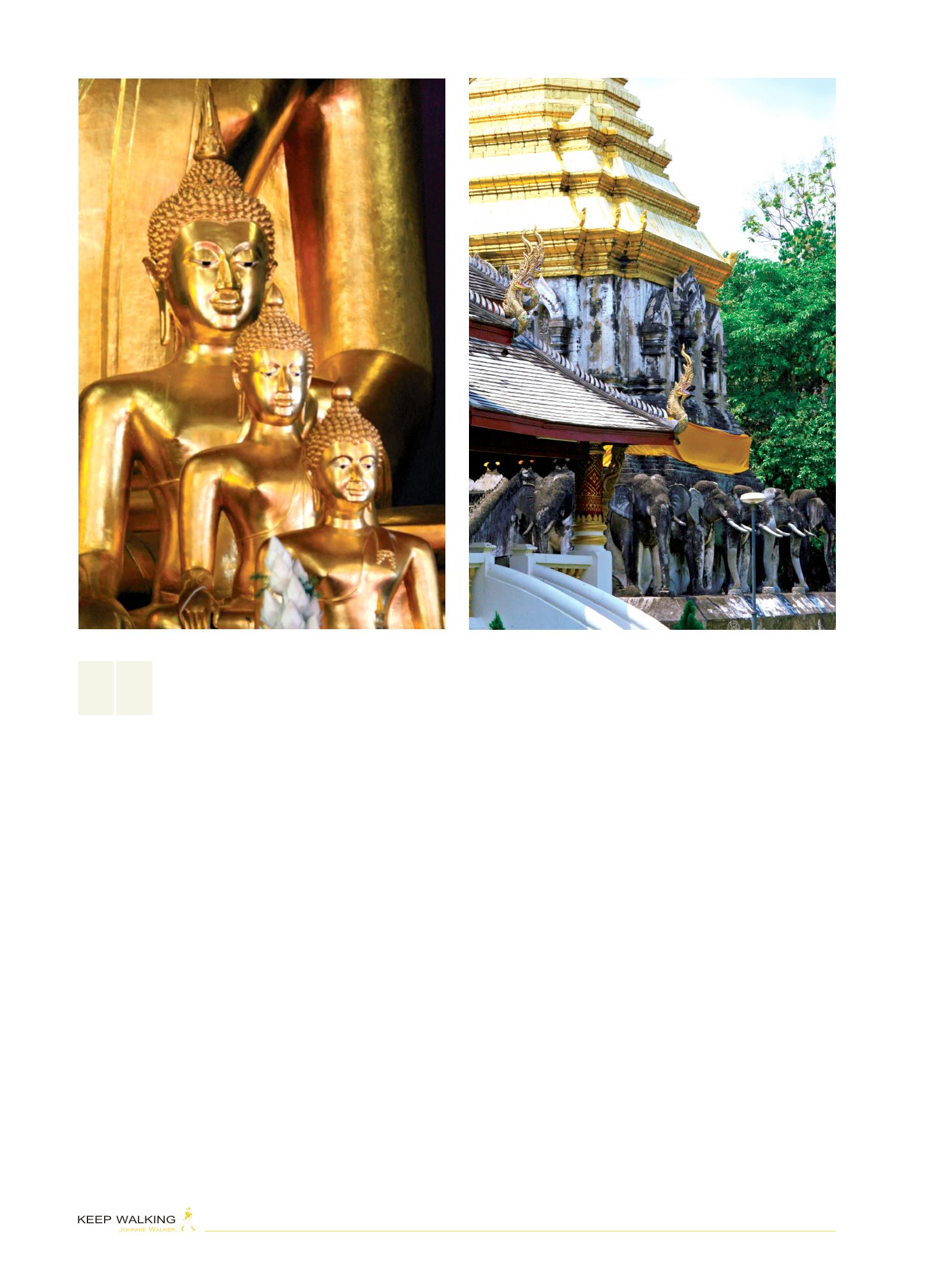
We visited some of the 300 temples: Wat
Phrathat Doi Suthep; Wat Chiang Man, the most
ancient with two venerated statues of Buda and
one stupa adorned by elephants; Wat Phra Singh
that dates back to 1345; Wat Chedi Luang with its
immense and elegant stupa or
Chedi
damaged by
the 21st century earthquake; Wat Suan Dok, etc.
Each one has its own beauty, holy and valuable
figures that represent Buda in different postures,
the spectacular detailed decorations of golden
Fue difícil dejar el Four Seasons Tented Camp,
donde fuimos apapachados con una esencia de lujo
y elegancia que compartíamos cadamomento cerca
de elefantes. Antes de partir, recorrimos los llanos
donde los arrozales mueven sus espigas al ritmo de
la brisa, y donde se encuentra el Templo Blanco,
decorado por extrañas figuras de guerreros y dioses
o dragones, con infinidad de espejitos. Paseamos
por las colinas boscosas, las aguas sulfurosas y los
pueblos tradicionales antes de llegar a nuestro
siguiente destino: Chiang Mai.
Chiang Mai
Situada a la orilla del río Ping, Chiang Mai es la
capital cultural del norte, al pie de las altas mon-
tañas. Fundada en 1296 por el Rey Mengrai, era
un punto estratégico del reino Lanna, en la ruta
del comercio, que contaba con su muralla y foso.
Sufrió las invasiones birmanas y thais pero
gracias a sus importantes templos, conservó
su fama y auge, siendo la segunda ciudad
de Tailandia después de Bangkok, lugar favorito
de los turistas.
Visitamos algunos de sus 300 templos: Wat
Phrathat Doi Suthep, Wat Chiang Man, el más anti-
guo con dos veneradas estatuas de Buda y una estu-
pa adornada por elefantes, Wat Phra Singh que data
de 1345; Wat Chedi Luang con su inmensa y elegan-
te estupa o
chedi
dañada por el terremoto del siglo
XVI; Wat Suan Dok. Cada uno contiene unas bellas,
reverenciadas y valiosas figuras que representan a
Buda en diferentes posturas. Los decorados de hoja
de oro son finos y espectaculares, los techos inclina-
1. Las estatuas de Buda son numerosas
dentro del templo de Wat Phra Sing
que datan de 1345
The statues of Buda are numerous
inside the temple of Wat Phra Sing
which data from 1345
2. Wat Chiang Man es el templo más
antiguo de Chiang Mai, donde
destacan las estatuas de elefantes
Wat Chiang Man is the oldest
temple of Chiang Mai, where the
elephant statues stand out
1
2


