Secreto invaluable
En la primera mitad del siglo XX la producción de trufa
disminuyó drásticamente. Su cultivo y cosecha fue
celada por el misterio.
¿Dónde se localizaban? Era el secreto mejor guardado.
Las mujeres fueron excluidas de este conocimiento y
sólo en su lecho de muerte el productor pasaba a sus
hijos los secretos del cultivo. Durante las guerras mun-
diales su cosecha decayó drásticamente y muchos mu-
rieron enterrando este secreto con ellos. No fue sino
hasta la década de 1960 que volvieron a ser altamente
valoradas y se realizaron esfuerzos para cultivarlas.
Las lluvias tardías del verano son propicias para el
crecimiento de la trufa, la cual es muy sensible y suscep-
tible al clima. Un crudo invierno o un verano seco pueden
ser su ruina. Agostodebe ser tibio, húmedoyconmuchas
tormentas y relámpagos para que se logren bien. Este
mes es el hacedor de trufas de invierno; sin embargo, un
clima propiciopara la trufa no lo es para el vino, por loque
elbuenlogrodeambosesincompatible:unbuenañopara
el vino, va en detrimento de la trufa y viceversa.
Piamonte y Perigord son igualmente una yuxtapo-
sición de tierras y una resistencia indómita –valles bos-
cosos aislados y barrancos o crudas mesetas–. Ambas
regiones llevan recuerdos del paso de la historia. Ahí las
trufas son parte de los cimientos de una cultura impreg-
nada de folclor, tradición, misterio y secreto; de una cul-
tura expresada en una cocina sencilla pero celestial.
Al estar en presencia de la trufa, blanca o negra, es
necesario recordar que forma parte indispensable de las
mesas reales e incluso se considera unmanjar divino.
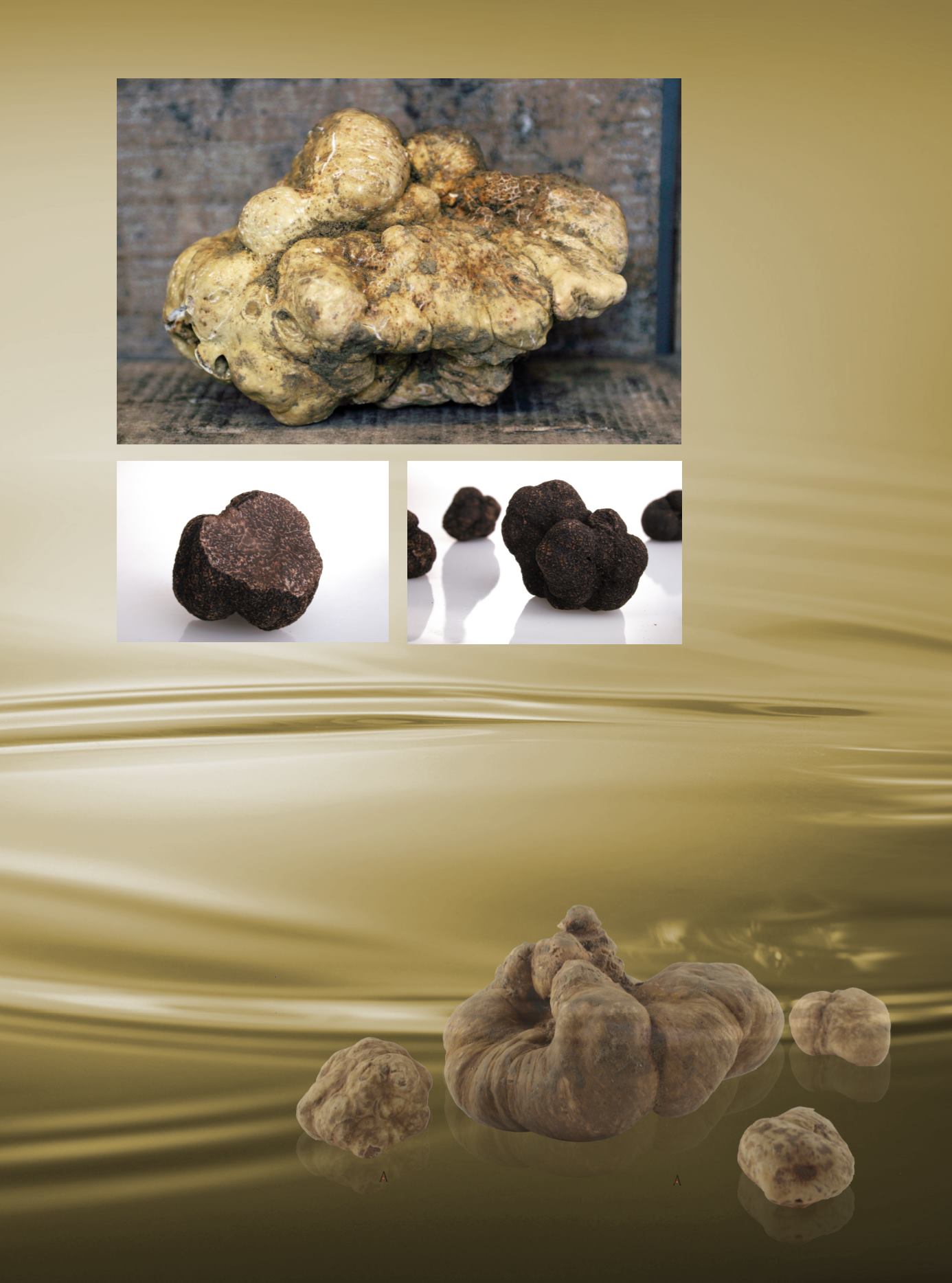
El pasadomes de
noviembre fue
certificada por
micólogos expertos
como
TuberMagnatum
Pico
y le fue otorgado
el récordmundial
Guiness.
The largest truffle
spreadaround the
world, was awarded
the GuinnessWorld
Recordand certified
as
TuberMagnatum
Pico.
Invaluable secret
In the first half of the XX century, truffle produc-
tion decreased dramatically. Its cultivation and
harvesting was surrounded mystery.
Where were located? It was the best kept se-
cret. Women were excluded from this knowledge
and only in his deathbed, the producer passed to
their sons the secrets of the crop. During the World
Wars harvest declined dramatically, andmany died
burying this secret with them. It was until the 60s
that returned to be highly valued and efforts were
made to cultivate.
Late summer rains are favorable for the growth
of truffles, which is very sensitive and susceptible
to weather. A harsh winter or a dry summer may be
their ruin. August shouldbewarm, humidwithmany
storms and lightning tobe achievedwell. Thismonth
is the maker of winter truffles; however, a favor-
able climate for truffles is not for wine, so the good
achievement of both is incompatible: a good year for
wine, it is detrimental to the truffle and vice versa.
Piedmont andPerigord are equally a juxtaposition
of land and indomitable resistance –isolated wooded
valleysandravinesor rawplateaus. Bothregions carry
memories of the passage of history. There truffles are
part of the foundation of a culture impregnated with
folklore, tradition, mystery and secrecy; a culture ex-
pressed ina simplebutheavenlycuisine.
Being inthepresenceof truffles, blackorwhite,we
must remember that it is an indispensable part of the
royal tables andeven it is consideredadivine food.
·amura·
117
gourmet • gourmet


