Termas
Una parte del agua que llegaba a Roma en acueductos,
se canalizaba hacia las termas y los baños públicos de
los ciudadanos romanos. Bañarse y relacionarse con
otros en las termas cobró auge a partir del siglo I a.C.,
cuando el ingeniero Cayo Sergio Orata, encontró un
sistema, el
hipocaustum
, que permitía calentar y dis-
tribuir el aire caliente por el conjunto; es decir, generó
lo que podría denominarse una piscina con calefac-
ción. En términos generales, el sistema consistía en
un horno de leña construido afuera del edificio. El aire
caliente que se producía se canalizaba por una tubería
subterránea. El piso de la terma tenía ventilaciones
por donde circulaba el aire.
Con el paso de los siglos se perdió el carácter de-
mocrático de las termas, como espacios de diálogo y
placer a través del agua; sin embargo, aún existen en
la actualidad algunos balnearios que responden a la
expresión democrática de la antigua Roma.
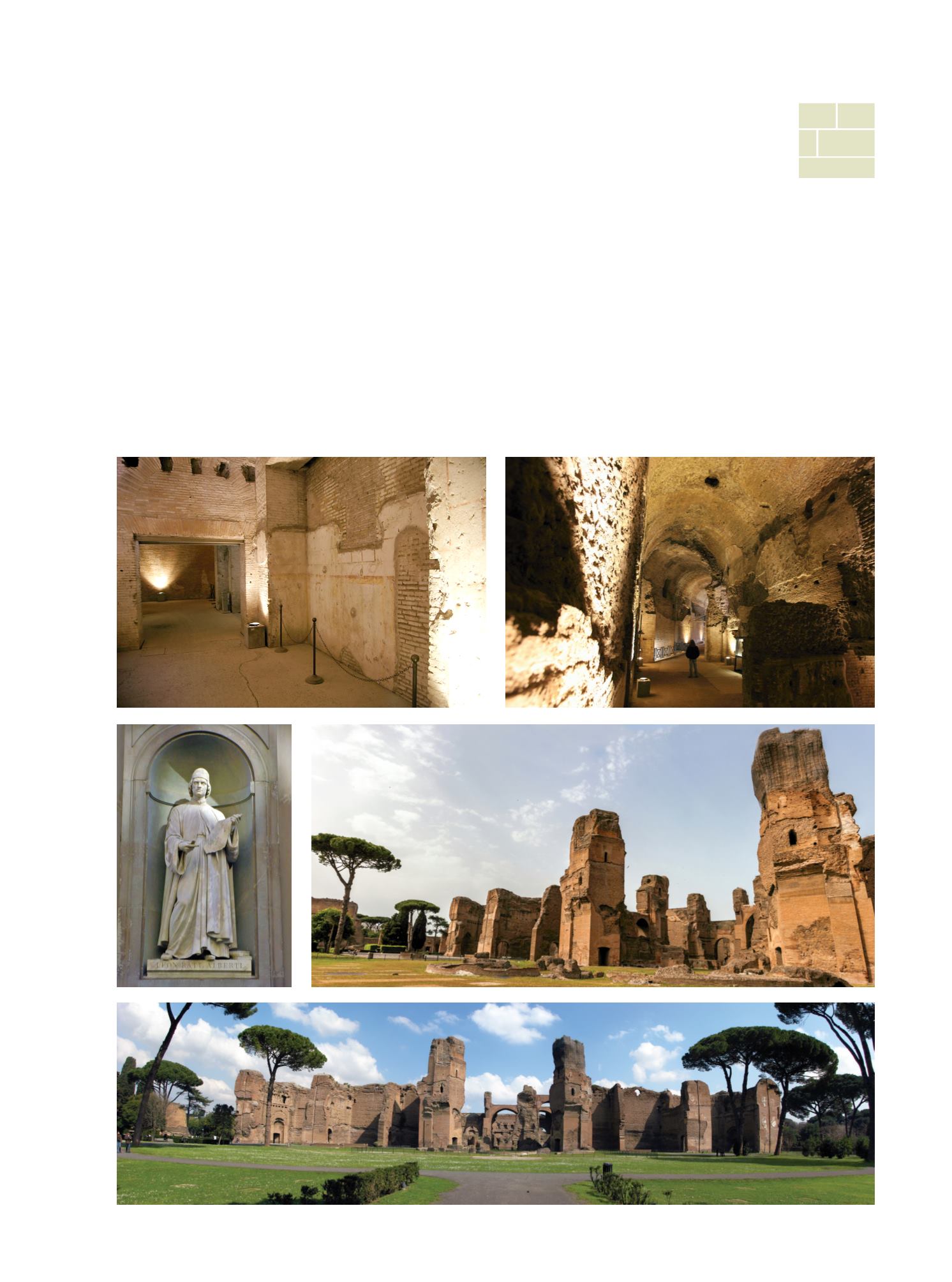
11 y 12. El baño en la
antigua Roma era un
ritual para limpiarse
y socializar. /
The
bathroomin
ancientRomewas
aritualtocleanse
andsocialize.
13. Leon Battista
fue el encargado de
restaurar el Aqua
Virgo. /
LeonBattista
wascommissioned
torestorethe
AquaVirgo.
14y15.Vestigios
delastermasde
Caracalla./
Vestige
ofthebathsof
Caracalla.
·amura·
123
herencia cultural •
culture and heritage
Thermae
A part of the water that reached Rome by the aque-
ducts, was directed to the thermae and public baths
of the Roman citizens. To take a bath andminglewith
other people in the thermaebecamepopular fromthe
I century BC, when the engineer Caius Sergius Orata,
found a system, the hipocaustum, that allowed to
heat and distribute the hot air through the complex;
thismeans, createdwhat could be called a swimming
pool with heating. In general, the system comprised
a timber oven attached outside the building. The hot
air that was produced would be channeled through
an underground pipeline. The floor of the thermae
had vents where the air would get circulated.
With the passing of the centuries the demo-
cratic nature of the thremae was lost, as spaces for
dialog and pleasure through water; however, some
baths still exist today that answer to the democratic
expression of ancient Rome.
11
12
13 14
15


