56
·amura·
L
a región del suroeste de Francia cuenta con la
tradición de las corridas y muchas de las ciu-
dades tienen sus plazas. A lo largo del verano,
esas plazas permiten admirar a los más destacados
toreros, especialmente en Bayonne y Dax.
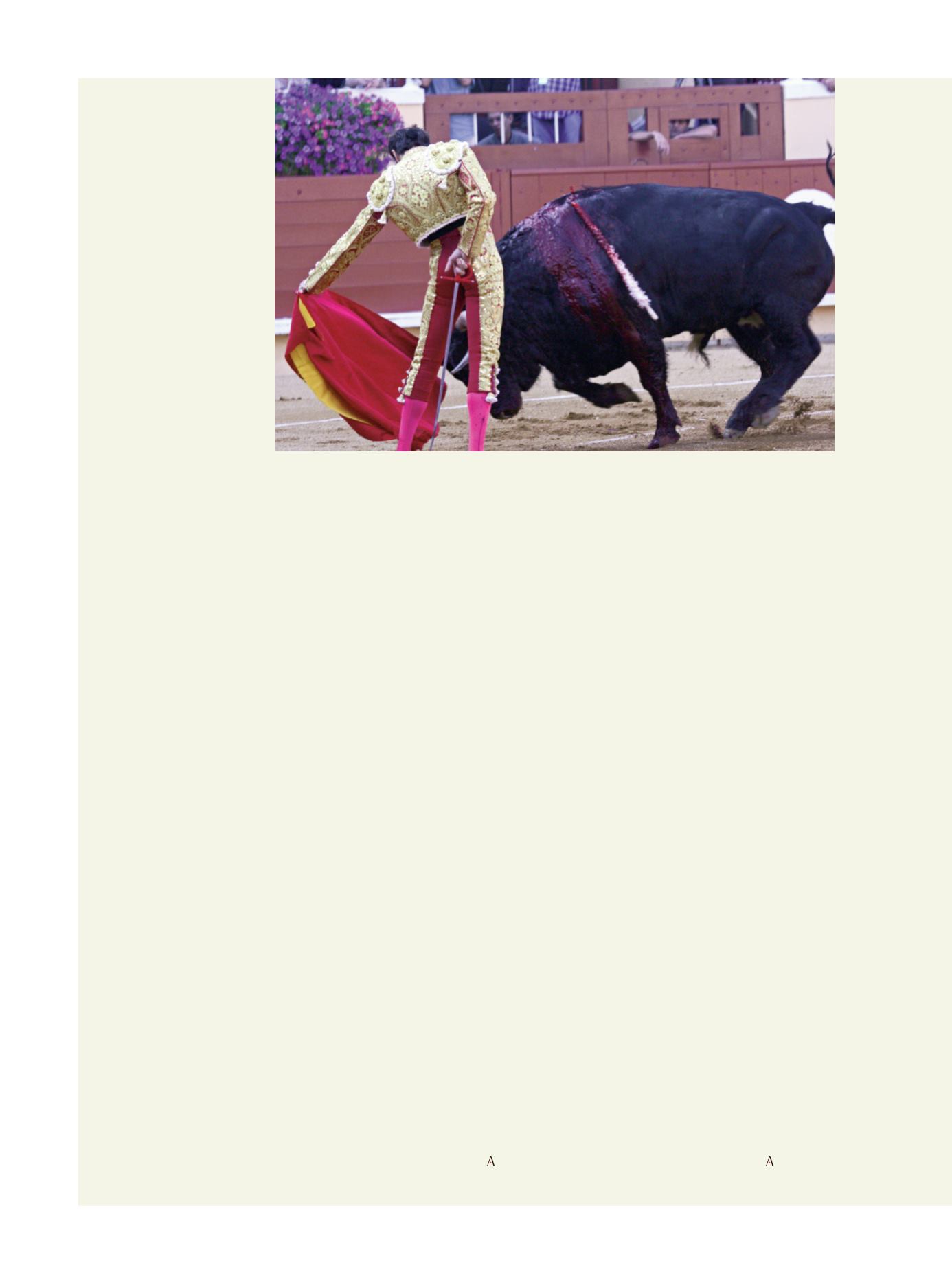
La Fiesta Brava es un espectáculo magnífico
donde el hombre, vestido con su traje de luces de
colores vivos, mueve su capote frente a un toro de
entre 450 y 550 kilos. Es un desafío a la furia del ani-
mal, la palma de la mano del torero toca la cabeza del
toro, los “ole” retumban en la plaza, la música suena,
los “ho” y “ha” llenan el escenario. Unmundo de colo-
res se agita alrededor de la bestia y de la muleta, el
triunfo del torero vibra por las gradas.
Enrique Ponce ha sido el triunfador de la tem-
porada pasada, con dos orejas dos veces, un verda-
dero rey de la arena, un príncipe valiente frente al
toro furioso. Cesar Rincón hacía su despedida des-
pués de una larga y valiente carrera, con todos los
honores que se merece, Javier Castaño estremecía
con bravura, la fiesta llenaba la plaza.
Otra de las tradiciones de la región son las vacas
landas, en una plaza rectangular la vaca dirigida por
un lazo y los “toreros” toreando las vacas, sin capo-
te, con elegantes movimientos. Otros brincan enci-
ma con piruetas o salto del ángel. Valientes hombres
enfrentan los cuernos de las vacas que piden encor-
narlos. Fiesta diferente donde la vaca sale triunfan-
te del escenario después de un buen juego.
Las corridas de Bayonne y Dax han sido parte del
mundo taurino, dentro de hermosas plazas con toda
la tradición, colores, fabulosas imágenes, y las mira-
das del torero frente al peligroso cuerno.
T
he south west region of France has a tradition
of bullfights and there are bullrings in many
cities. Throughout the summer, spectators
can marvel at the feats of the most outstanding
matadors, especially in Bayonne and Dax.
The Fiesta Brava is a magnificent spectacle in
which the matador, dressed in his vibrantly colored
outfit, waves his cape in front of a bull that weighs
in at between 450 and 550 kilos. It is defiance of the
animal’s fury, the palm of the matador’s hand
touches the bull’s head and the cries of “ole” echo
around the ring, the music sounds, the “ho’s” and
“ha’s” fill the scene. A world of color move to and fro
around the beast and the caped sword and the mata-
dor’s triumph vibrates around the terraces.
Enrique Ponce was the winner of the last season,
taking two ears on two occasions; a true king of the
arena, a brave prince facing the raging bull. Cesar
Rincón nears his farewell after a long and brave career
with all the honors he deserves, Javier Castaño shakes
with bravado, the fiesta filled the bullring.
Another of the region’s traditions are the so-called
vacas landas
; the cow is led by a lasso in a rectangular
arena and the bullfighters fight them with elegant
movements without capes. Other jump up and pirou-
ette or angel’s jumps (literally jumpingover the animal
with arms extended). Brave men face the cows’ horns
that want to spike them. This is a different fiestawhere
the cow leaves the stage triumphant after agoodgame.
The bullfights of Bayonne and Dax have been part
of the bullfighting world in beautiful bullrings full of
tradition, colors, fabulous images and the matador’s
looks in front of the dangerous horns.
compás int •
compass int
Tradición de corridas,
espectáculo grandioso
Bullfighting Traditions, a Grand Show


