Meet the music • Música
Después de una brillante carrera escolástica en
Valencia, siguió los pasos de Albéniz, Falla y Turi-
na al establecerse en París. En 1927 fue admitido
en la Ecole Normale de Musique como alumno de
Paul Dukas, con quien estudió composición hasta
1932. Como discípulo favorito de Dukas, era lógico
que recibiera una fuerte influencia en sus intentos
musicales de esta época. En aquellos años Rodrigo
trató mucho a Manuel de Falla, quien lo aconsejaba
y ejercía cierto ascendiente sobre él. Otro nombre
que se liga fuertemente con él es el de Ricardo Viñes.
En 1933 regresa a España y recibe la codiciada beca
del Conde de Cartagena, le fue otorgada por unani-
midad de votos y le permitió extender sus estudios
en París por dos años más. Trabaja con Maurice Em-
manuel y Andrés Pirro, especializándose en historia
de la música. En esta etapa viaja continuamente a
Suiza, Alemania y Austria, componiendo canciones
y piezas para piano.
Al estallar la Guerra Civil en 1936 retorna a Espa-
ña para siempre. Por intervalos dirige programas que
se especializan en conciertos que se transmiten por
radio y se entrega a la composición. En 1939 estable-
ce su residencia en Madrid y logra fama instantánea
con su
Concierto de Aranjuez para guitarra y orquesta.
Pocas obras han recibido una acogida semejante y
se marca una época definitiva en la música española
moderna. El Concierto de Aranjuez fue compuesto en
París durante el invierno de 1939 y retocado en Ma-
drid a los pocos meses. Al año siguiente se estrenó y
alcanzó uno de los éxitos más grandes que se recuer-
dan en los anales de la música española. Los críticos
recibieron la nueva obra con elogios unánimes y ab-
soluto entusiasmo. La fecha de su estreno se convir-
tió en uno de los momentos históricos en la música
de España, un crítico dijo: “En efecto, es imposible
encontrar una obra española con cualidades pictóri-
cas tan excitantes y perfecciónde forma. Por primera
vez en la historia de nuestra música lo pintoresco y
lo clásico se fusionan, recíprocamente mitigando
y dándose vida mutuamente”.
·amura·
120
After outstanding studies in Valencia, he fol-
lowed the examples of Albeniz, Falla and Turina by
moving to Paris. In 1927 hewas accepted at the Ecole
Normale de Musique in the class of Paul Dukas, with
whom he studied composition up to 1932. Being the
favorite pupil of Dukas, it was logical that he was
deeply influenced in his musical expressions at that
time. During those year Rodrigo was close to Manu-
el de Falla, who gave his advice and overlooked his
progress. Another musician he admired was Ricardo
Viñes. In 1933 he returned to Spain and was granted
the Conde de Cartagena Scholarship, a great honor.
He received this recognition obtaining unanimity
of votes and it allowed him to continue studying in
in Paris for two more years. He worked with Maurice
Emmanuel and Andrés Pirro, specializing in history
of music. In this period he travels often to Switzer-
land, Germany and Austria, composing songs and
pieces for piano.
With the outbreak of the Spanish Civil War in
1936 he returns to Spain for the rest of his long
life. Occasionally he directs radio programs cov-
ering concerts and concentrates on composing.
In 1939 he moves to Madrid and becomes famous
overnight with his C
oncierto de Aranjuez for Guitar
and Orchestra
. Very few compositions have been so
warmly received and it established a watermark in
modern spanish music. The
Concierto de Aranjuez
was composed in Paris during the Winter of 1939
and given fine tuning a few months afterwards.
The premiere was the following year and the suc-
cess was so great that it produced a milestone in
the world of spanish music. The critics received
the new work with unanamious approval and
absolute enthusiasm. The date of the premiere
became a musical event that went down in the
history of Spanish music and one critic said:”
Truly, its impossible to find a spanish composi-
tion with the exciting and picturesque expressive
qualities merged here and complementing each
other so vividly”.
2 3
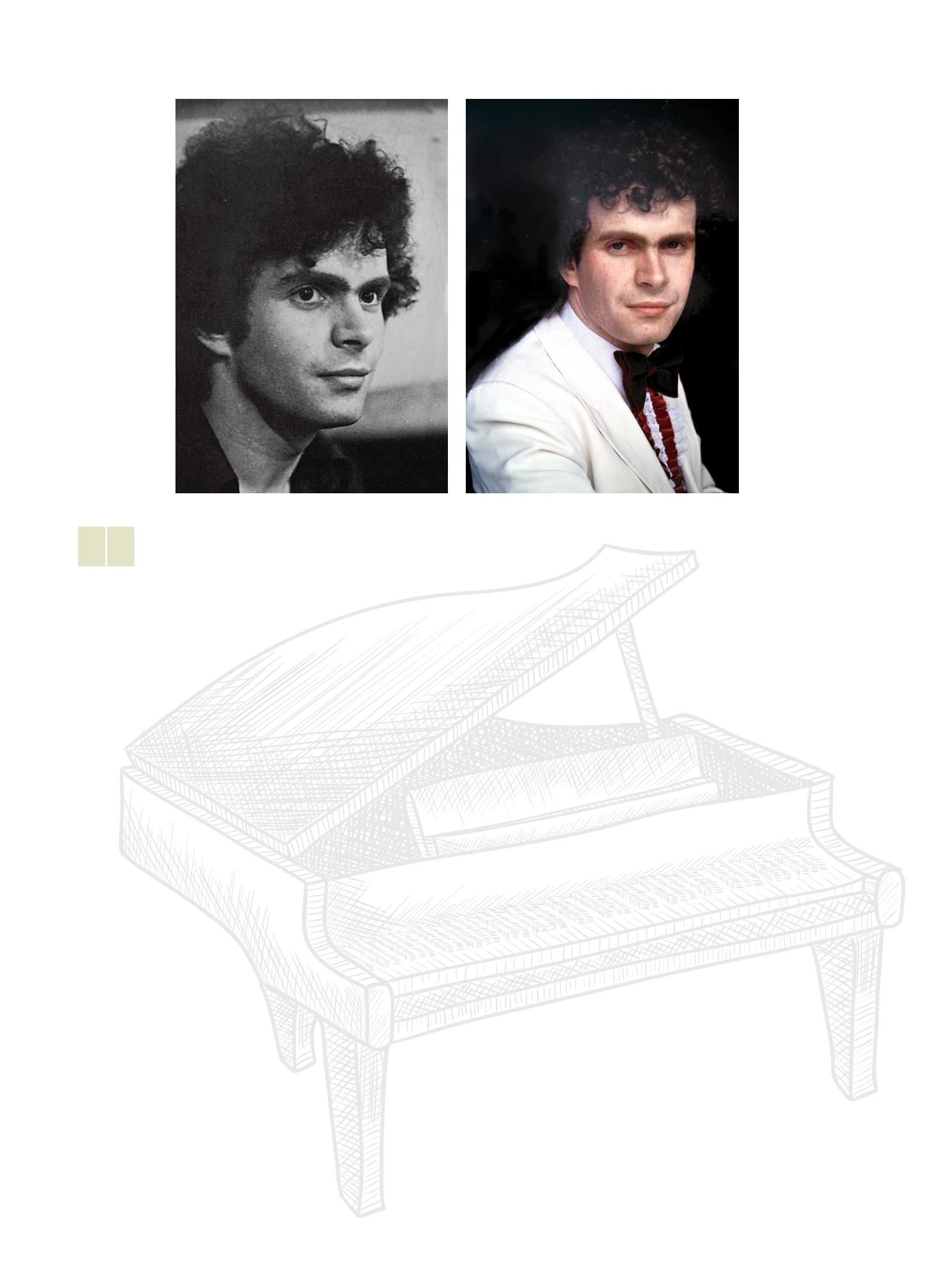
2y3.Un jovenSimon
Rattle,al iniciodesu
carrera./
English
conductor Simon
Rattle in his youth.


