Meet the music • Música
·amura·
124
El gusto musical cambió gradualmente en los
años transcurridos entre los reinados de Felipe II y
Felipe IV. A diferencia de la poesía, la música tenía
que seguir el arrastre de la gente, quien la popu-
larizaba. Siguiendo la noble gracia de las pavanas
y gallardas, siguió el estilo más ligero de los mari-
zápalos, villanos, españoletas, canarios, etc., que
eran más apropiados al bullicio del teatro popular
que a las fiestas palaciegas. Las danzas que escribió
Gaspar Sanz se basaron en estos estilos y en otros
y se publicaron en 1667. Sus obras son cortas, sen-
cillas y ligeras, reflejo fiel de los gustos y maneras
de la época.
Entre 1947 y 1948, España y todos los países de
habla hispana celebraron el cuarto centenario del
nacimiento de Cervantes y Rodrigo contribuyó a
los festejos con la conmovedora obra coral que lle-
va acompañamiento de orquesta llamada
Ausencias
de Dulcinea
, para bajo, cuatro sopranos y orquesta.
Esta obra recibió el Premio Nacional Cervantes. Es el
recuerdo de un trovador que personifica las añoran-
zas del caballero de la triste figura por lamujer ideal,
la de sus sueños. La obra es dramática, expresiva y
cuestionante. La figura de Don Quixote se combina
con voces que salen de la nostalgia y establecen
diálogos con él.
Musical taste has changed gradually in the
years between the reigns of Felipe II and Felipe IV.
Unlike poetry, music has had to follow public taste
and the people are those who make works popu-
lar in the palace festivities. Following the noble
grace and gallant pavans followed the lighter style
Marizápalos, villains, españoletas, canaries, etc.
that weremore appropriate to the bustle of popular
theater that palatial holiday. The dances written
by Gaspar Sanz are base d on these styles and oth-
ers published in 1667. They are short works, simple
and light, a faithful reflex of the taste and customs
of the period.
Between 1947-48 Spain and the whole spanish
speaking countries celebrated the fourth century
of the birth of Cervantes and Rodrigo’s contribu-
tion to the festivities was the touching choral work
with orchestral accompaniment called
Absenses
of Dulcinea
, for bass, four sopranos and orchestra.
This work receive the National cervantes Award. It
is the reminiscing of a troubadour that recalls the
feelings of the Knight of the sad countenance for
the ideal woman, the one of his dreams. The work is
dramatic,expressive and questioning. The figure of
Don Quixote is combined with voices that come out
ofhis nostalgic feelings and create a dialogue.
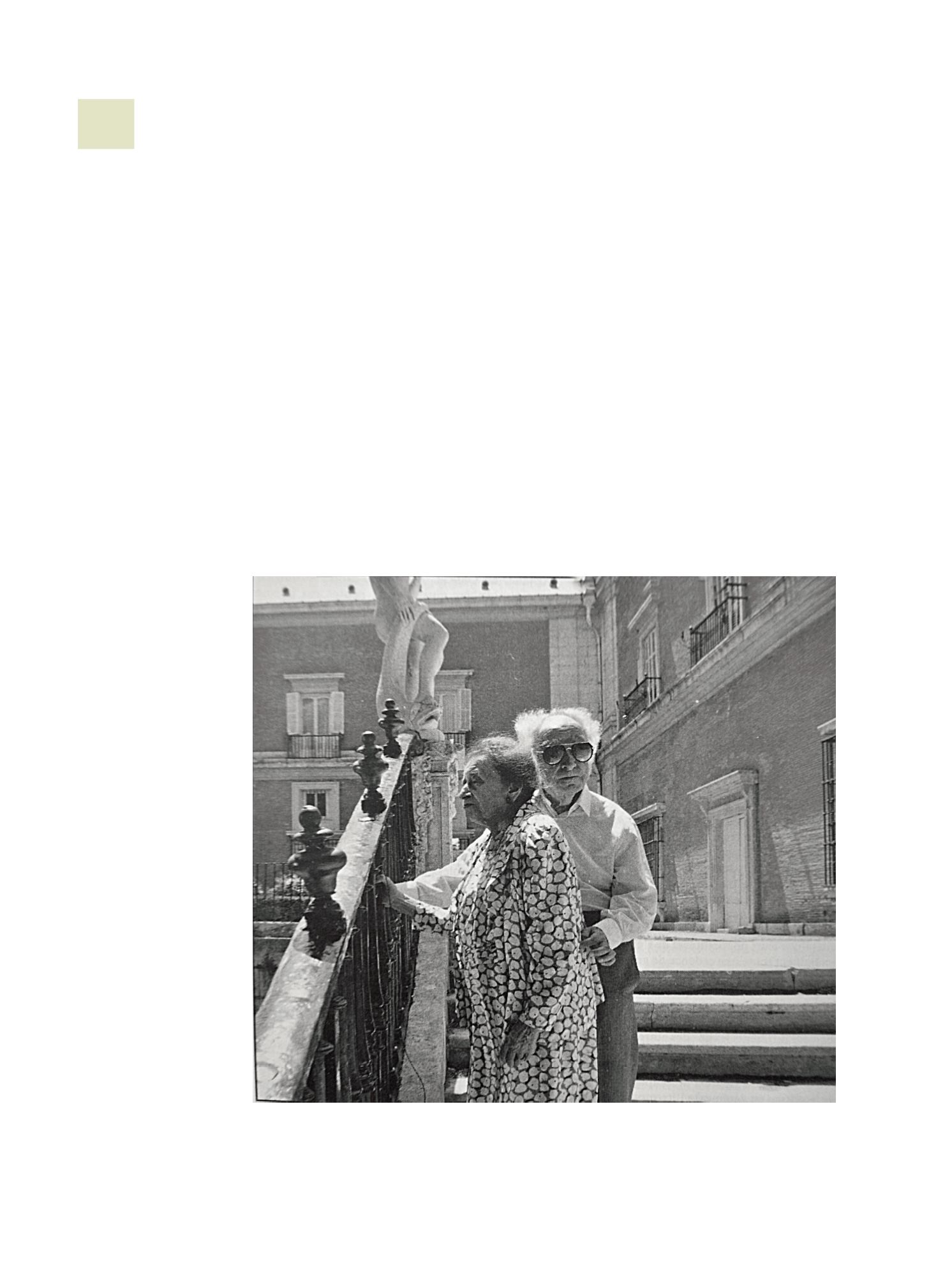
7.Rodrigoysuesposa
Victoriafrenteal
CastillodeAranjuez./
Rodrigo and his wife
Victoria in front of
the Castle
of Aranjuez.
7


