Meet the music • Música
·amura·
122
Cuando Rodrigo llegó a París ya había com-
puesto algunas obras características repletas de
lirismo mediterráneo, como
La zarabanda lejana,
Preludio al gallo mañanero
y
Muy graciosa es la
doncella.
Estas piezas, con sus melodías sinuosas
y ritmos españoles, siguieron la tradición bien
establecida del
Concierto de Aranjuez
, que es una
composición madura y asombrosamente bien ba-
lanceada, explora campos nuevos de armonía y
ritmo y abre nuevas vistas en el uso de la orquesta
y el instrumento solista. La guitarra, a pesar de su
sonido arcaico y distante, nunca se sumerge en la
orquesta, sino que establece su individualidad y
hasta dialoga con ella.
Como muchos compositores del siglo XX, Rodri-
go se fascina con el siglo XVIII y, al igual queManuel
de Falla, hizo un estudio profundo de Domenico
Scarlatti y del padre Antonio Soler, cuya música
chispeante lleva un fondo de seriedad española.
Rodrigo describe la guitarra ideal soñada por
los compositores españoles como un instrumen-
to extraño, fantástico, multiforme, con las alas del
arpa, la cola de un piano y el alma de una guitarra.
La asociación abierta por sus tonos es infinita, por
incluir la improvisación gitana inspirada por guita-
rristas como Rodríguez el Murciano, que inspiró al
compositor ruso Mikhail Glinka y el arte de un An-
drés Segovia.
When Rodrigo arrived in Paris he had already writ-
ten some Works that contain meditarranean warmth
such as L
a Zarabanda Lejana
(The distant Saraband),
Pre-
ludioalgallomañanero
(Preludeforthemorningcockand
Muy graciosa es la doncella
(The maiden is very lovely),
These pieces with their sinuous melodies and spanish
rhythm, continue the tradition established by the
Con-
cierto de Aranjuez
, which is a mature composition and
amazinglywellbalanced,exploringnewareasofharmo-
ny and rhythm and opens new doors in the treatment
of theorchestraand the solo instrument. Theguitar, de-
spite its arcane and distant sound is never submerged
in the orchestra, but establishes its individuality and
evenhas conversationswiththeorchestra.
Like many 20th. Century composers, Rodrigo ex-
presses his fascination with the 18th Century and,
like Manuel de Falla, he conducted a serious study of
Domenico Scarlatti and Padre Antonio Soler, whose
brilliantmusic contains a fabulous spanish strain.
Rodrigo describes that the perfect guitar
dreamt by the spanish composers was a bizarre in-
strument, fantastic, multiform, with the wings of
the harp, the tail of a piano and the soul of a guitar.
This association of tones is infinite due to the fact
that it includes gypsy improvisation inspired by
Rodríguez el Murciano, that was a model for rus-
sian composer Mikhail Glinka(Jota Aragonesa) and
the art of an Andrés Segovia.
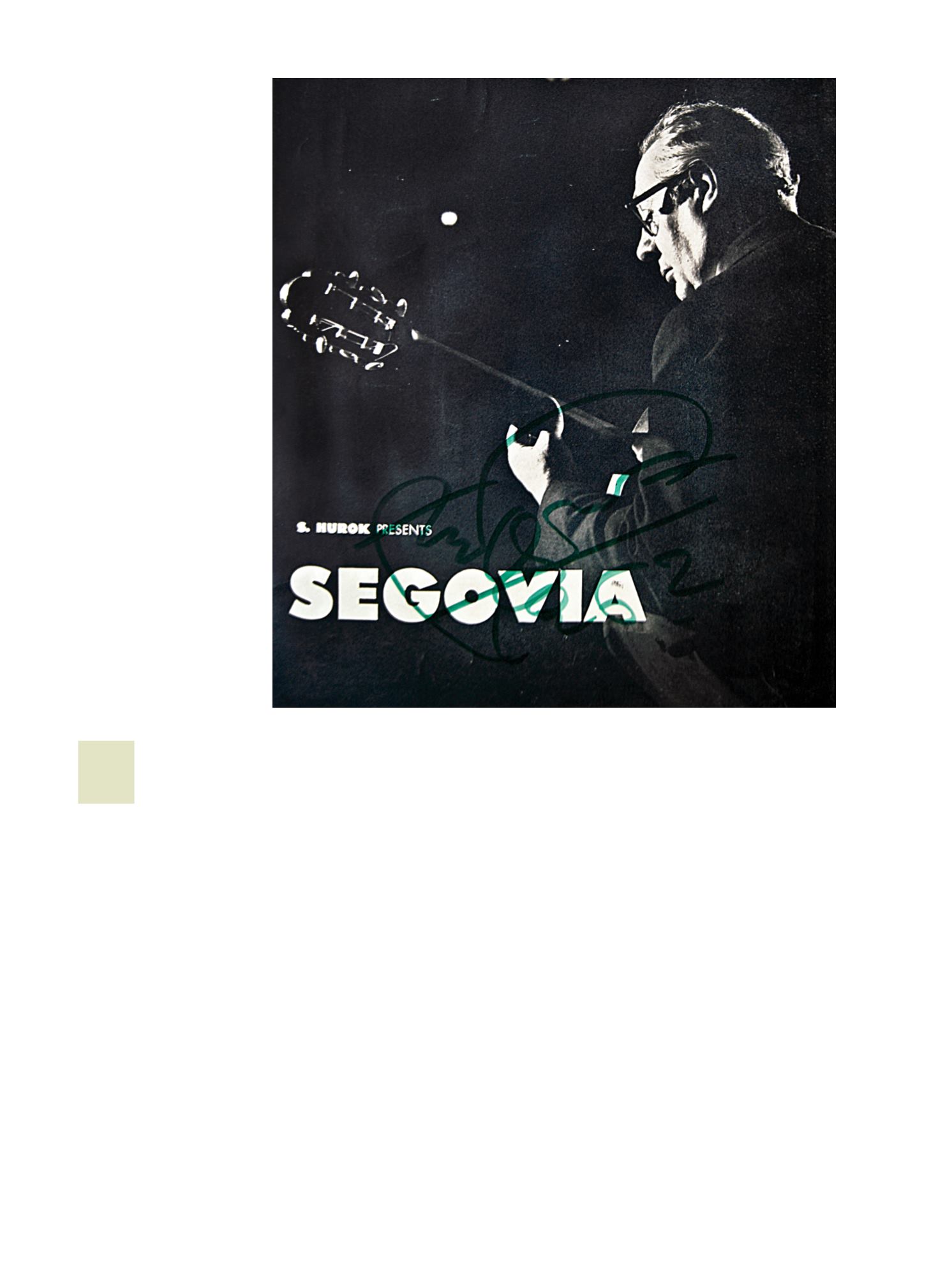
5.AndrésSegovia,
unade lasgloriasde
nuestrostiempos./
Andres Segovia, one
of the glories of
our time.
5


