·amura·
49
compás int • int compass
Huella implacable
Donde antes se alzaban mezquitas, hoy se levan-
tan iglesias que buscan acallar la memoria del
vencido. La mejor muestra de ello se eleva ante la
mirada de sus visitantes, la Catedral de Valencia,
que se levantó sobre lo que fuera la Mezquita Ma-
yor. Alrededor de su consagración rondan diversas
leyendas; la más conocida coincide con el relato de
Josef Teixidor en su libro
Antigüedades de Valen-
cia
, la cual dice que el rey Jaime I, armado con un
martillo de plata, destrozó las paredes del templo
musulmán, faena a la que se sumarían sus hom-
bres para que, en pocas horas, la mezquita fuera
convertida en ruinas. Sin embargo, se trata de un
mito, pues en realidad la Mezquita Mayor sirvió de
catedral hasta la construcción del actual templo y
cuya edificación se prolongó en diferentes etapas.
Desde 1262 hasta el siglo XIX; hecho que la con-
vierte en una maravillosa síntesis de la historia de
la ciudad y conjugación de la mejor arquitectura
valenciana de todos los tiempos. Así, el recuerdo
románico se hace presente en la Puerta del Palau;
la elegancia del gótico está en la Puerta de los
Apósteles, donde todos los jueves, a las 12 del día,
se reúne el Tribunal de las Aguas desde el año 880;
la novedad renacentista de la obra nova, es apre-
ciada en la bella Aula Capitular; el audaz prodigio
del gótico también se aprecia en cimborrio octa-
gonal, obra de Martí Llobet; la espectacularidad
teatral barroca recibe al parroquiano en la Puerta
del Cerros. Esto es en una majestuosa edificación.
Merciless print
Where yesterday there were mosques, today there
are churches that are looking forward to silencing
the memory of the defeated. The best example of
this raises in front of the eyes of the visitors, the
Cathedral of Valencia that was built on top of the
Main Mosque. There are various legends around
its consecration; the best known coincides with
the account of Josef Teixidor in his book
Antiques
of Valencia
where he says that King James I, armed
with a silver hammer, damaged the walls of the
Muslim temple, task to which other men joined,
so in a few hours, the mosque would be totally
ruined. However, this is a myth, for in reality the
mosque functioned as cathedral until the con-
struction of the actual temple which took several
stages, from 1262 until the XIX century, turning
it into a wonderful synthesis of the city history as
well as the sum of the best Valencian architecture
of all times. Andsodoes theRomanmemorybecomes
present in the Puerta del Palau (Door of the Palace): the
elegance of the gothic is in the Door of the Apostles,
whereeveryThursdaytheCourtofWatersgetstogether
since the year 880; the Renaissance novelty of the Obra
Nova (new work) can be appreciated in the beautiful
Aula Capitular (City Hall); the audacious prodigy of the
gothic can also be appreciated in the CimborrioOctago-
nal l (Octagonal Base of the Cupola), work of Martí Llo-
bet;thespectaculardramaoftheBaroquewelcomesthe
parishioner inthePuertadel Cerros (Door of theCerros).
This is amajestic construction.
29
30
31
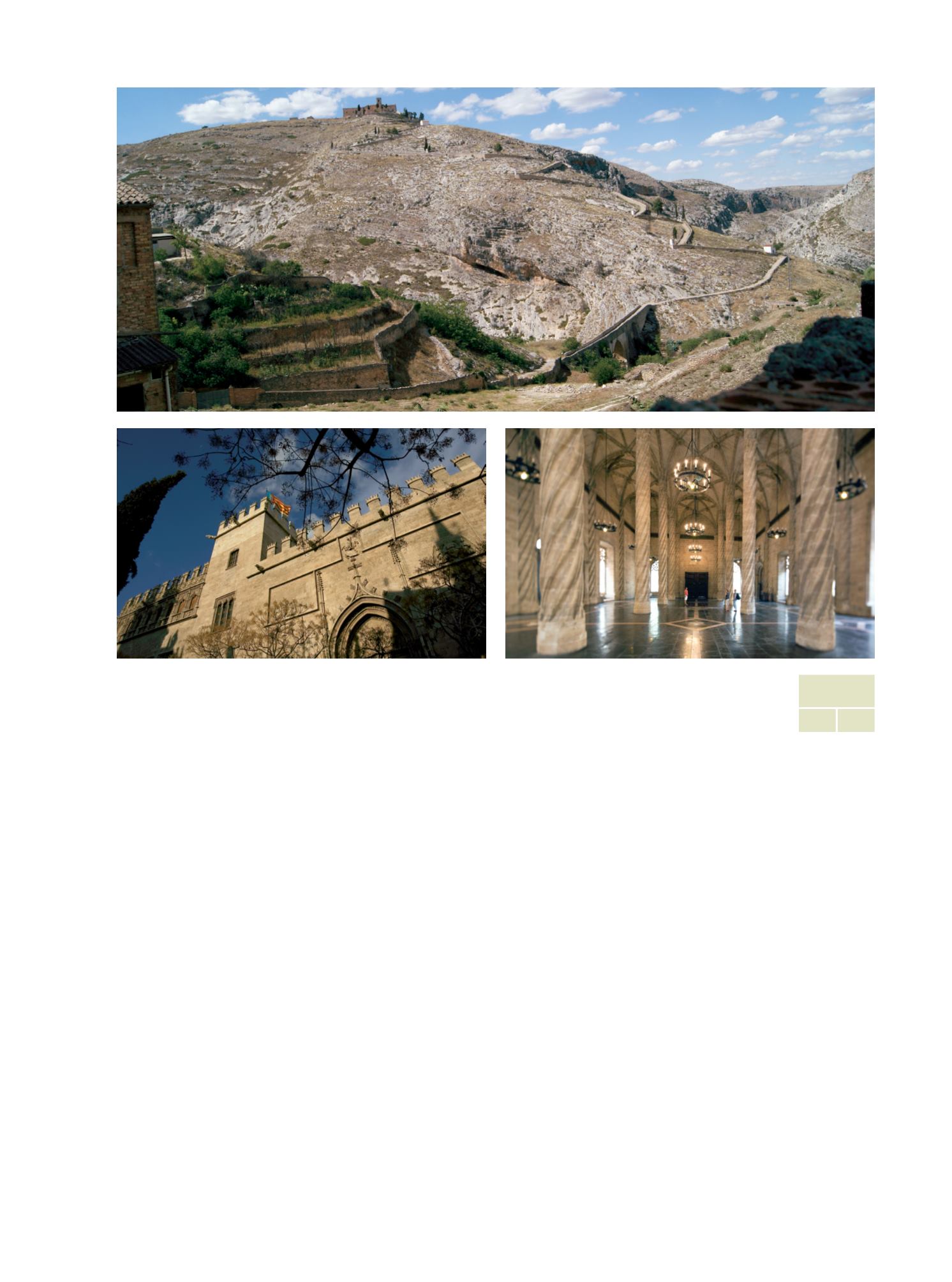
29. Mezquita y
cuevas. /
Mosque
andcaves.
30. Lonja de
Valencia. /
Marketof
Valencia.
31. Lonja de la seda.
/
SilkMarket.


