·amura·
39
1
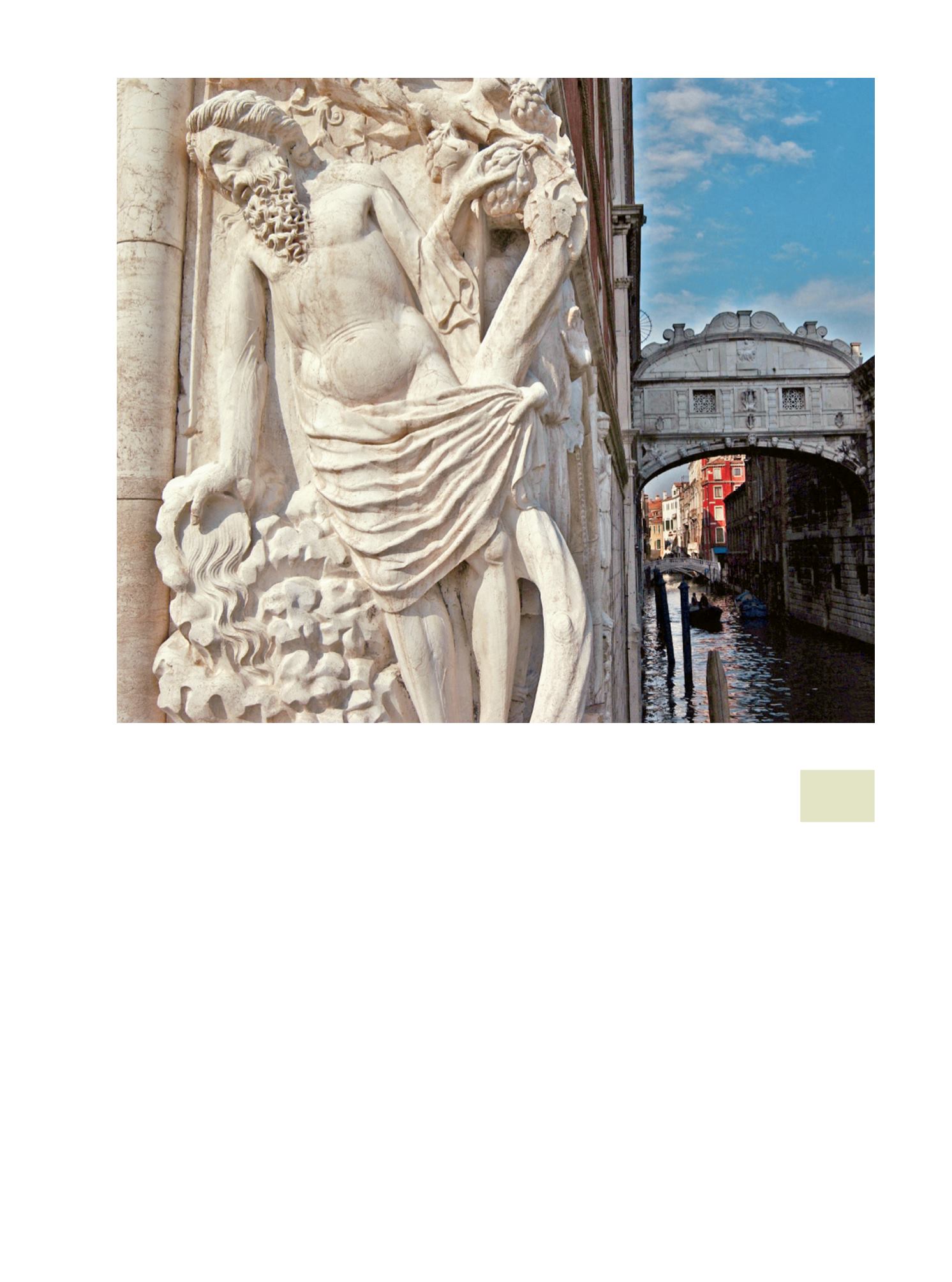
1. La arquitectura
de la ciudad experi-
mentó un periodo
especialmente
brillante durante
el Renacimiento./
The architecture
of the city went
through an
especially bright
period during the
Renaissance.
La arquitectura de la ciudad experimentó un perio-
do especialmente brillante durante el Renacimiento,
con arquitectos como Mauro Codussi, Pietro Lombar-
do, y Jacopo Sansovino, que construyó la monumental
Biblioteca Marciana.
En Venecia nació Antonio Vivaldi, una de las cimas
de la música barroca. Otro de los grandes de la música,
Richard Wagner, falleció en la ciudad el 13 de febrero
de 1883. Igualmente el gran compositor Igor Stravin-
ski aunque murió en Nueva York, quiso que sus restos
fueran llevados a Venecia y reposan hoy en el cemen-
terio de “San Michelle”.
Todo ello es reflejo de la importancia de la ciudad
no sólo como lugar de origen de muchos genios, sino
sobre todo como inagotable fuente de inspiración a
lo largo de la historia de poetas, músicos, pintores y
todo género de artistas.
Desde 1893 alberga la Bienal de Venecia, que in-
cluye el festival de cine anual “Mostra Internazionale
d’Arte Cinematográfica”.
En Venecia se encuentra uno de los coliseos de
ópera más famosos del mundo, el teatro de La Fenice,
que literalmente significa “Ave Fénix” y que hace ho-
nor a su nombre, habiendo surgido de sus cenizas tras
repetidos incendios, el último a finales del siglo XX.
Fue lugar de estreno de algunas de las más famosas
piezas del repertorio, entre ellas varias de Verdi.
The architecture of the city went through an espe-
ciallybrightperiodduringtheRenaissance,withsuchar-
chitects likeMauroCodussi, PietroLombardo, and Jacopo
Sansovino,whobuiltthemonumentalMarcianLibrary.
Antonio Vivaldi was born in Venice, one of the
summits of baroque music. Another great one’s of
the music, Richard Wagner, passed away in the city
on February 13 of 1883. Likewise the great composer
Igor Stravinski even though he died in New York,
wanted his remains to be taken to Venice and today
rest in the “Saint Michelle” cemetery.
All of this is a reflection of the importance of the
city not only as a place of origin for many geniuses,
but most of all as an endless source of inspiration
throughout the history of poets, musicians, pain-
ters and all type of artists.
Since 1983 it holds the Bienal of Venice, which
includes the annual film festival “Mostra Internazi-
onale d’Arte Cinematográfica”.
One of the most famous opera houses in the
world is found in Venice, the La Fenice Theater,
which literallymeans the “Fenix bird” and honors its
name, having emerged from the ashes after several
fires at the end of the XX century. It was a place of
premiers for some of the most famous pieces of the
repertuar, among them several of Verdi.


