·amura·
36
compás int •
compass int
1
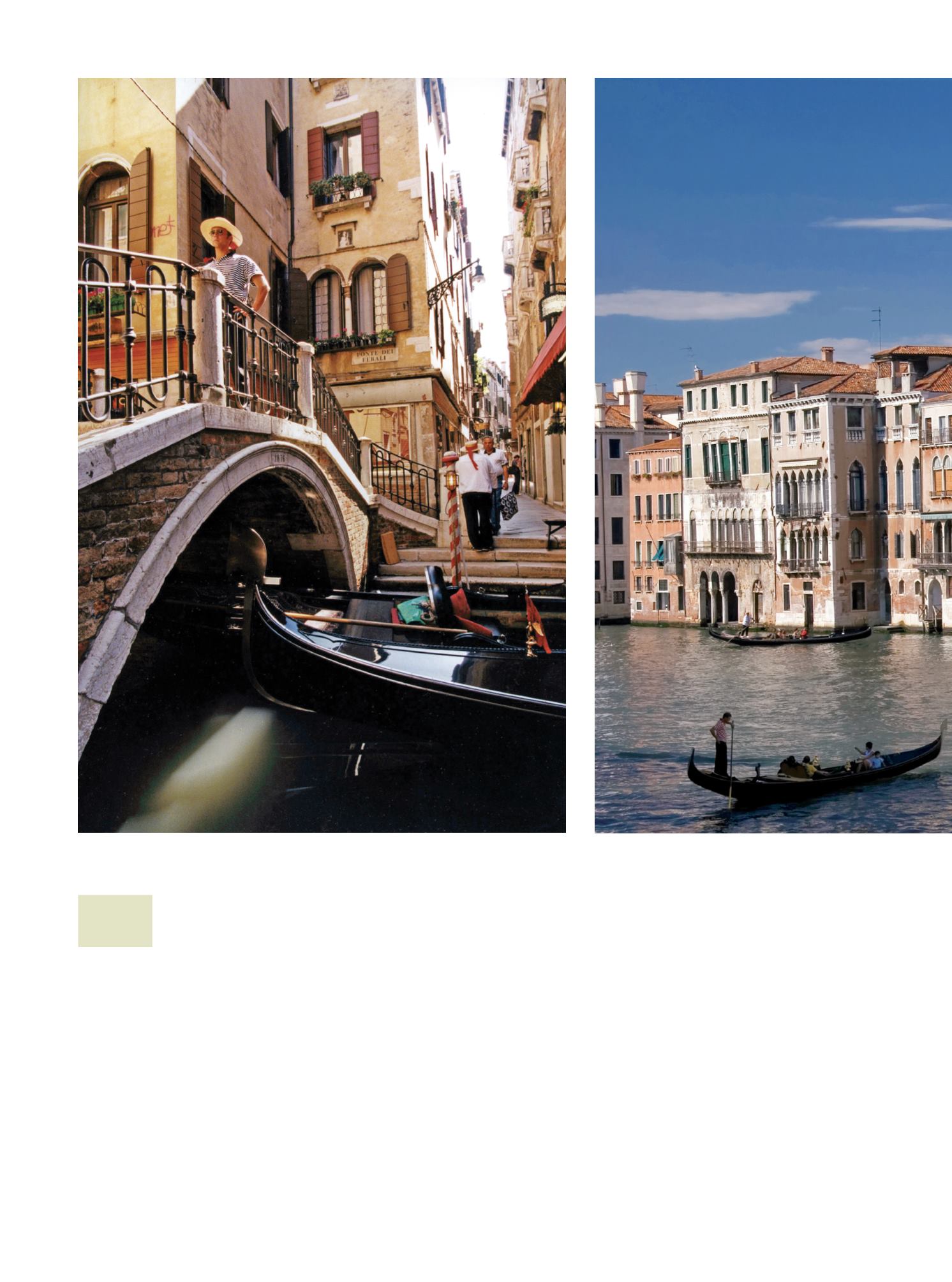
1. Venecia está
compuesta por
120 pequeñas islas
unidas entre sí por
unos 400 puentes./
Venice is made by
120 small islands
united among
themselves by 400
bridges.
L
a Ciudad de los Canales es la capital de la región
de Véneto. Está situada sobre un conjunto de
islas que se extiende en una laguna homónima
pantanosa en el Mar Adriático, entre las desemboca-
duras de los ríos Po (sur), y Piave (norte), en el nor-
deste de Italia.
Venecia está compuesta por 120 pequeñas islas
unidas entre sí por unos 400 puentes. Se llega a Vene-
cia desde tierra firme por el Puente de la Libertad que
accede al Piazzale de Roma.
El principal núcleo urbano cristalizó en la zona
de Rivo Alto (Rialto), a donde en los inicios del Siglo
IX fue trasladado desde Alejandría el cuerpo de San
Marcos el evangelista (al que se simboliza por el león
alado), que sería patrono de la urbe.
En siglos posteriores, Venecia crece económica,
política y demográficamente. Su vocación comercial
se mostró en la época de las cruzadas y en sus rela-
ciones con Constantinopla.
T
he City of the Canals is the capital of the
Veneto region. It is located among a group of
islands that reach a homonymous swampy
lagoon in the Adriatic Sea, among the mouth of
the rivers Po (south), and Piave (north), and at the
northeast of Italy.
Venice is made by 120 small islands united
among themselves by 400 bridges. You can reach
Venice by land through the Liberty Bridge which
gives access to the Piazzale of Rome.
The main urban core solidified in the Rivo Alto
(Rialto) area, where at the beginning of the IX cen-
tury the body of Saint Mark the evangelist (which
symbolizes the winged lion) and who would be pa-
tron of the city, was moved fromAlexandria.
In the following centuries, Venice grew econo-
mically, politically and demographically. Its com-
mercial vocation was shown during the age of the
crusades and in the relations with Constantinople.


