·amura·
124
conservancy •
conservación
Manos a la obra
Una de las primeras acciones del gobierno fue la
creación de un Sistema Nacional de Unidades de Con-
servación, es decir, áreas protegidas. Estas zonas ya
existían en varios lugares del mundo y datan de 1872.
Finalmente, Brasil entró en el grupo de países que pro-
tegen bosques, selvas; regiones enteras, pero tam-
bién se han preocupado por la gente, sus costumbres,
su comida y las tradiciones ancestrales que conviven
con su tan bien impuesta modernidad.
Así, se dividieron las unidades de conservación en dos
grandes categorías: de uso sostenible y de protección in-
tegral. Las razones para crear estos espacios son para pre-
servar los lugares sagrados en los que no está permitida
la presencia del hombre, y la conservación de reservas na-
turales. Vaya, que lo que se busca es que la explotación no
sobrepase la realidad, es decir, constantemente renovar lo
que se utilizó. El objetivo es que los recursos sigan exis-
tiendo pero que las comunidades también puedan apro-
vechar lo que ofrece la naturaleza: equilibrio.
Así es como actualmente se vive Brasil. De he-
cho, la iniciativa lanzada por el gobierno y el Progra-
ma de las Naciones Unidas para el Medio Ambiente
lanzaron un programa llamado Pasaporte Verde, con
la finalidad de influir en el comportamiento de los
turistas, por un respeto y conservación, además de
incentivar la compra y contratación de productos y
servicios sostenibles.
Getting down to work
One of the government’s first actions was the
creation of the National Conservation Unit System,
meaning, protected areas. These zones already ex-
isted in several places of the world and date back to
1872. Finally, Brazil entered the group of countries
that protect woods, rainforests; entire regions, but
also has been concerned for the people, its cos-
tumes, the gastronomy and ancestral traditions,
which convey so well with its imposed modernity.
They divided the conservation units in two
great categories: of sustainable use and of integral
protection. The reasons to create these spaces are to
preserve the sacred grounds in which human pres-
ence is not allowed and the conservation of natural
reserves. The intention is for the exploitation not
to surpass reality, meaning, constantly renewing
what has been used. The target is for the resources
to continue existing, but the communities may also
take advantage of what nature offers: balance.
This is the way Brazil lives today. In fact, the
government and the initiative by the United Na-
tions Program for the Environment launched
an arrangement called Green Passport, with the
finality of have an influence in the behavior of
tourists, for respect and conservation, besides
the incentive of purchase and hiring of products
and sustainable services.
1.
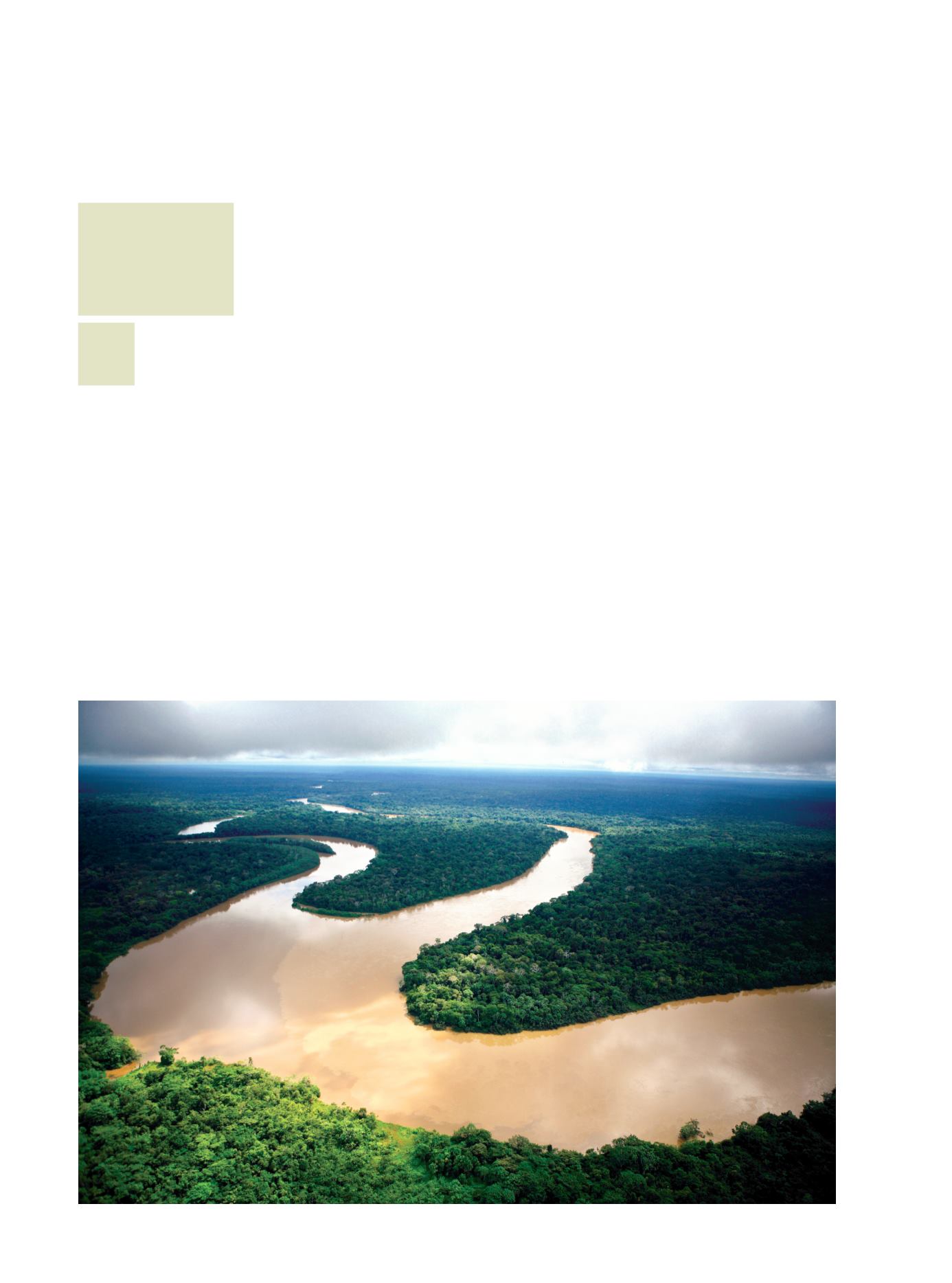
1.Amazonas. /
Amazon.
2. Paraty Brasil /
Paraty Brazil.
2.


