·amura·
114
los conquistadores •
the conquerors
Cabe aclarar que los museos cuyos “patronatos
de amigos” aportan donativos descontados de sus im-
puestos que sirven, además de pagar los sueldos de los
compradores, para adquirir y ampliar las colecciones, es-
tarían encantados de suspender sus compras si el INAH
expusiera el acervo que actualmente guarda en bodegas
y lo pusiera mediante la figura de comodato a disposi-
ción de los museos que celosamente amplían actual-
mente sus acervos a partir de las subastas de las casas
famosas como Barakat –con oficinas en Asia, Europa y
América atendidas por el padre y el hijo–quienpublica en
su página de internet piezas que, mientras en el mercado
local tienen precios de unos pocos cientos de dólares, en
cantidades abstractas, por decir de menos, van por arri-
ba de varios cientos de miles de euros. Lo cual hace pen-
sar alentadoramente que si el 90% de las adquisiciones
son realizadas por instituciones que alientan la escalada
de precios, ésta se suspenderá en el momento en que a
dichas instituciones ya no les costará tener las piezas
en exhibición.
Por otro lado, el mercado interno no sólo se origina
en el saqueomoderno o actual, sino también a partir de
colecciones hechas en el pasado por europeos ya falle-
cidos, como Lorenzo Boturini, quienes apreciaron enor-
memente la calidad y valor artístico de las piezas de las
diferentes culturas ancestrales mesoamericanas.
Así, el material comenzó a salir desde tiempos
muy lejanos; sólo por mencionar algunas coleccio-
nes se pueden resaltar las de Ernest Ericsson o la de
Michel y David Rockefeller; la de Dumbarton Oaks, en
Washington, o la del Museo de Arte de Chicago; la de
Denver, Colorado, o la de Michael C. Carlos Museum,
en la universidad de Atlanta, Georgia; la del Instituto
Smithsoniano, o la sala mesoamericana del British
Museum, entre otras tantas en Boston, Houston, Aus-
tin Texas, Israel, etcétera.
It’s important to clarify that museums with
“boards of friends” give donations that subtract-
ed from their taxes help amongst other things to
pay for the salaries of the buyer to acquire and
broaden their collections would be delighted to
suspend their buying if INAH would exhibit the
collection that rests today in storehouses and
would borrow it to museums that would otherwise
enlarge their collections in auction houses such
as Barakat which with offices in Asia, Europe and
America tended to by father and son published on
their website pieces that while in the local market
have prices of a few hundred dollars in abstract
amounts to say the least above many hundreds of
thousands of Euros. Which makes it encouraging
to think that if 90 percent of the acquisitions are
made by institutions that encourage the elevation
of prices of the piece, it would be suspended at the
moment, if it no longer costs for institutions to
have them on display.
On the other hand, the internal market not only
originates from modern or current looting, but from
collections made in the past, by Europeans that have
passedawayandthat likeLorenzoBoturini appreciated
enormously the quality and artistic value of the pieces
fromdifferent ancientMesoamericancultures.
This is how thematerial began to exit since distant
times only tomention a fewcollectionswe can empha-
size the one from Ernest Ericsson or Michel and David
Rockefeller or the one from Dumbarton Oaks in Wash-
ingtonortheoneattheMuseumofArtofChicagoorthe
one fromDenver Colorado or the one from the Michael
C. Carlos Museum at the University of Atlanta Georgia
or the one fromthe SmithsonianMuseumor theMeso-
americanHall at the BritishMuseumor somany others
inBoston, Houston, AustinTexas, Israel etc.
13
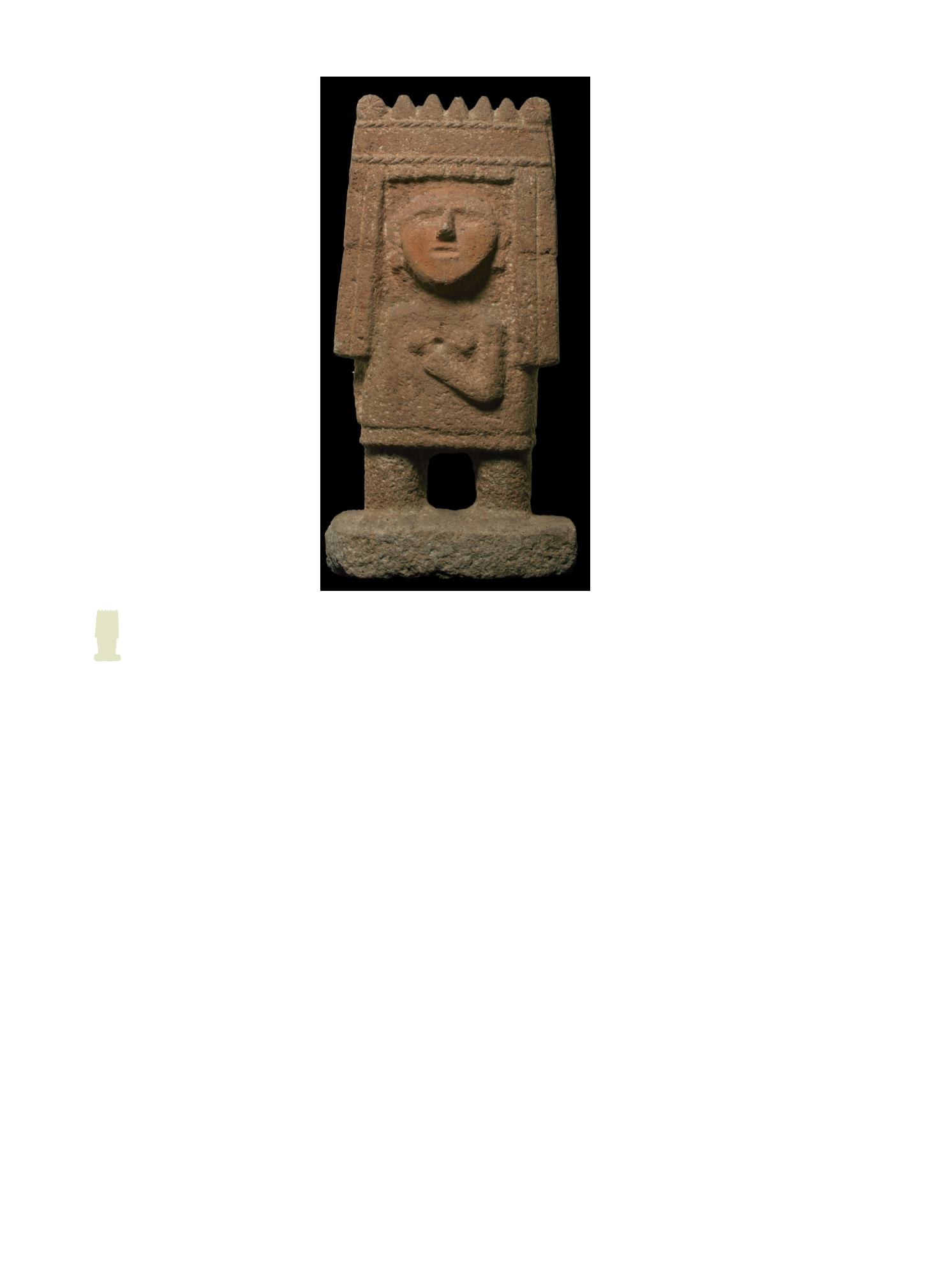
13.Chicomecóatl
Representaciónen
basaltode ladiosa
delmaíz.Segúnel
CódiceVaticanoA, los
días7serpientese
considerabanbuenos
parasembrarmaíz.
PeriodoPosclásico
Tardío(1325d.C.-
1521d.C.).
Altura:53.3cm.
(20.98 in).
Fondo:13.5cm.
(5.31 in).
Ancho:28.8cm.
(11.33 in).
Reg. INAH:1441-212
/
Chicomecóatl
Basaltrepresentation
ofthegoddessof
corn.Accordingtothe
VaticanCodexA,the
7thsnakefeltgood
toplantcorn.Data
fromtheLatePost
Classicperiod(1325d.
C.-1521d.C.).
Height:53.3cm.
(20.98 in).
Depth:13.5cm.
(5.31 in).
Width:28.8cm.
(11.33 in).


