44
·amura·
compás int •
compass int
and ancient buildings. When the preparation of
our sailboat in the Club Real Mediterráneo of
Málaga was ready we took the time to explore and
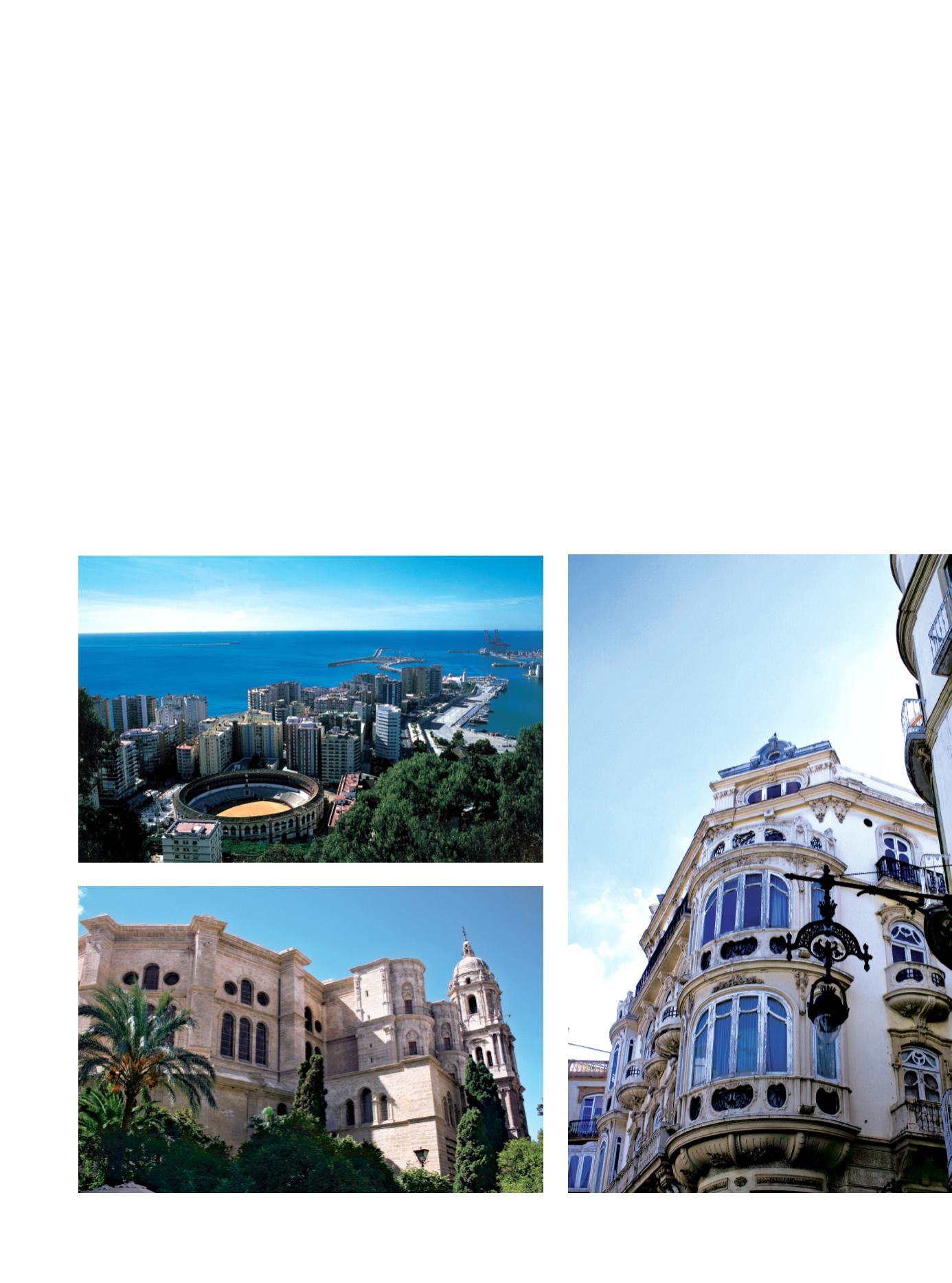
appreciate it. It is a grand city with a rich past.
In its streets you can observe elegant buildings
that date from the end of the 19th century, when
Málaga became renowned for its production of a
sweet wine that became all the rage. However,
there are also more ancient buildings, which date
to the time of the Moors and that feature a Moorish
style, as well as the birthplace of Picasso, where
the painter spent most of his childhood. Also out-
standing is the Picasso Museum, which is located
in the Renaissance style palace of the Counts of
Buenavista.
The cathedral, built in 1528 on the foundations
of the great Aljaba Mosque, presents a curious
blend of styles and its high vaults divided in
Arabian style domes, its beautiful chorus and
carved stone that adorn the doors, are impressive.
One of the two towers, known as “La Manquita”,
was never finished, thus maintaining an asym-
metrical appearance that further emphasizes its
importance.
There are gardens that adorn the city and the
churches are elegant, like the one dedicated to
Santiago, of Gothic-Mudéjar style and that shelters
velero estuvo lista, en el Real Club Mediterráneo
de Málaga, nos dimos tiempo de visitarla y apre-
ciarla. Es una gran ciudad, con un rico pasado.
En sus callejones se observan edificios ele-
gantes que datan de finales del sigo XIX, cuando
Málaga se volvió famosa por la producción de un
vino dulce que se puso de moda. Pero también
hay edificios más antiguos, que datan del tiempo
de los árabes, con su estilo morisco; así como la
casa natal de Picasso, donde el pintor pasó gran
parte de su infancia. Además está el Museo
Picasso, que se encuentra en el palacio renacen-
tista de los condes de Buenavista.
La catedral, construida en 1528 sobre las
bases de la gran mezquita Aljama, presenta una
curiosa mezcla de estilos, y es impresionante con
sus altas bóvedas divididas en cúpulas al estilo
árabe, su hermoso coro y sus tallados en piedra
que adornan las puertas. Una de las dos torres,
llamada “La Manquita”, nunca se terminó, con lo
cual guarda un aire asimétrico que hace mayor su
grandeza.
Hay jardines que adornan la ciudad; las igle-
sias son elegantes, como la de Santiago, de estilo
gótico mudéjar, que alberga la imagen del Cristo
de Medinaceli, de gran fervor en la ciudad, y tam-
bién el santuario de la Virgen de la Victoria, patro-


