·amura·
60
compás int • int compass
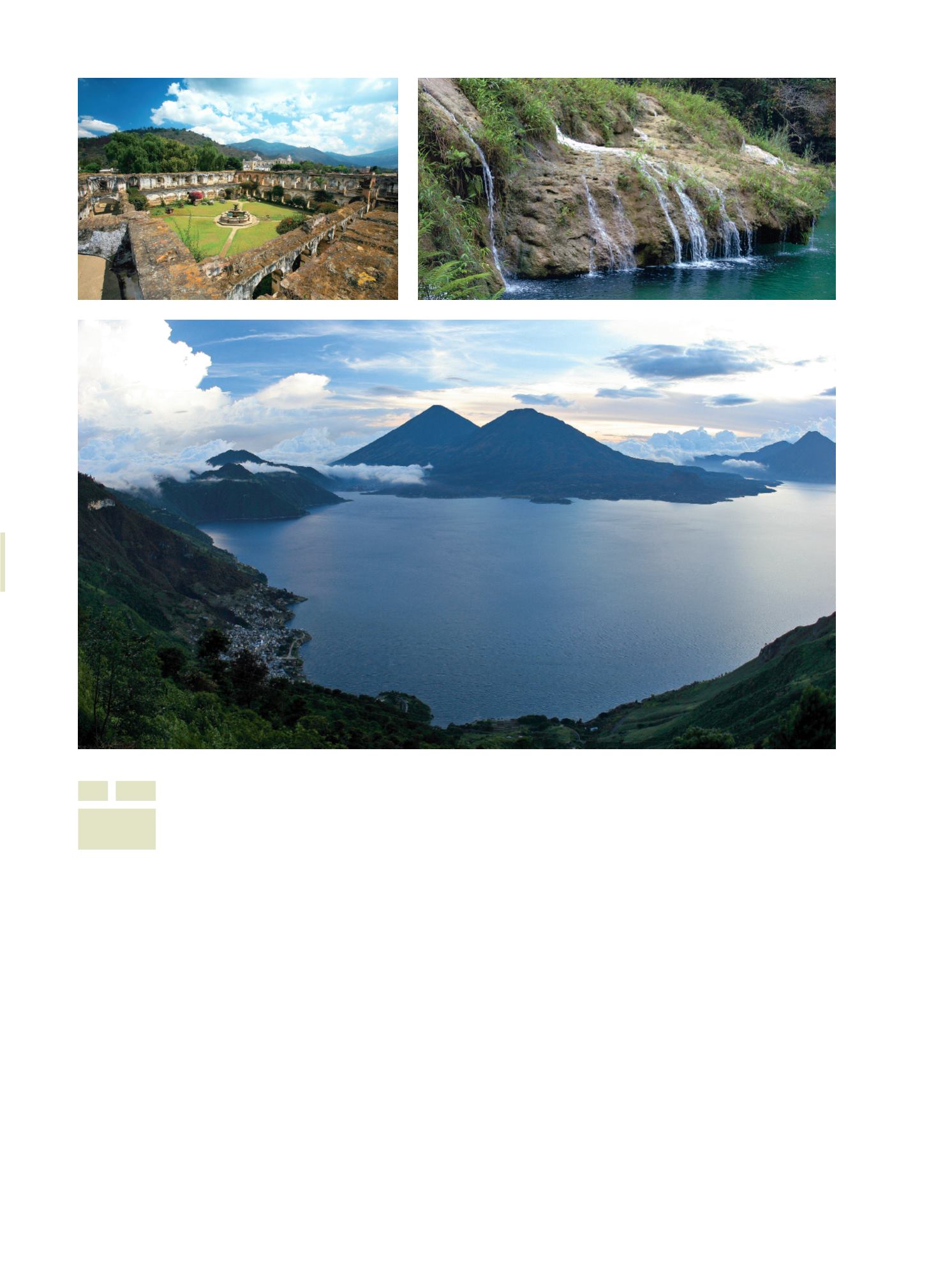
1. Convento Santa
Clara, Antigua
Guatemala.
2. Semuc Champey,
Lanquín, Alta
Verapaz
3. Atitlán.
de los terremotos y la fachada actual de estilo barroco
y renacentista data de 1670. Caminamos entonces por
la calle del Arco adornada por suntuosas casas. El arco
amarillo fue construido para comunicar las dos partes
del monasterio de Santa Catalina y le da un toque ínti-
mo a la calle. Más adelante alcanzamos el convento de
La Merced con su fabulosa fachada barroca en blanco
y amarillo enmarcada por dos torres-campanarios de
baja proporción y adornadas de esculturas, frente a
la cruz de piedra del atrio. El monasterio era inmen-
so y todavía podemos apreciar su patio principal con
la fuente más colosal de la ciudad acicalada por unos
querubines.
Caminando por esas hermosas calles, descubri-
mos las elegantes casas coloniales, visitamos los
monumentos religiosos más destacados: templo de
Santa Teresa del cual solo queda la fachada; el con-
vento de los Capuchinos con su imponente iglesia y
su claustro; el templo del Carmen cuya ruina luce su
fachada barroca ricamente decorada; el templo de San
Pedro. Alcanzamos el pequeño parque adornado por
el tanque La Unión que eran unos antiguos lavaderos
cubiertos por esos hermosos arcos que se reflejan to-
davía en el agua. En frente se encuentra el monasterio
de Santa Clara que era de dos niveles con una iglesia
monumental y todavía, dentro de esas ruinas, pudi-
the Plaza, an imposing building the size of a city
block and who has seen its fare share of disasters.
It was built in 1670. We walked afterwards through
the Arco street, dotted with luxurious houses. The
yellow arc found in Don Rodrigo’s house was built
to bridge the gap between the two parts of the San-
ta Catalina monastery and it provides the street
with an intimate touch. From there, we reached La
Merced convent, with its fabulous white and yel-
low baroque façade framed by two bell-towers and
adorned with sculptures, in front of the atriums
cross. The monastery was immense and one can
still appreciate the principal patio that is home to
the largest fountain in the city, flanked by cherubs.
Walking through these streets, we discovered
elegant colonial houses, and we visited the most
prominent religious monuments: the temple of Saint
Theresa which only the façade remains, the Capuchin
convent with its imposing church andmonastery, the
templeofCarmenwhoseruinsfeaturearichlyadorned
baroque façade and the temple of Saint Peter. We then
reached the small park adorned by the La Union tem-
ple, whichwas one of the ancient bathing houses cov-
ered with beautiful arch’s that reflect on the water. In
front of it one finds the Santa Clara monastery, a two-
level church that was, and is, monumental, even in
1
3
2


