compás int •
compass int
54
·amura·
B
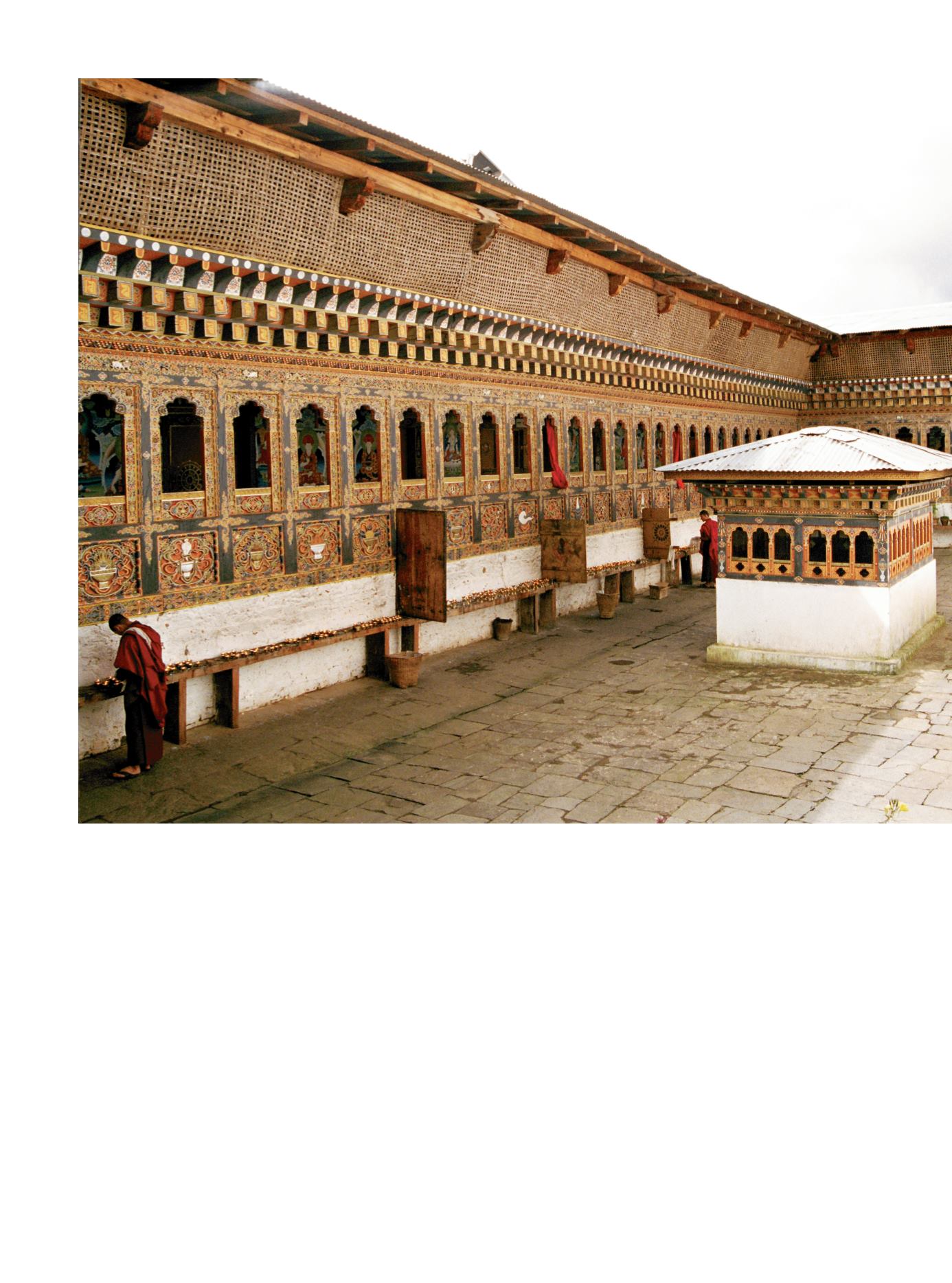
után es un país diferente a todos. Rodeado
por China al norte y por India al sur y es reco-
nocido como el último Reino budista del
Himalaya. Bután vivió bajo una aislamiento auto-
impuesto durante todo el siglo XX y fue solo hasta
los 70 que abrió sus fronteras a un puñado de visi-
tantes. El Bután de hoy continúa como el de antes,
libre de influencia global y entregado a sus tradi-
ciones culturales, religiosas y sociales. En el mundo
moderno representa una maravillosa introspección
a la vida de los Himalayas, por esta razón es visto
como uno de los grandes destinos de viaje en el
mundo actual.
Geográficamente Bután desciende desde lo
alto de los Alpes, que exceden los 7 mil metros de
altura, hasta las planicies del sur a tan solo 300
metros a nivel del mar. Esta dramática caída hace
que los ríos corran de norte a sur y al pasar de los
años han forjado profundos valles y barrancos que
son separados por aristas y altos pasos de monta-
B
hutan is a country quite unlike any other.
Landlocked in the north by China, and in
the south by India, it is widely recognised
as the last surviving Buddhist Himalayan
Kingdom. Bhutan has lived in self-imposed iso-
lation for much of the 20th century and it was
only in the 1970’s that it opened its borders to a
handful of visitors. Today, life in Bhutan conti-
nues as before, free of global influence and true
to its cultural, religious and social traditions. In a
modern world, it provides a wonderful insight
into life in the Himalayas as it was. For this rea-
son it is viewed as one of the last great travel des-
tinations in the world today.
Geographically, Bhutan descends from the
highest Alps, which exceed 7,000 metres in
height to the plains in the south that are an alti-
tude of just 300 metres. Through this dramatic
fall, the rivers run from north to south and over
the years have forged deep valleys and ravines


