·amura·
54
compás int • int compass
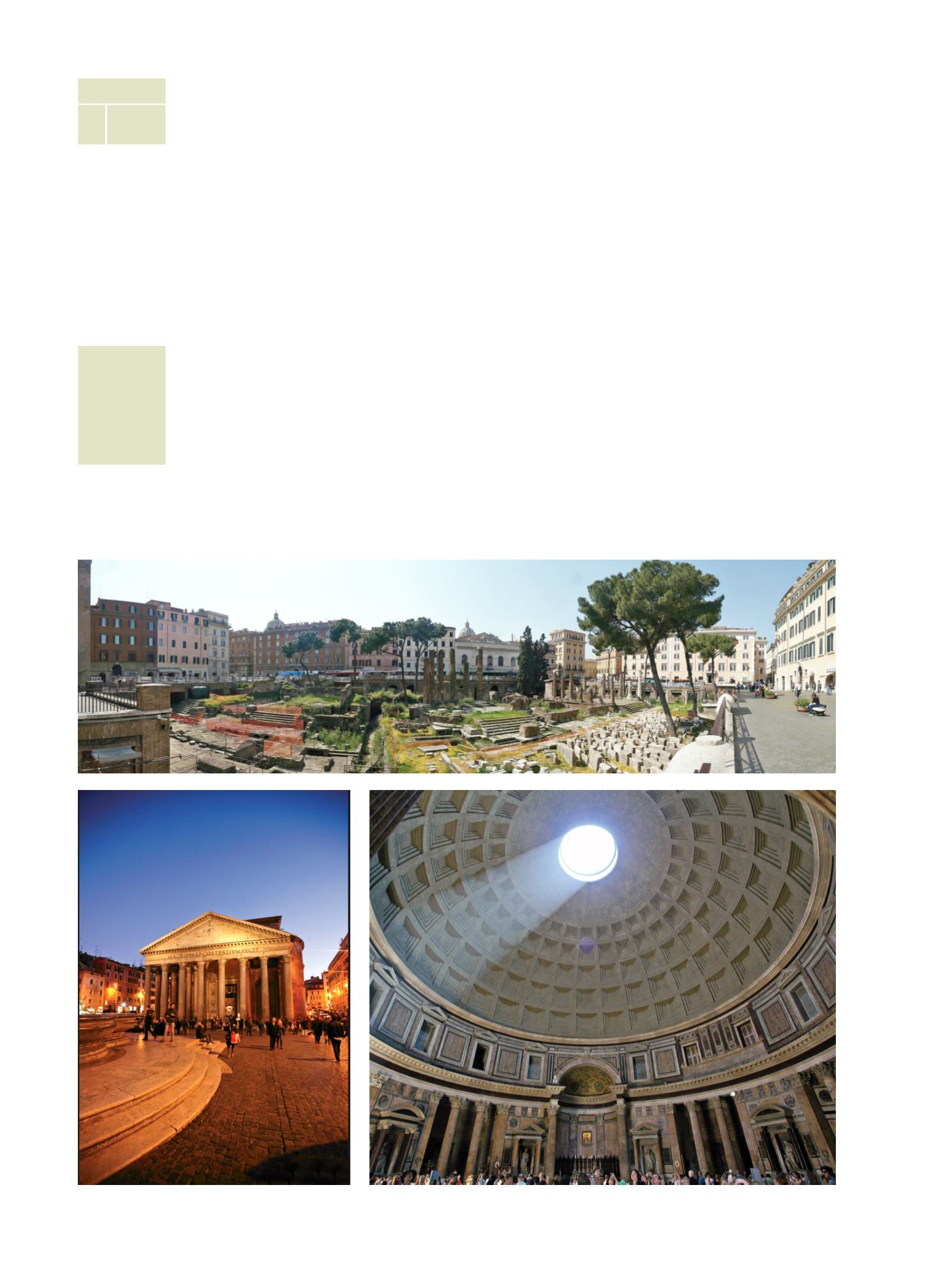
Largo di Torre Argentina
En el centro de esta plaza se encuentran cuatro an-
tiguos templos romanos republicanos y las ruinas
del teatro de Pompeyo. Es conocida también por-
que actualmente el recinto donde se encuentran
estas ruinas es un refugio de gatos.
Un paseo por:
-Panteón de Agripa. Es uno de los grandes edi-
ficios de la antigüedad y que se ha mantenido en
pie desde hace más de 2,000 años. En la época ro-
mana fue construido como templo dedicado a to-
dos los dioses, por lo que su forma es circular para
dar igual importancia a cada uno de ellos. En el año
608 d. C. el edificio fue convertido en iglesia.
-Iglesia de San Ignacio de Loyola. Es una igle-
sia jesuita construida en 1626 en memoria de san
Ignacio de Loyola. Aunque el estilo de la iglesia
es barroco, se dice que, por los votos de pobre-
za de la orden jesuita, que en lugar de construir
la cúpula como en el diseño original, el artis-
ta Andrea Pozzo pintó el domo y la nave central
en perspectiva.
26. Largo di Torre Argentina,
descubierta en 1929,
guarda algunos restos
de templos romanos que
datan del siglo III a.C.
/LargodiTorreArgentina,
discoveredin1929,keeps
someremainsofRoman
templesdatingfromthe
thirdcenturyBC.
27 y 28 . El Panteón de
Agripa, conocido por los
romanos como La Rotonda.
/ThePantheon,knownto
theRomansasLaRotonda.
29. Colisseo Romano
interior
/Interior
Roman Colisseum.
Largo di Torre Argentina
In the center of this square one can find four
ancient Republican Roman temples and the ru-
ins of the Theater of Pompey. It is also known
because the compound where these ruins are lo-
cated is a place of refuge for cats.
A walk through:
-Pantheon of Agrippa. Is one of the largest
buildings of the ancient times and that still
stands since more than 2000 years ago. In the
Roman times it was built devoted to all the gods,
because of this, its shape is circular to give same
importance to each one of them. In the year 608
AC the building was transformed into a church.
-Church of St. Ignatius of Loyola. Is a Jesuit
Church built in 1626 in memory of St. Ignatius
of Loyola. Even though the style of the church
is Baroque, it is said that because of the poverty
vows of the Jesuit Order, instead of building the
dome as in the original design, they made the
artist, Andrea Pozzo, to paint the dome and the
main nave in perspective.
29
26
27 28


