·amura·
49
compás int • int compass
El monte Celio alberga una de las iglesias más anti-
guas de Roma: la archibasílica de San Juan de Letrán. Fue
construida inicialmente a principios del siglo VI durante
el imperio de Constantino, el primer emperador romano
en aceptar e introducir la religión católica. La apariencia
de esta basílica sufrió varias modificaciones a través
del tiempo, por haber sido destruida dos veces por
incendios, no obstante, su forma permanece intacta.
Su fachada y aspecto actual fueron diseñados por el
arquitecto barroco Francesco Borromini. Ésta es tam-
bién una de las cuatro basílicas Papales, en las cuales
el pontífice máximo de la iglesia católica funge como
obispo y oficia la misa.
Por último, el monte Aventino cierra el círculo de
colinas que rodea el Centro Histórico de Roma. Aun-
que es principalmente residencial, se encuentran
algunos lugares panorámicos o de interés histórico.
Desde él se puede apreciar una de las mejores vistas
de la cúpula de San Pedro, del Circo Máximo y de las
ruinas en el monte Palatino.
En la cima se encuentra el Jardín de los Naranjos,
desde donde la cúpula de San Pedro crea uno de los
efectos ópticos más extraños, entre más lejos estés
del balcón, más cerca se ve la cúpula y viceversa.
A unos cuantos metros de este parque también se
encuentra la plaza diseñada por el famoso arquitecto
Giovan Battista Piranesi en 1765 para la orden de los
Caballeros de Malta. Desde la puerta principal de esta
sede, se puede ver a través del ojo de la cerradura la
cúpula de San Pedro al fondo de una arcada de plantas
que enmarcan la espectacular vista.
The Caelian mount holds one of the most an-
cient churches of Rome: The Archbasilica of St. John
Lateran. It was initially built at the beginnings of
the VI century during the Empire of Constantine,
the first Roman Emperor to accept and introduce
the Catholic religion. The appearance of this basili-
ca has suffered several modifications through time,
since it was destroyed two times by fires, nonethe-
less its form remains intact. Its facade and current
appearance were designed by the Baroque architect
Francesco Borromini. This is also one of the four Pa-
pal Basilicas, inwhich themaximumpontifex of the
Catholic Church performs as Bishop and says mass.
And last, the Aventine mount closes the circle
of hills that surrounds the Historical Center of
Rome. Althoughmainly residential, there are some
panoramic places or of historical interest. From it
one can see one of the best views of the St. Peter’s
Dome, of the Circus Maximus and of the ruins in
the Palatine mount.
AtthetopislocatedtheGardenoftheOranges,from
where the St. Peter’sDome creates one of the strangest
optical effects, the further away from the balcony, the
closer the dome seems to be andvice versa.
A few meters away from this park is also lo-
cated the piazza designed by the famous architect
Giovan Battista Piranesi in 1765 for the order of
the Knights of Malta. From the main gate of this
place, the Dome of St. Peter can be seen through its
keyhole with a plant arcade as a backdrop for the
spectacular view.
16
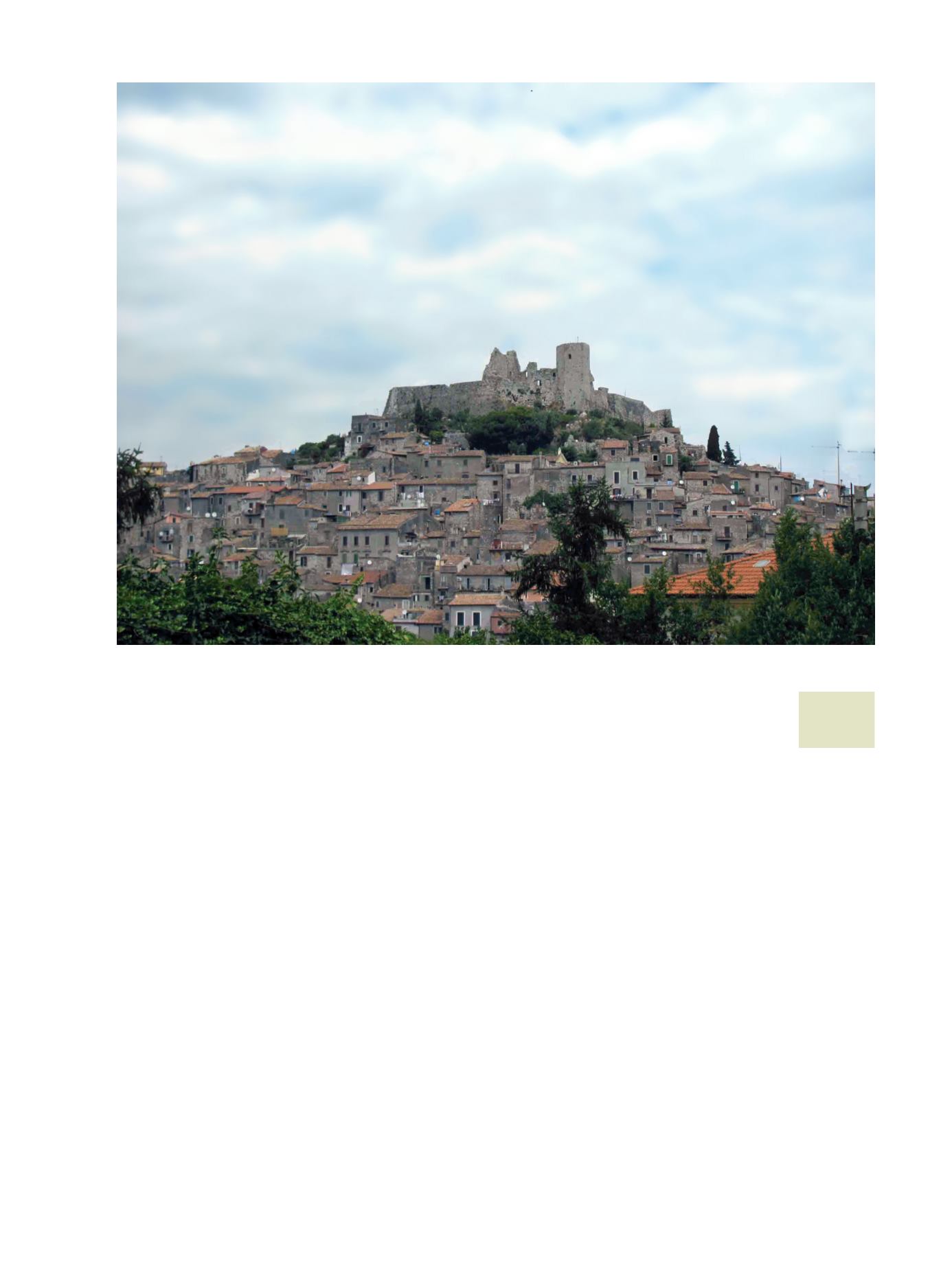
16. Monte Celio en
Roma.
/Monte Celio
in Rome.


