ventanas al mundo •
windows to the world
·amura·
67
Estambul
Istanbul
Pekín
Beijing
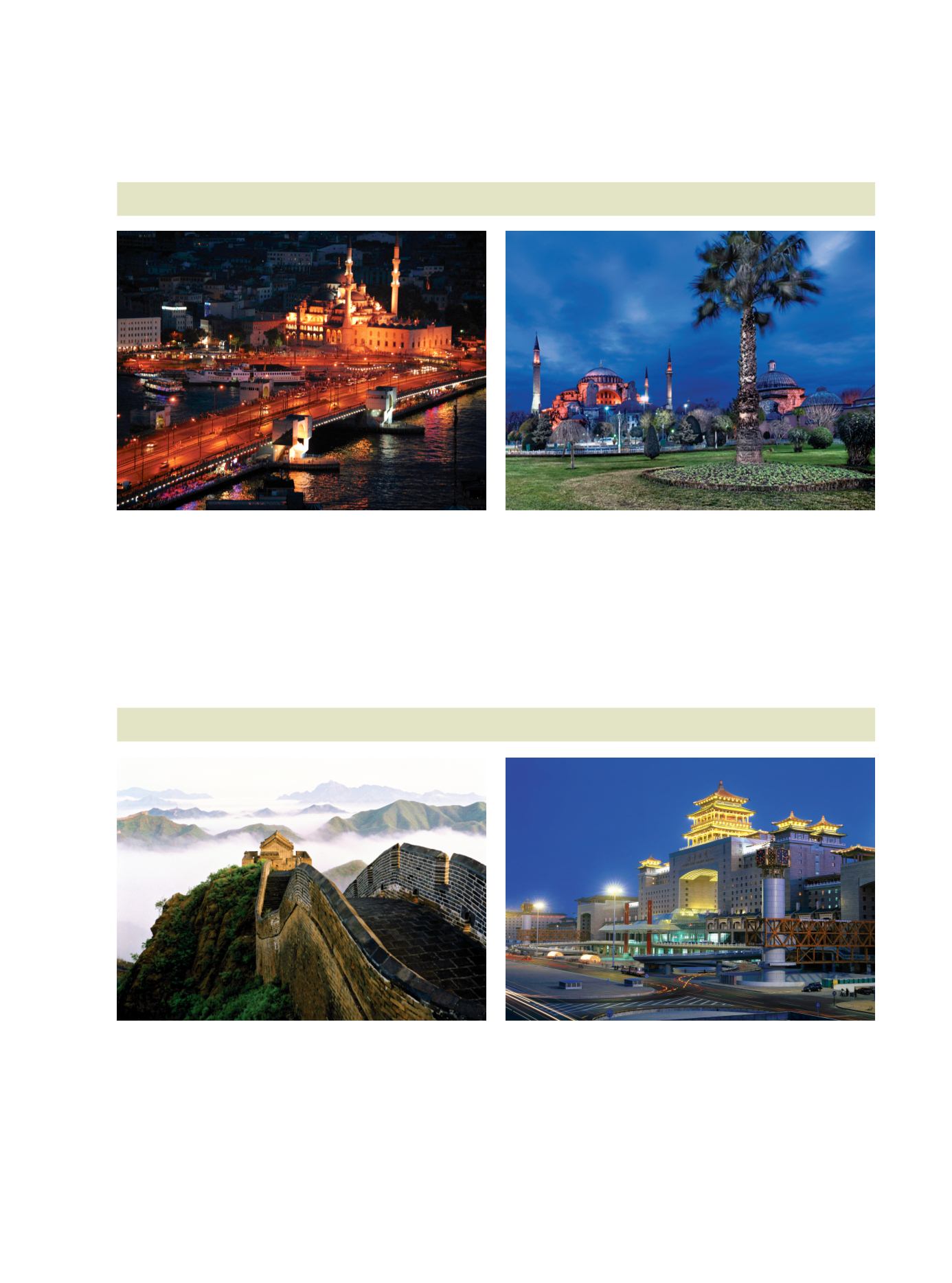
Estambul, originalmente llamada Bizancio y luego Constantinopla, es la ciudad más grande de Turquía y la tercera de Europa. Fue capital del Imperio Romano de
Oriente, del ImperioOtomanoyde laRepública de Turquía. Se le considera entre lasmás bellas ciudades del planeta y cuna de la civilización. El PalacioTopkapi, resi-
denciade los sultanespor casi 400años, consisteencientosdeaposentos ricamenteadornados. LaBasílicadeSantaSofía, hoymezquitaHagiaSophia, inicialmen-
te fue iglesia y ahora esmezquita; contiene elementos de varios estilos arquitectónicos. El Gran Bazar ha sido visitado a lo largo de siglos pormillones en busca de
lamercancíamás sorprendente ymaravillosa. LaMezquita Azul, principal atractivo turístico de Estambul, es todo un icono del lugar. /
Istanbul, originallynamed
ByzantiumandlaterConstantinople,isthelargestcityinTurkeyandthethirdlargestinEurope.IthasbeenthecapitaloftheEasternRomanEmpire,theOt-
tomanEmpireandtheRepublicofTurkey.Itisconsideredamongthemostbeautifulcitiesintheworldandalsothecradleofcivilization.TheTopkapiPalace
has been the residence of the sultans for almost 400 years, and it consists of hundreds of richly decorated rooms. The Basilica of St. Sophia, Hagia Sophia
mosque today, was initially a church and now, is amosque. It contains elements of several architectural styles. The Grand Bazaar has been visited for cen-
turies bymillions insearchof themost amazingandwonderfulmerchandise. TheBlueMosque, Istanbul’smain tourist attraction, is an iconof theworld.
Pekín resulta impresionante por el contraste entre lo ancestral y lomoderno; lo uno se pierde en el pasado, lo otro anticipa el futuro. El viajero occidental, incapaz
de descifrar la historia que narra su arquitectura antigua, siente además que Pekín ya rebasó a su lugar de origen en la carrera hacia el porvenir. Su cultura creó el
Templo del Cielo, la Ciudad Prohibida, laGranMuralla y el Palacio de Verano, entremuchas otras reliquias, y hoy edificamaravillas como la VillaOlímpica, el edificio
Zaha Hadid, el Distrito Financiero, el Gran Teatro Nacional o la nueva Torre de la CCTV. En cuanto a hoteles de lujo, The Regent Beijing pone acento en la calidez
mientras el Sofitel Wanda Beijing lo hace en lamajestuosidad y The Opposite House en la decoración futurista. /
Beijing is impressivebecauseof the contrast
betweentheancient andthemodern, asone is lost inthepast, theother anticipates the future. Thewesterntraveler, unable todecipher the story told
by its ancient architecture, feels that Beijinghasnowovertaken its original place in the race for the future. This culture created theTempleofHeaven,
theForbiddenCity, theGreatWall andtheSummerPalace, amongother relics, andtoday, it buildswonders like theOlympicVillage, thebuildingZaha
Hadid, theFinancial District, theNational GrandTheater or thenewCCTVTower. As for luxuryhotels, TheRegent Beijingemphasizesonwarmthwhile
the SofitelWandaBeijingdoes in themajesty; andTheOppositeHouse in futuristic decor.


