·amura·
58
compás int • int compass
LAS CIUDADES TIBETANAS
El Tíbet se divide en cuatro grandes regiones,
cientos de pequeños poblados y tres ciudades princi-
pales: Gyantse, Shingatse y Lhasa. A partir del siglo VI,
la ciudad de Lhasa ha fungido como centro de la activi-
dad religiosa, política y comercial del país. Se localiza a
la vera del río Kyichu, a 3,660 m sobre el nivel del mar.
Tiene una población de aproximadamente 400,000
habitantes, de los cuales únicamente una quinta par-
te son tibetanos. Estos viven, junto con un grupo de
musulmanes, en la vieja sección de la ciudad, mientras
que la recientemente inmigrada población china habi-
ta complejos multifamiliares en el nuevo Lhasa.
Por cientos de años comerciantes, nómadas y pe-
regrinos han llegado a esta ciudad para canjear sus
bienes o visitar los lugares santos. Actualmente mu-
chos viajeros siguen visitando Lhasa, convirtiéndola
en una ciudad activa y bulliciosa.
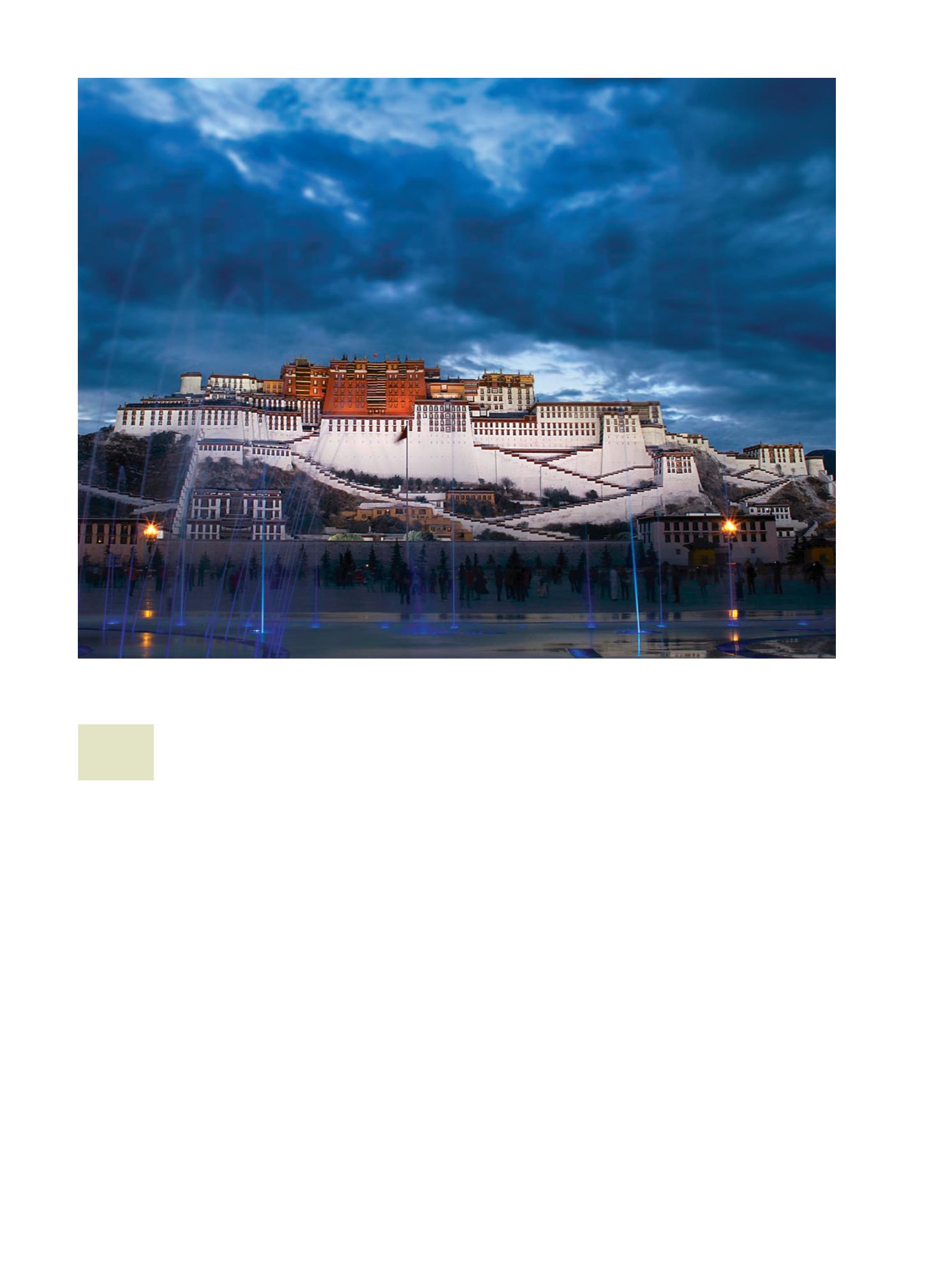
TIBETAN CITIES
Tibet is divided into four regions, hundreds of
small towns and three major cities, Gyantse, and
Lhasa Shingatse. Beginning in the sixth century,
the city of Lhasa (IMAGE) has been the center of the
county’s religious, political and commercial activi-
ties. It is located on the banks of the river Kyichu,
at 3.660 meters above sea level. It has a popula-
tion of approximately 400,000, of which only one
fifth are Tibetans who live together with a group
of Muslims, in the old section of the city, while the
newly immigrated Chinese population lives in the
new multifamily Lhasa.
For centuries traders, travelers and pilgrims
have come to this city to exchange their goods or
to visit the holy places. Currently many travelers
continue to visit Lhasa, making it an active and
bustling city.
25. El Palacio de
Potala, el Monasterio
más importante de
Lhasa y del Tíbet.
/
Potala Palace, the
most important
Monastery in Lhasa
and in Tibet.
25


