·amura·
58
compás int • int compass
drales e iglesias fascinantes, monasterios fastuosos,
caminando por el sendero tras la ambición de acercarse
a un santo. Euskadi, La Rioja y Galicia nos habían dado
el placer de la meditación, los ágapes y la belleza natu-
ral. Habíamos recorrido un Camino que llena de misti-
cismo y enriquece el alma. Caminante hacia Santiago,
no te preocupes, si tus pies duelen o si tu alma vaga
en coche, siempre llegarás a un punto donde tu men-
te definirá un nuevo futuro tras horas de meditación y
reflexiones. Muchos peregrinos terminan su recorrido
en el cabo Finisterre, o Fisterra como lo llaman los ga-
llegos, el cabo más occidental de la península Ibérica, el
fin del mundo, y donde, según la tradición, queman su
ropa para empezar una nueva vida, una existencia des-
pués del Camino a Santiago de Compostela, un mundo
que nos lleva a disfrutar las bellezas del arte sacro y nos
llena de leyendas e historias santas.
O
drals and fascinating churches, sumptuous mon-
asteries, walking through an ocean of ambition
to get close to a saint. Euskadi, La Rioja and Gali-
cia had given us the pleasure of meditation, the
agapes, and the natural beauty. We had crossed a
Route that fills one with mysticism and enriches
the soul. Traveller walking to Santiago, worry no,
if your feet hurt or if your soul travels by car, you
will always reach a point where your mind will de-
fine a new future in three hours of meditation and
reflection. Many a pilgrim completes his journey
in the cape of Finisterre, o Fisterra as the locals
call it, the westernmost cape of the Iberian pen-
insula, the end of the world where, after existing
on the Route to Santiago de Compostela, a world
that leads us to enjoy the beauties of sacred art
and fills us with legends and holy tales.
O
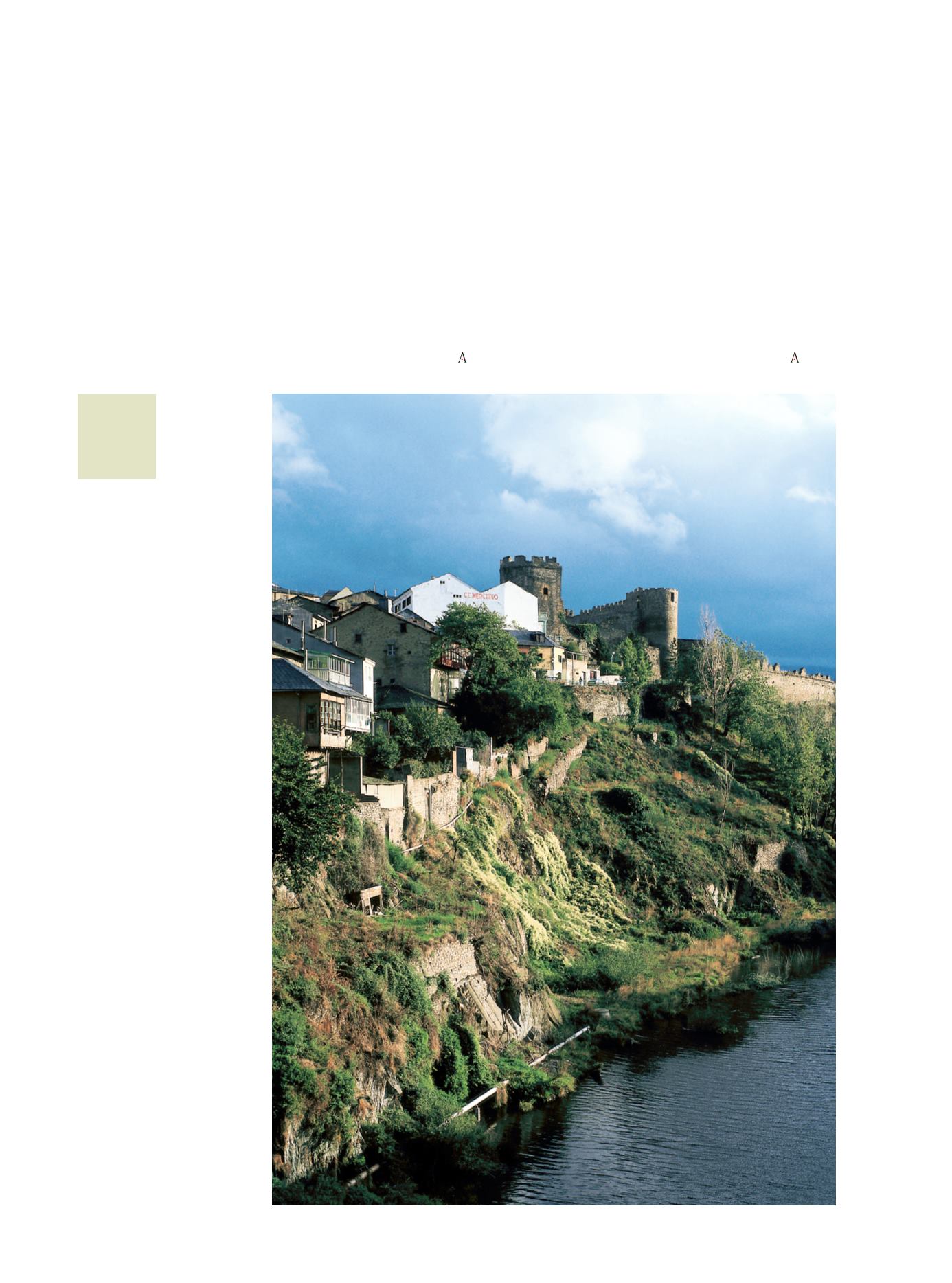
1. Ponferrada León.
1


