·amura·
53
compás int • int compass
de Santa María la Real, una talla románica hermosa que
según dicen, observó el milagro inclinando su cabeza.
Frente al altar, nos quedamos asombrados admirando
el cáliz y la patena, protagonistas del milagro, y el reli-
cario que guarda la carne y la sangre.
El camino encontraba un significado más mítico
a pesar de recorrerlo en coche, por las curvas de las
montañas, cruzando los peregrinos a bicicleta o a
pie. Alcanzamos el inmenso Monasterio Benedictino
de Samos, cuyos pies se bañan en el río. Con sus 2
claustros y su iglesia monumental, es un lugar que
estalla con fe y misticismo a tal punto que, un conejo
hábil e inteligente nos acompañaba por los pasillos.
Es uno de los monasterios más antiguos de España,
empezado en el siglo VI, pero que muestra todos los
estilos por sus continuas remodelaciones, pasando
del prerrománico hasta el modernismo. En el pueblo
que cuenta con pocas casas, hallamos una pequeña
capilla prerrománica en medio del bosque, junto al
río atravesado por un puente de piedra.
Al llegar a Sarria, descubrimos la pequeña iglesia ro-
mánica y en Portomarín admiramos la iglesia fortaleza
de San Nicolás, que desmontaron porque iba a quedar
inundada por la presa y que hoy corona una colina, junto
al paso del Conde de la Maza y la Iglesia de San Pedro.
Una gran sorpresa nos esperaba en la iglesia ro-
mánica de Vilar de Donas, donde las pinturas murales
del siglo XIV adornan lo muros, las lápidas, entierros
de los Caballeros de Santiago, recuerdan los rostros de
antaño y el piso baja hacia el altar como un camino que
their meditations. The church vibrates with its
beautiful images of Saint Maria la Real. In front
of the altar, we became astounded admiring the
challis, who experienced the miracle and the relic
box that holds the flesh and blood.
The Route became possessed with an even grat-
er mystical significance even when travelling on it
by car, through the curves of the mountains, cross-
ing the pilgrims on bikes or on foot. We reached the
immense Benedictine Monastery of Samos, whose
feet are bathed in the river. With its two cloisters
and a monumental church, it is a place that calls
forward faith and mysticism to such a degree that
even an agile and intelligent rabbit accompanied
us as we walked through the hallways. This is one
of the most ancient monasteries in Spain, begun in
the 6th century, but one which shows all the archi-
tectural styles because of the renovations, passing
from the pre-Roman up to modern architecture. In
the town that features a small amount of homes, we
found a small chapel in the middle of forest, next to
a river with a bridge made of stones.
Whenwe reachedSarria, wediscovered the small
church and in Portomarin we admired the fortified
church of Saint Nicholas, which was dismounted
given that it was to be flooded by the damn, and
which today crown a hilltop, next to the Conde la
Maza and the Church of Saint Peter passage.
A great surprise awaited us at the church of Vi-
lar de Donas, where the first mural paintings of the
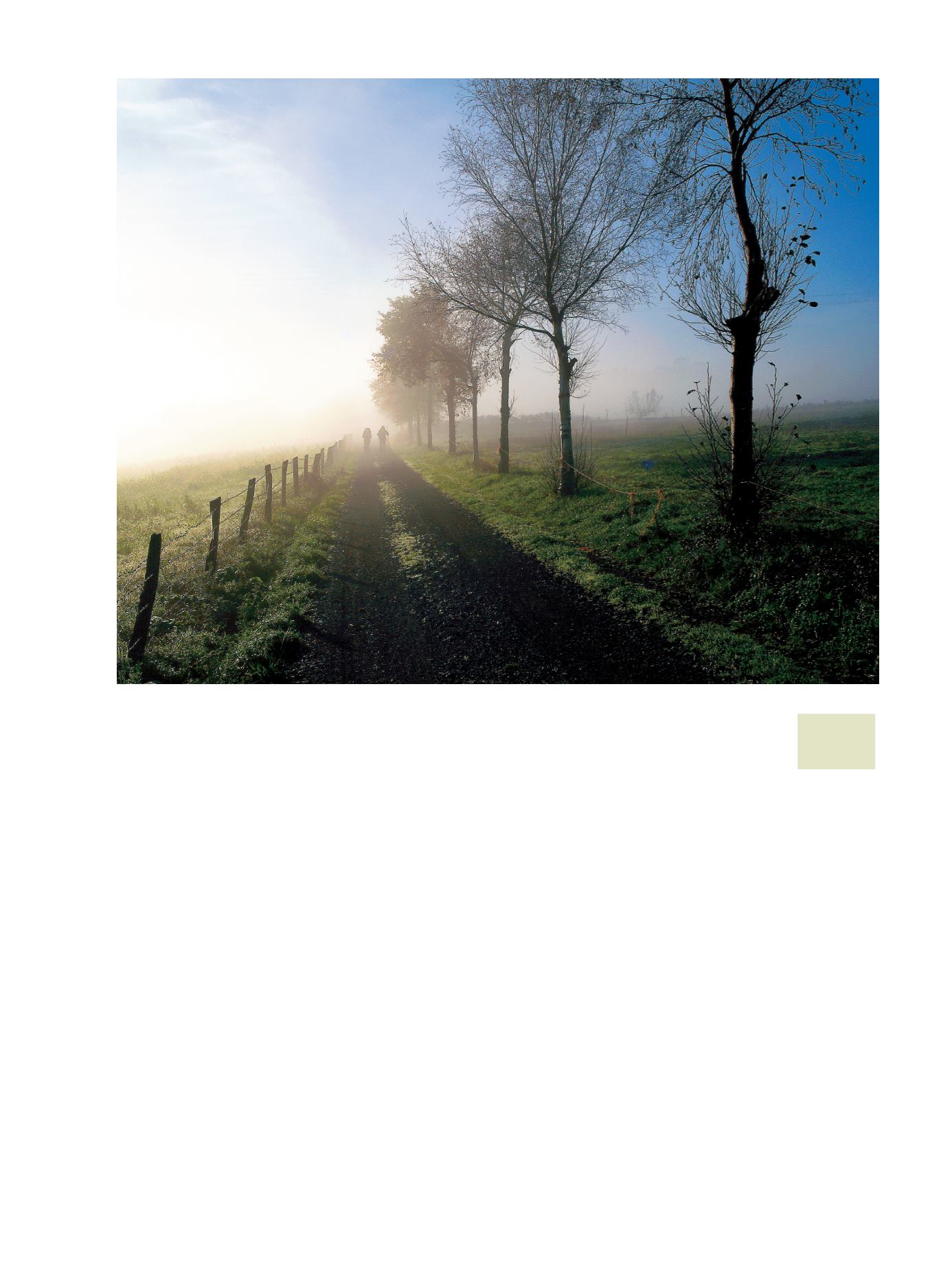
1. Arzúa Outono.
Fernando Bellas
1


