·amura·
43
compás int • int compass
1. Monasterio en
Lago di Lugano. /
Monastery at Lago
di Lugano.
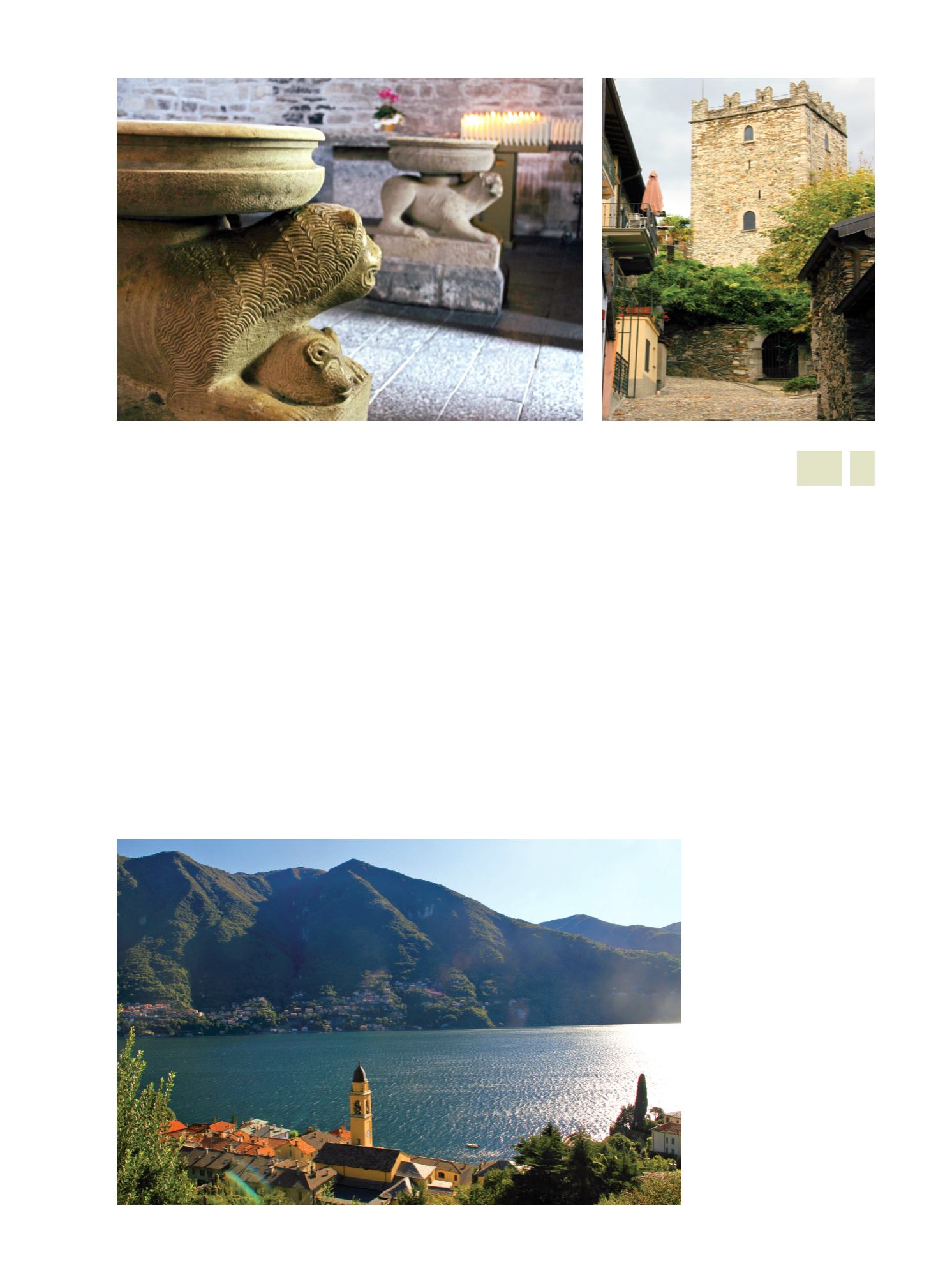
2. Lago di Como.
1
2
1740, la cual exhibe una cúpula barroca de Filippo Ju-
vara, su fachada gótica con soberbias esculturas, su
impresionante Porta Della Rana y su nave así como
los altares laterales lucen unos tapices únicos del si-
glo XVI y pinturas de Ferrari y Luini. Al lado del Duomo
encontramos el Broletto o Antiguo Ayuntamiento que
data del siglo XIII con su estilo románicogótico. Esa
hermosa ciudad fue fundada por los romanos en 196
a.C. y su muralla medieval fue construida por Barba-
rroja. Pasear entre sus callejones es penetrar un libro
de historia y arquitectura visitando sus iglesias, es-
pecialmente San Fedele del siglo XII y Sant’ Abbondio,
una joya de estilo románico lombardo del siglo XI.
Dejando Como seguimos hacia el norte por la ri-
bera del lago disfrutando de una vista soberbia de
los pueblos que acabamos de atravesar del otro lado.
Alumbrados por el sol otoñal cruzamos los pueblos de
Belvio, Torno, con sus iglesias y sobre todo la mag-
nífica Villa Pliniana construida en 1573 por el conde
Anguissola, gobernador de Como y donde se alojaron
Stendhal, Byron y Rossini. Los encantadores pueblos
se sucedían, cada uno más acogedor que el otro, en
in 1740, exhibits a Baroque dome of Filippo Juvara,
Gothic façade with superb sculptures, its impressive
Porta Della Rana and his nave and the side altars look
unique tapestries from the sixteenth century and
paintings by Ferrari and Luini. Next to the Duomo we
found the Broletto, or the Old Town Hall, dating from
the thirteenth century with romanesque-gothic
style. This beautiful city was founded by the Romans
in196 BC and itsmedieval wall was built by Barbaros-
sa. Walking among its streets is to enter a book of
history and architecture by visiting their churches,
especially San Fedele from the twelfth century, and
Sant ‘Abbondio, a jewel of Lombard Romanesque
style of the eleventh century.
Leaving Comowe continue north along the shore
of the lake enjoying a superb view of the people who
just go through the other side. Lighted by the au-
tumn sun crossed the peoples of Belvio, Torno, with
its churches and especially the magnificent Villa
Plinian built in 1573 by Count Anguissola, governor
of Como, andwhere Stendhal, ByronandRossini stay.
The charming villages succeeded one another, each


