·amura·
154
cinematografía •
Cinematography
“Battleship Potemkin” (1925) is, without a
doubt, one of the most iconic and representative
films of Russian cinema, and one of the most cher-
ished films of international cinema to this day.
Sergei Eisenstein used the montage technique to
represent the staircase of Odessa, one of the most
famous scenes in cinematography.
Another pioneer, and one of the most important
Russian filmmakers of the last few years, was Andrei
Tarkovsky, who busied himself in projecting futuristic
elements, greatly extended longshots, shots that in-
clude elements of the landscape and nature, as well as
ananxiety for technology; a clear exampleof this is “So-
laris” (1972), whith is sci-fi and futuristic vision of the
world,aswellas“Ivan’sChildhood”(1962),whichrelates
the storyof a childspyduring theSecondWorldWar.
One of the most quotable sayings from this
Russian artist is: [Directing] “No ‘sequence shot’
has a right to be repeated, as no two personalities
are the same. As soon as a ‘staging’ takes places it
becomes a sign, a cliché, a concept (as original as
it may seem); then all elements – characters, set-
ting, and ambience, becomes ischemic and false.”
El Acorazado Potemkin (1925) es sin lugar a
dudas la película más icónica y representativa del
cine ruso y una de las más importantes del cine
mundial hasta el día de hoy. Sergei Eiseinstein usó
la técnica de montaje para representar la escalina-
ta de Odessa; una de las escenas más famosas del
marco cinematográfico.
Otro pionero y uno de los directores rusos más im-
portantes de los últimos años fue Andrei Tarkovsky, el
cual se interesó en proyectar elementos futuristas, to-
mas extremadamente largas, que incluyen elementos
del campo y la naturaleza, además de su inquietud por
la tecnología, claro ejemplo de esto es Solaris (1972) con
su sci-fi y su visión futurista del mundo, junto con La In-
fancia de Iván (1962), la cual habla de un niño espía de la
Segunda Guerra Mundial.
Una de las frases más recordadas del artista ruso es:
[dirigiendo] Ningún “plano secuencia” tiene derecho a
ser repetido, al igual que no hay dos personalidades que
sean las mismas. Tan pronto como una “puesta en esce-
na” se convierte enuna señal, un cliché, un concepto (por
original que sea), entonces todo el asunto - personajes,
situación y psicología se vuelve esquemática y falsa.
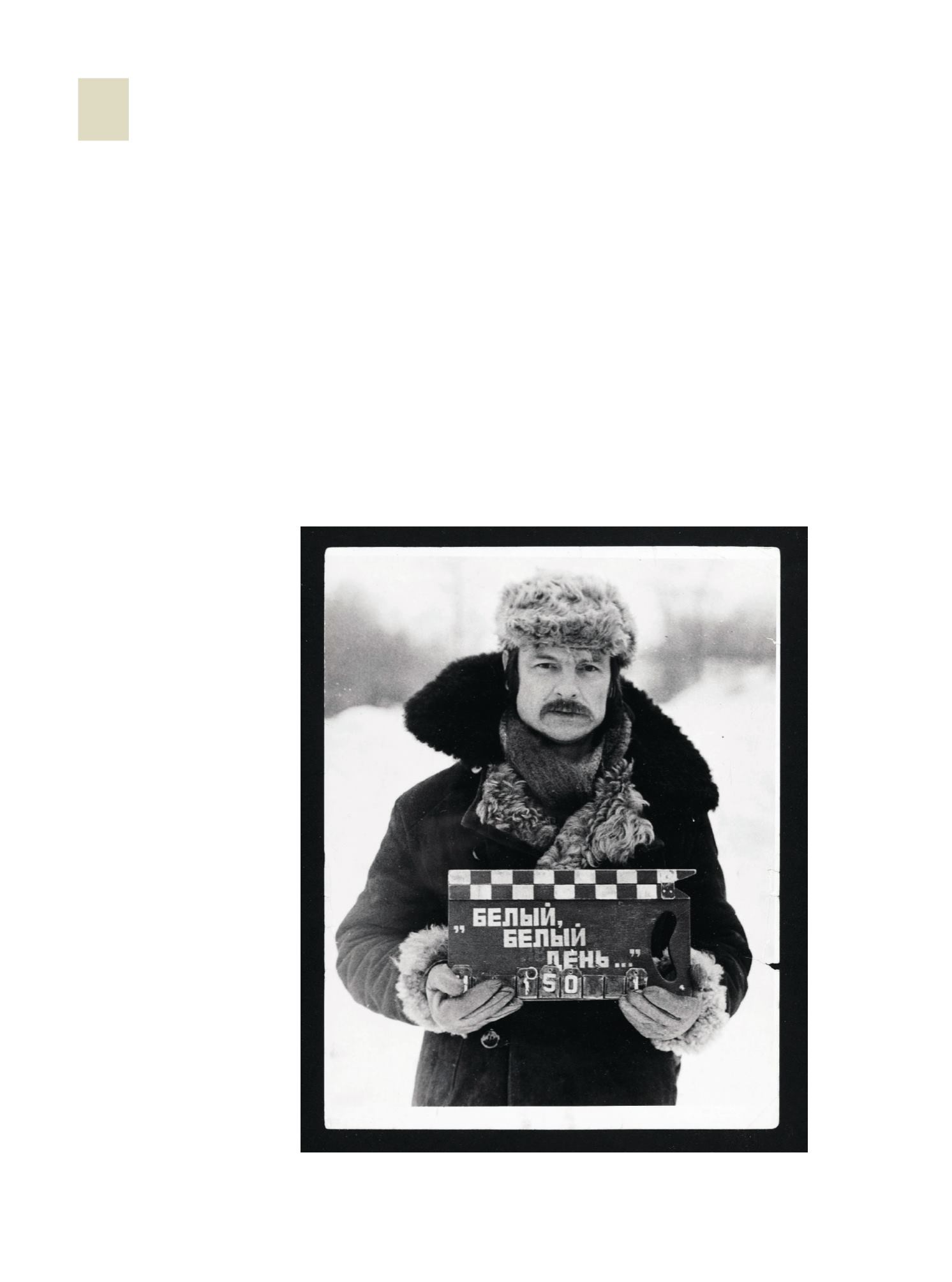
5. Andrei Tarkovsky
es considerado el
mejor director del
periodo de posguerra.
/
AndreiTarkovskyis
regardedasthebest
directorofpostwar
period.
5


