Hábitat y cosmogonía
La arquitectura fundacional eslava-vikinga cambió
hasta la relación con Constantinopla (990–1020), con
la conversión del príncipe Vladimir al cristianismo asu-
mió entonces la manera moderna, como se calificaba
a la cultura helenizante. Dejaron de construir sus tem-
plos de madera, importaron formas arquitectónicas
de Constantinopla (iglesia de la Koimesis o Santa So-
fía, ambos en Kiev). La emulación de Jaroslav (1019–
1054) y sus sucesores, con obras como Santa Sofía
de Novgorov, San Demetrio o el ícono de la Virgen de
Vladimir mantuvo vivo ese nexo entre lo bizantino
y lo eslavo. Consiste en una exposición de pinturas
murales, de caballete, esculturas y arquitecturas in-
dispensables de transitar para los viajeros lectores de
Amura, revelando obras de diversos temas, técnicas,
expresiones y épocas.
El acento cultural más amplio y unificador en la
cosmogonía que envuelve la teogonía fundacional
sobre el mundo, la vida y las cosas, es eslava-grie-
ga. La creencia religiosa principal es la cristiana-
ortodoxa (rito griego) y, en tamaño menor de fieles,
le sigue la creencia musulmana-islámica. Todo lo
religioso menguó durante el socialismo-real-esta-
linista y se reactivó tras el colapso de la burocracia
soviética, con las reformas de Mijail Gorbachov a
mediados de los ochenta del siglo XX.
Habitat and cosmogony
The
Slavic-Viking
foundational
architecture
changed until the relationshipwith Constantinople
(990-1020), with the conversion of Prince Vladimir
to Christianity took then the modern way, as de-
scribed to the Hellenic culture. They gave up build-
ing temples of wood, imported architectural forms
of Constantinople (Church of the Koimesis or Saint
Sophia, both in Kiev). The emulation of Jaroslav
(1019-1054) and his successors, with works such as
Saint Sophia of Novgorov, San Demetrio or the icon
of the Virgin of Vladimir kept alive this nexus be-
tween the Byzantine and the Slavic. It consists of
an exhibition of mural paintings, easel, sculptures
and architectures essential pass for travelers read-
ers Amura, revealing works of various topics, tech-
niques, expressions, and times.
Cultural accent wider and unifying in the cos-
mogony that surrounds the foundational theogony
on the world, life and things, is Slavic-Greek. The
main religious belief is the Christian-Orthodox
(Greek Rite) and in size of less than faithful, fol-
lowed by the Muslim-Islamic belief. All religious
waned during the Socialism - Royal - Stalinist and
was reactivated following the collapse of the Soviet
bureaucracy, with the reforms of Mijail Gorbachov
mid-eighties of the 20th century
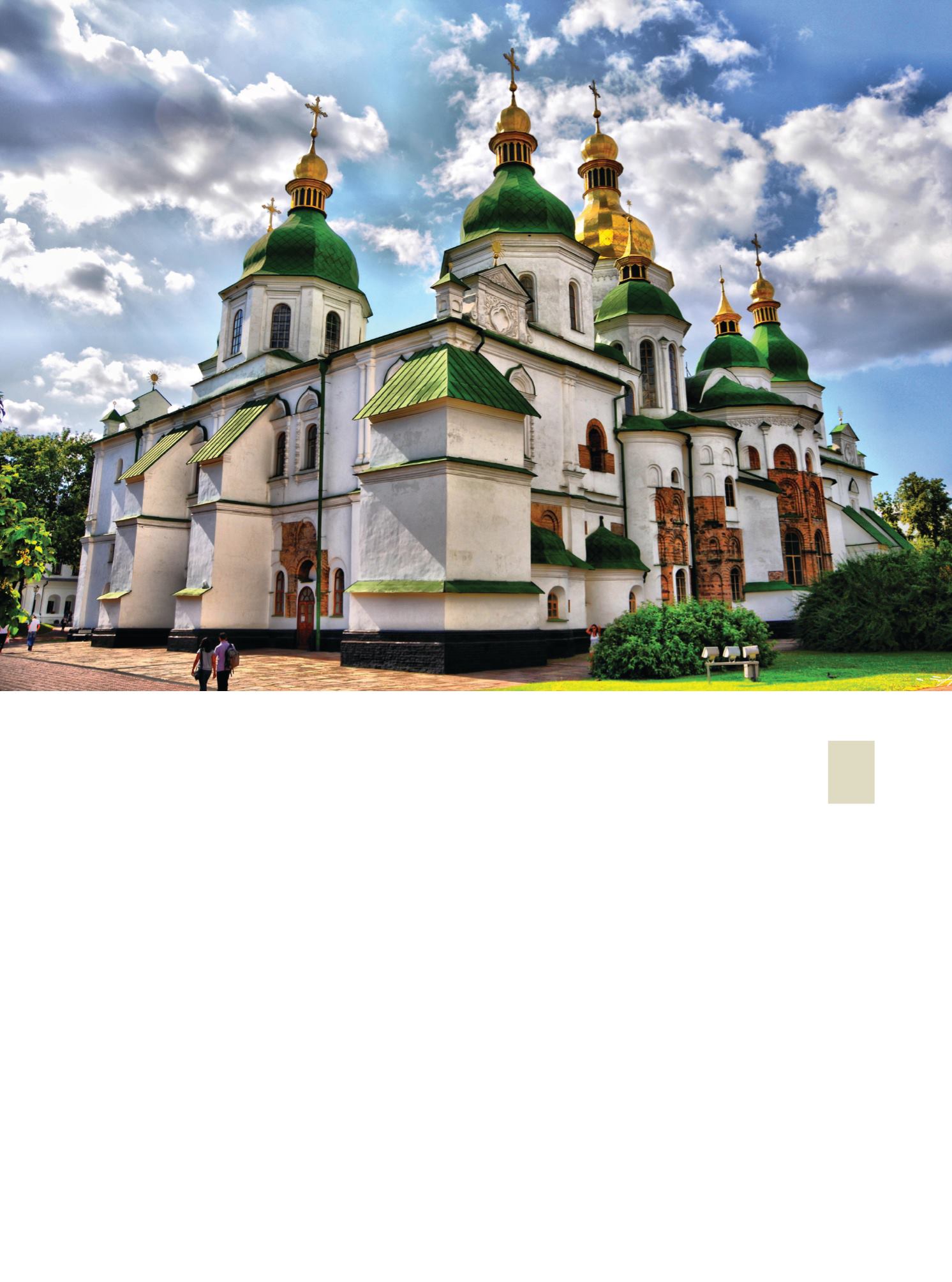
3. Santa Sofía de Kiev
fue inspiración de la
arquitectura Rusa. /
St. Sophia of Kiev
was inspiration
of the Russian
architecture.
3
·amura·
91
los conquistadores •
the conquerors


