En su reinado encargó a Piotr Urusov organizar la dan-
za y todo lo relativo al entretenimiento recreativo-cultu-
ral. Al principio, el teatro Bolshoi se organizó con tropas de
óperaydramaqueseproducíanconunamismacompañía,
integrada por todos los que tuvieran aptitudes sin impor-
tar condición social; esto habla de cómo se organiza la cul-
tura y cómo se la apropian los pueblos.
El edificio del teatro Bolshói abrió sus puertas en
1856, el día de la coronación del zar Alejandro II. Es de la
academia del Bolshói que se ven nacer grandes estrellas
del ballet comoNataliaOsipova y Polina Semionova. Esen-
cia de la belleza de la historia y la armonía de la música de
Tchaikovsky y JohannStrauss hijo. Así podríamos incluir al
ballet Moiséyev, danza folclórica de Rusia, que recién dis-
frutamos en Mérida, Yucatán, en el contexto del Festival
Maya de la Cultura.
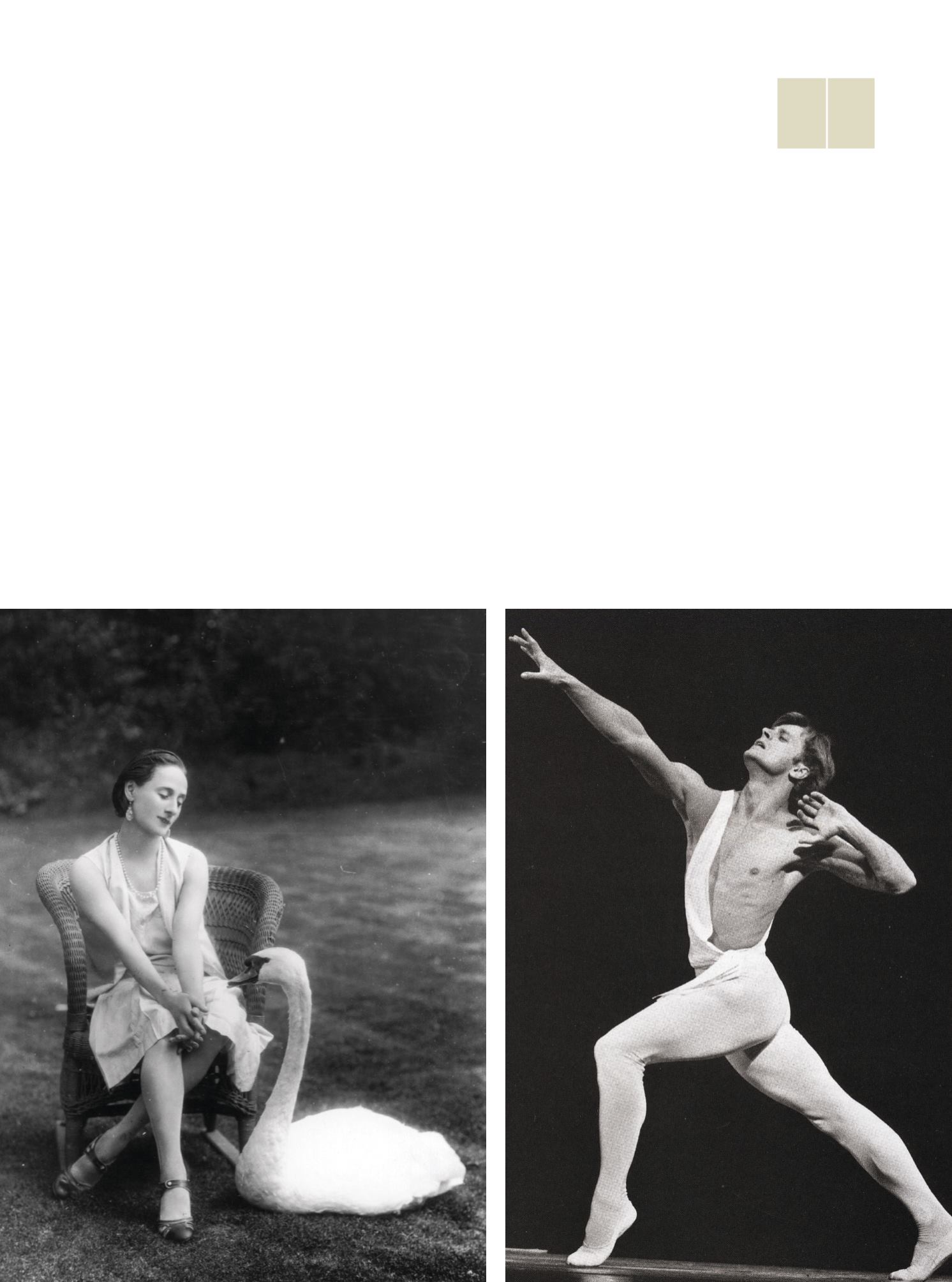
Han destacado bailarinas como Anna Pavlova (San
Petersburgo, 1882-La Haya, 1931), con raíces culturales
profundas con las que logrómodernas coreografías. Mijaíl
Baryshnikov (27 de enero de 1948 en Riga, actualmente
Latvia), su ciclo creativo e interpretativo incluye obras,
desde el ballet clásico hasta el ballet moderno, además
de emplear diferentes estilos para interpretar trabajos
creados por coreógrafos tandispares como el rusoGeorge
Balanchine y la estadunidense Twyla Tharp.
8
9
8. El baile que le
dio la mayor fama a
Anna Pavlova fue La
Muerte del Cisne. /
The dance that gave
greatest fame to
Anna Pavlova is The
Dying Swan.
9. Mijaíl Baryshnikov
es el fundador
de la academia
White Oak Dance
Project en Estados
Unidos. /
Mikhail
Baryshnikov is the
Academy founder
White Oak Dance
Project in the U.S.
In his reign she instructed Piotr Urusov organize
the dancing and everything related to recreational-cul-
tural entertainment. At thebeginning, theBolshoi The-
atrewas organizedwith troops of opera anddrama that
occurredwiththesame company, integratedbyallwho
hadskillsregardlessofsocialstatus;Thisspeaksofhow
culture is organizedandhowappropriate it peoples.
ThebuildingoftheBolshoiTheatreopeneditsdoors
in 1856, the day of the coronation of the Czar Alejandro
II. It is theAcademy of the Bolshoi who are born stars of
the ballet as Natalia Osipova and Polina Semionova. Es-
senceof thebeautyof the storyand theharmonyof the
music by Tchaikovsky and Johann Strauss son. So we
could include the ballet Moiseyev, folk dance of Russia,
we recently enjoyed in Mérida, Yucatán, in the context
of theMayaCulture Festival.
They have outstanding dancers such as Anna Pav-
lova (Petersburgo, 1882 - the Hague 1931), with deep
cultural roots that succeeded in modern choreogra-
phies. Mijaíl Baryshnikov (27 January 1948 in Riga,
now Latvia), their creative and interpretive cycle in-
cludes works, from classical ballet to the modern bal-
let, as well as use different styles to interpret works
created by choreographers as diverse as the Russian
George Balanchine and the American Twyla Tharp.
los conquistadores •
the conquerors
·amura·
93


