·amura·
51
compás int • int compass
Zamosc
Terminamos nuestro día en Zamosc, un pueblo fun-
dado en 1580 por Jan Zamoyski, siguiendo un diseño
renacentista con sus calles rectas, sus fortificaciones
y sus edificios de estilo italiano. Visitamos las iglesias,
la sinagoga, el mercado y comimos la delicada cocina
regional en Muzealna, un restaurante ubicado en el
sótano donde las piedras del edificio reflejan la histo-
ria de la ciudad y que abre su terraza en la plaza desde
la primavera. Zamosc es como un tesoro, un pueblo
que ha atravesado el tiempo sin una arruga, pasmado
en la historia, con un exquisito sabor romántico, y que
nos transporta en la atmósfera de antaño.
Cracovia
Atravesando la hermosa campiña de Swintokrzyskie
voivodato, alcanzamos Sandomierz. Este pueblo, si-
tuado al cruce del río Vístula y San, ha sido importan-
te desde la Edad Media, y su centro histórico amura-
llado corona una loma, en donde la plaza del mercado
se adorna de un ayuntamiento en forma de fortaleza.
Su catedral es impresionante, así como el castillo y la
iglesia de San Jacobo que se encuentra en la ruta ja-
cobea. Recorriendo las colinas de Województwo malo-
polskie (pequeña Polonia), descubrimos unas hermo-
sas iglesias de madera, acogedoras y adornadas con
refinados iconos, hasta llegar a Cracovia.
Testimonio de los tiempos de guerra está Wawel,
fortaleza montada sobre un peñón a la orilla del Rió
Vístula. A su pie deslumbra la fastuosa Stare Miasto,
un elegante dedal de antiguos callejones que llevan a
la plaza Rynek Glówny, rodeado por su muralla, y a su
lado se impone Kazimierz.
Pasando la puerta monumental, penetramos en un
mundo medieval que deslumbra por su belleza, empe-
zando por la imponente y grandiosa catedral, sitio de
coronación de los reyes polacos. En su interior destaca
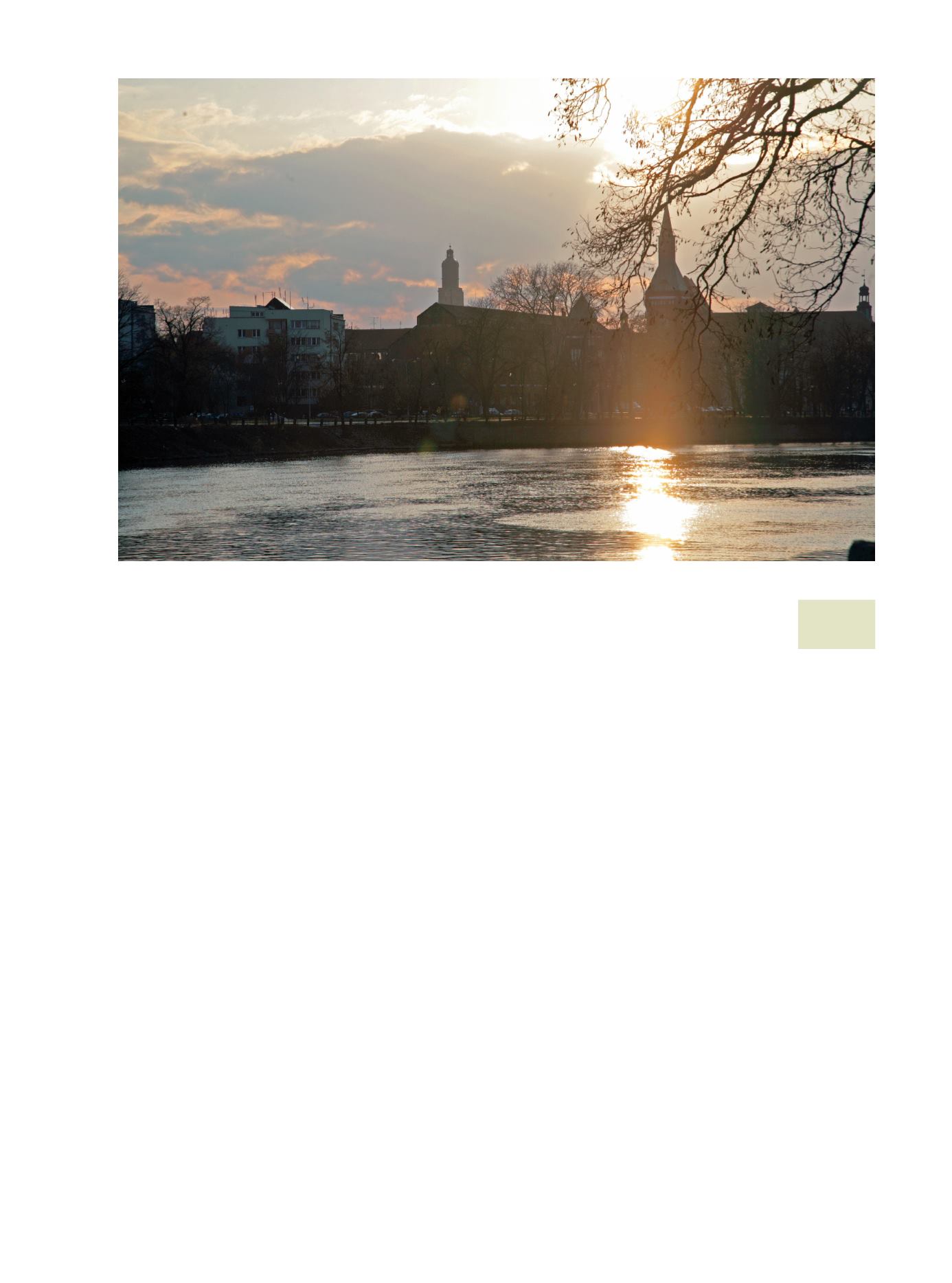
1. Worclaw
1
Zamosc
We ended our day at Zamosc, a town founded in
1580 by Jan Zamoyski, following a renaissance
design: perfectly straight roads, fortifications and
buildings inspired by Italian design. We visited the
church, the synagogue, the market and feasted on
regional cuisine at Muzealna, a restaurant located
on a basement and which opens its terraces to-
wards the plaza in the spring. Zamosc is a treasure,
a town that has felt the effects of time, yet has not
suffered under them. It possesses an exquisite ro-
mantic flavour, one that transports travellers to
days of yore.
Krakow
Crossing throughgorgeous Swintokrzyskie voivodato
countryside, we reached Sandomierz. This town, situ-
ated at the crossing of the Vístula and San River, has
been an important spot since the Middle Ages, and its
walled historic centre crowns a hill where the market
square is adorned by a Town Hall in the form of a for-
tress. Its cathedral is impressive, as well as the castle
and the church of Saint Jacob that is found on the
Jacobean route. Travelling through the hills of Wojew-
ództwo malopolskie (Little Poland), we discovered a
wonderful wooden church, homely and adorned with
refined icons; thenwe departed to Cracovia.
A testimony of the times of war is Wawel, a for-
tress mounted on a cliff at the edge of the Vístula
River. At its foot one finds the gleaming Stare Mi-
asto, an elegant thimble of ancient alleyways that
lead to the Rynek Glówny plaza, also surrounded by
a wall, and adjacent to it we find Kazimierz.
Crossing the monumental doors, we penetrated
into a medieval world that blinds one with its beauty,
beginning with the imposing and grandiose cathe-
dral, the place where Polish kings where coroneted.


