·amura·
55
compás int • int compass
Los templos tibetanos son resguardados por nu-
merosas estatuas de Bodhisattvas, seres evolucio-
nados en su comprensión del amor y la sabiduría, así
como de protectores: seres temibles que representan
las fuerzas que destruyen la ignorancia.
El interior de los templos se encuentra impregnado
del penetrante olor a incienso y amanteca de yak. Un velo
de obscuridad y sombras envuelve sus misterios, ya que
la única iluminación disponible es provista por las cande-
las y lámparas demanteca de yak.
Inmensos y coloridos murales cubren sus paredes,
estatuas doradas se alinean a los lados de los corredo-
res y las salas de meditación. El altar contiene grandes
estatuas de Budas y otros aspectos de la mente des-
pierta. Los devotos circulan alrededor de estos sím-
bolos colocando ofrendas de Khatas: mascadas cere-
moniales que depositan en los cuellos o manos de las
imágenes. Muchos peregrinos recitan el mantra nacio-
nal “Om mani Padme Hum” que significa “Paz, la joya
en el loto“. Algunas personas asisten a los templos to-
dos los días con el fin de depositar en ellos ofrendas de
mantequilla de yak para las lámparas.
Numerosos peregrinos viajan grandes distancias
para visitar los templos más importantes tales como el
Jokhang de Lhasa, en donde se encuentra la primera esta-
tua de Buda, traída a estas tierras por una de las esposas
extranjeras del afamado rey Tsong Tsen Gampo.
La vida monástica nunca ha sido sencilla. El día
empieza antes del amanecer, monjes y monjas se man-
tienen ocupados con numerosas labores. Algunos se
dedican durante largas horas al estudio y a las plega-
rias, otros trabajan como artistas, artesanos, cocineros,
maestros o constructores. Aunando a todas estas acti-
vidades sus prácticas meditativas, no descuidan el es-
tudio de sus escrituras ni la recitación de sus mantras.
20. 21. Templo
Jokhang en Noburlin-
gka, Lhasa.
/ Jokhang
Temple at Noburlin-
gka, in Lhasa.
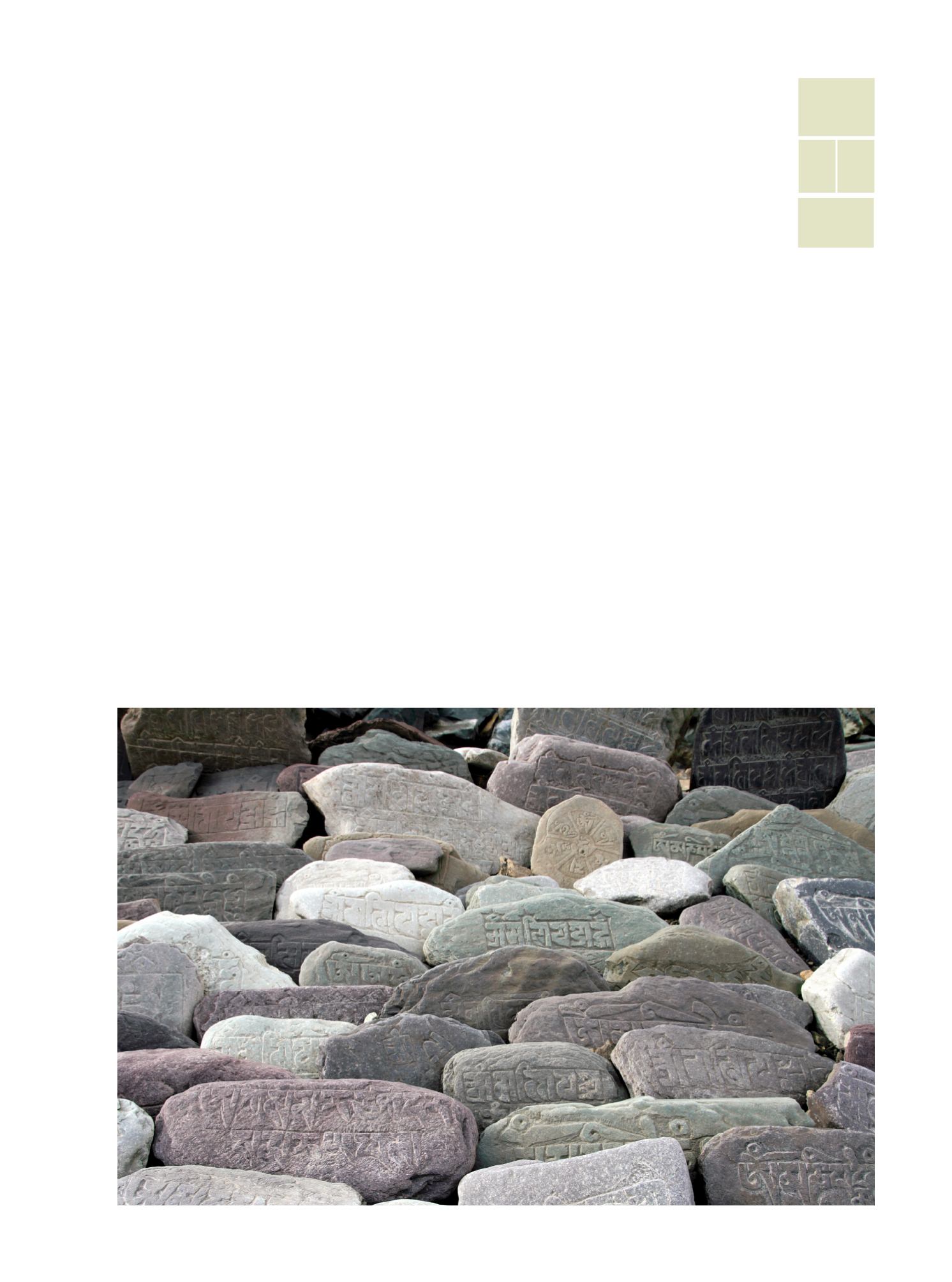
22. 23. Las piedras
Mani tienen inscritos
“mantras”, que son
plegarias.
/ Mani
stones inscribed
with “mantras”, that
are orisons.
20
21
22
23
Tibetan temples are guarded by numerous stat-
ues of Bodhisattvas. Beings highly advanced in
their understanding of love and wisdom and pro-
tectors. Fearsome beings that represent the forces
that destroy ignorance.
The interior of the temples are full of a strong
incense and yak butter aroma. A veil of darkness
and shadows wraps mysteries, since the only
available lighting is provided by candles and yak
butter lamps.
Huge and colorful murals cover the walls, gold-
en statues line by the sides of the corridors and
meditation rooms. The altar contains large stat-
ues of Buddhas and other aspects of the awakened
mind. Devotees circulate around these symbols
placing khatas offerings. As ceremonial scarves
are placed on the hands on the necks of the imag-
es, many pilgrims recite the national mantra “Om
Mani Padme Hum” which means “Peace, the jewel
in the lotus”. Some people attend the temple every
day in order to bring their offerings of yak butter
for the lamps.
Many pilgrims travel long distances to visit
the major temples such as the Jokhang (IMAGE) in
Lhasa. It is here, where the first statue of Buddha
was brought to this country by one of the foreign
wives of famed King Tsong Tsen Gampo.
Monastic life has never been easy. The day be-
gins before dawn, monks and nuns are kept busy
with many tasks. Some dedicate long hours to
study and prayer, others work as artists, artisans,
cooks, teachers, or builders. Additionally to all
these activities, they combine meditative practic-
es, and do not neglect the study of scriptures or the
recitation of their mantras.


