compás int • int compass
En los últimos veinticinco años, más de 7 millones
del resto de China han llegado al Tíbet, lo que paula-
tinamente convierte a la población tibetana en una
minoría dentro de su territorio. Como consecuencia,
las mejores oportunidades de trabajo y los servicios
de vivienda y salud han sido destinados a esta nueva
población de migrantes internos, que en muchos ca-
sos permanecen ahí sólo temporalmente.
FAMILIA Y VIDA COTIDIANA
A semejanza del mundo hispano, la familia ocupa
un lugar prominente en la sociedad tibetana, siendo
la columna vertebral de su modelo de vida. Los niños
comparten el hogar con sus padres y abuelos, e in-
clusive en algunas ocasiones hasta con parientes de
segundo y tercer grado. La familia extensa es común
en el Tíbet y el calor de hogar es algo que se comparte
no sólo con amigos y parientes, sino también con visi-
tantes y peregrinos.
La cocina es sin duda alguna el centro de la vida
comunitaria. El rito de la elaboración de los alimen-
tos, las charlas familiares alrededor de la hoguera,
así como el extendido consumo del tradicional té con
mantequilla de yak, hacen de este sitio la fuente de la
alegría y la hospitalidad del pueblo tibetano.
Los niños son considerados importantes miembros
del núcleo familiar y todos participan en sus actividades y
juegos. Sin embargo, es importante mencionar que com-
parativamente la mujer tiene un prominente papel en el
mundo tibetano, haciéndose cargo de numerosas funcio-
nes, tanto familiares como laborales. Probablemente sea
acertado afirmar que ninguna mujer goza de tan elevada
posición en otras sociedades tradicionales de Asia.
14
In the last twenty years, more than 7 million
from the rest of China have come to Tibet. This
has gradually turned the Tibetan population
into a minority within their own territory. As
a result, better job opportunities, housing and
health services have been allocated to this new
population of internal migrants, who often stay
there only temporarily.
FAMILY AND DAILY LIFE
As in the Hispanic world, family occupies a
prominent place in Tibetan society; it is the back-
bone of the Tibetan model of life. Children share
the home with their parents and grandparents, and
sometimes even relatives of second and third rela-
tions. The extended family is common in Tibet and
the warmth of home is something that is shared not
only with friends and relatives, but also with visi-
tors and pilgrims.
The kitchen is undoubtedly the center of
community life. The ritual of preparing food,
family discussions around the stove, and the
widespread use of traditional tea with yak but-
ter, make this site the source of joy and hospital-
ity of the Tibetan people.
Children are considered important members
of the family and everyone is involved in their
activities and games. However, it is important to
mention that women have a prominent role in
the Tibetan world, taking over many functions,
both household and labor. It is probably fair to
say that no woman enjoys such high position in
other traditional Asian societies.
·amura·
50
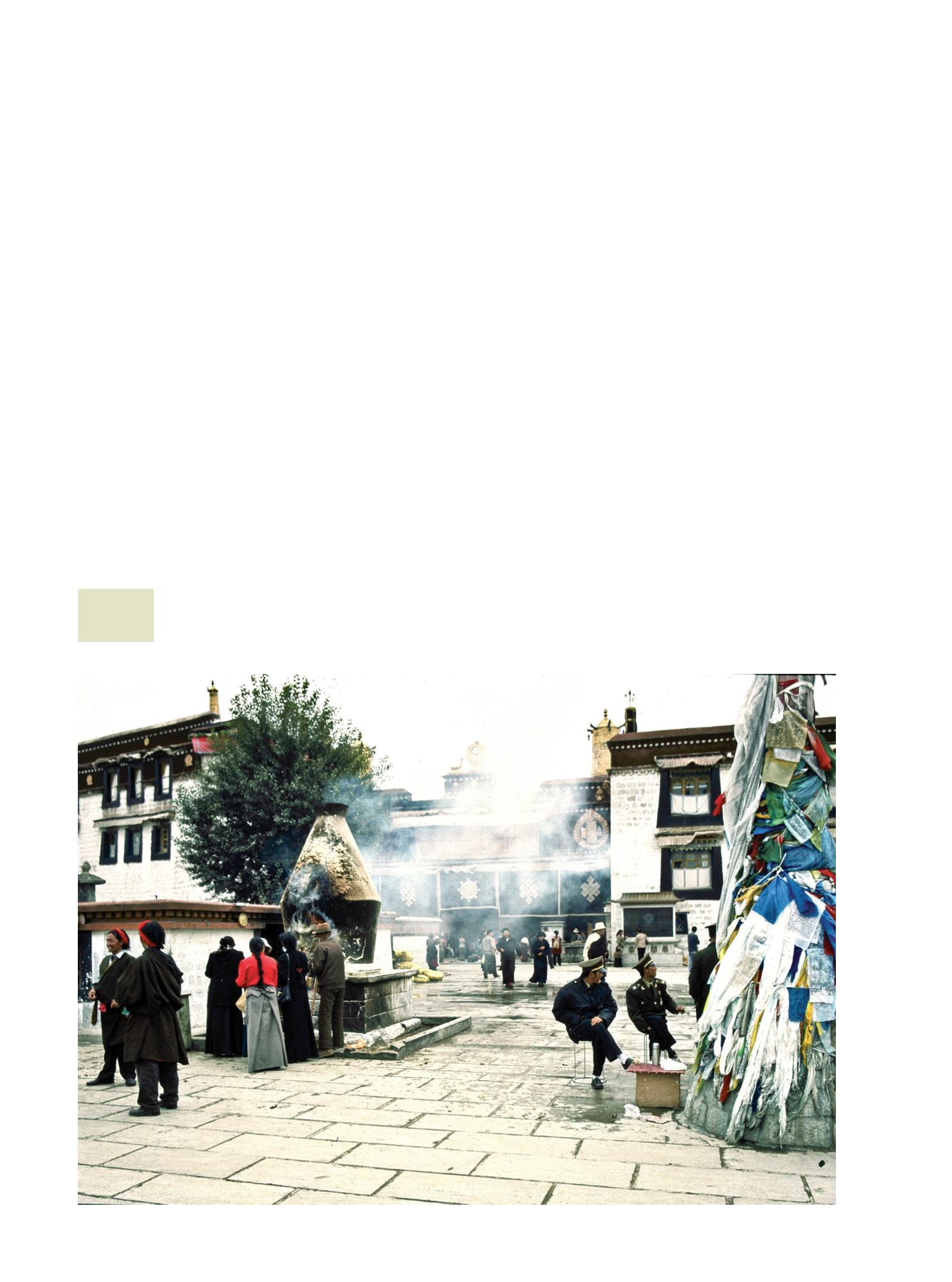
14. Paisanos tibeta-
nos y guardias chinos
en la plaza Barkhor,
frente al monasterio
Jokhang, en Lhasa.
/
Tibetan pilgrimand
Chinese guards at
Barkhor wquare in
front of the Jokhan
monastery, in Lhasa


