·amura·
52
compás int • int compass
Muchos siglos antes de que el budismo fuera lleva-
do al Tíbet, los tibetanos creían que las fuerzas de la na-
turaleza eran en realidad espíritus y dioses que debían
de ser propiciados y venerados, ideas comprensibles al
convivir con las portentosas fuerzas geográficas y cli-
máticas presentes en el Tíbet. Este sistema de creencias
fue llamado Bön y algunas de sus prácticas con el tiempo
pasaron a formar parte de la tradición tántrica del Tíbet.
El Budismo llegó al Techo del Mundo aproxima-
damente en el siglo VII. Esta religión fue fundada en
India por un asceta, Siddhartha Gautama, conocido
como el Buda, nombre que significa “Despierto”. Es
decir, quien ha actualizado todos sus potenciales,
trascendido sus limitaciones y aprendido a ver las
cosas tal cual son. A partir de sus observaciones di-
rectas de la realidad, los budistas creen en la reen-
carnación, el ciclo del nacimiento, la muerte y el re-
nacimiento y el Karma, la ley de la causa y el efecto.
Cuando una persona muere se cree que, en depen-
dencia del Karma que ha acumulado, renacerá como
hombre, deidad, animal o demonio.
Lameta del budismo es terminar con este ciclo recu-
rrente y alcanzar el Nirvana: la cesación del sufrimiento
entendido también como estado de suprema felicidad. El
Buda enseñó que los hombres podían alcanzar el Nirva-
na a través de las prácticas meditativas, la fuerza de la
oración, una conducta ética, una actitud altruista hacia
el prójimo y la búsqueda de la sabiduría. En ocasiones
la religión tibetana es incorrectamente denominada la-
maísmo, ya que sus monjes son conocidos como lamas.
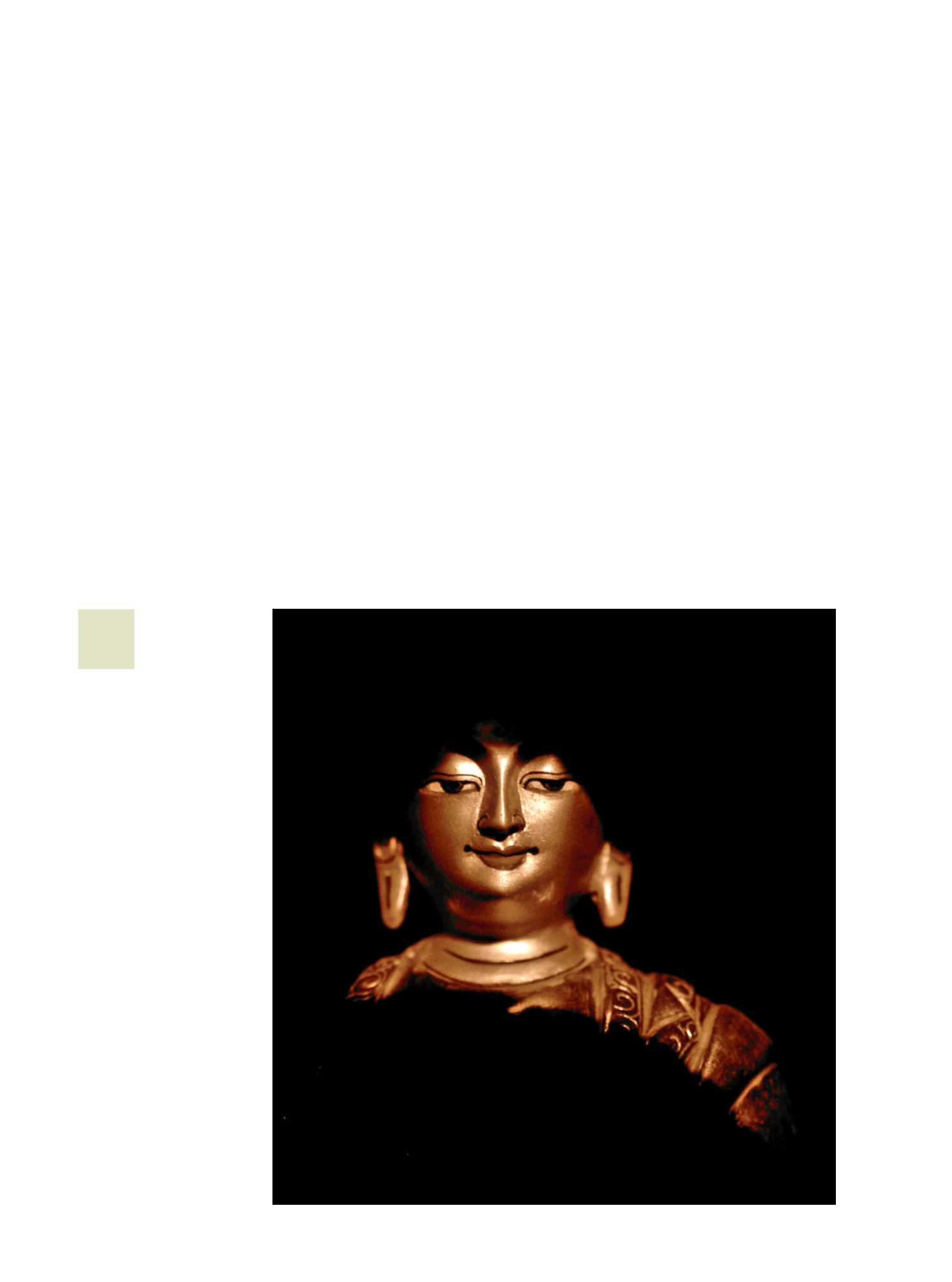
16
16. Siddharta
Gautama, el Buda.
/
Siddhartha Gautama,
Buddha.
Many centuries before Buddhism was brought
to Tibet, Tibetans believed that the forces of nature
were actually spirits and gods that had to be propiti-
ated and worshiped; it is understandable when liv-
ing with the remarkable geographical and climatic
forces present in Tibet. This system of belief was
called Bön and some of their practices eventually
became part of the tantric tradition of Tibet.
Buddhism reached the roof of the world in
about the seventh century. This religion was
founded in India by Siddhartha Gautama, known
as the Buddha (IMAGE). The name, “Awakened”.
Means that who has reached all his potential, tran-
scended limitations and learned to see things the
way they are. Through direct observations of real-
ity, Buddhists believe in reincarnation, the cycle of
birth, death and rebirth and the karma, the law of
cause and effect. When a person dies it is believed
that, depending on the karma that he or she have
accumulated, they will be reborn as a man, a god,
an animal or a demon.
The goal of Buddhism is to end this recurring
cycle and to reach Nirvana. The cessation of suffer-
ing is also understood as a state of supreme hap-
piness. Buddha taught that men could achieve
Nirvana (IMAGE) through meditative practices, the
power of prayer, ethical conduct, an altruistic at-
titude towards others and the pursuit of wisdom.
Sometimes, Tibetan religion is incorrectly called La-
maism, as monks are known as lamas.


