·amura·
59
compás int • int compass
1. Ojos en primer
plano, una imagen
tradicional de Líbano.
/ Eyes in foreground,
traditional image of
Lebanon
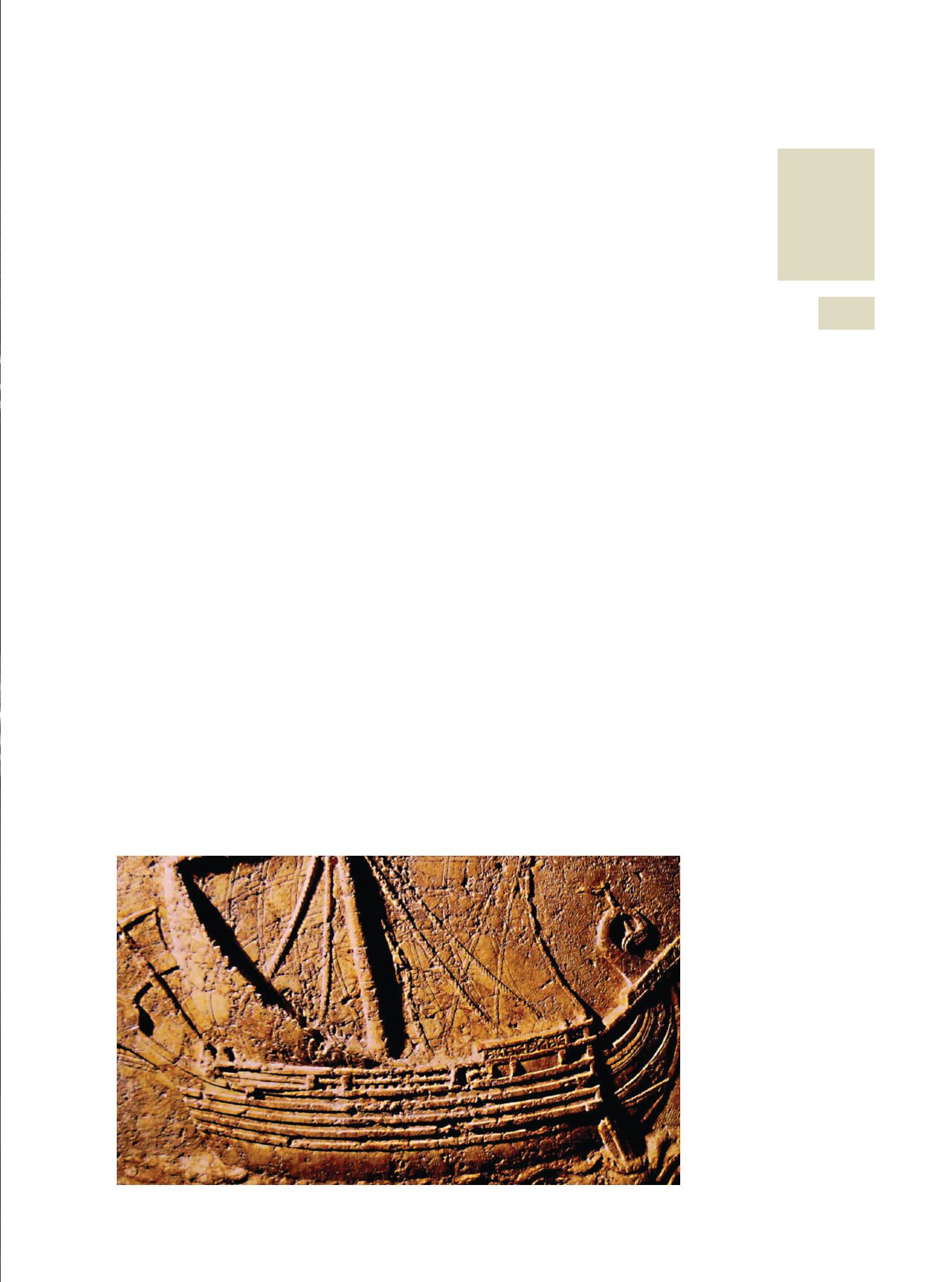
2. Antigua represen-
tación de un barco
fenicio, intrépidos
navegantes
. / Old
representation of
Phoenician ship,
brave sailors.
1
2
E
l Líbano se caracteriza por su pequeña superficie,
su diversidad geográfica, su variedad climática, su
distinguida historia, su apertura cultural y su plura-
lidad religiosa. Es unmodelo de país en donde Dios colocó
toda la belleza que se puede encontrar en el mundo.
El Líbano tiene montañas, valles, costas, nieve, mar,
ruinas históricas que se remontan a miles de años; igle-
sias, mezquitas, museos, hoteles, restaurantes, clubes
nocturnos, además de universidades y hospitales pres-
tigiosos. Podemos ver a un hombre con elegantes ropas
modernas y a otro con su vestimenta tradicional. Es ha-
bitual ver a una mujer con su vestido al viento y otra con
vestimenta religiosa. También se puede ver un hombre
tomando hasta emborracharse y otro que no se acerca
nunca al alcohol. Esto es la palabra libre y la opinión libre,
además los diarios del Líbano están despojados de cual-
quier tipo de restricción y censura. Se pueden observar
sentimientos orientales inmersos en el orgullo y otros
inmersos en el realismo. En el Líbano, podemos observar
a Occidente con sus libertades y a Oriente con sus tradi-
ciones y costumbres familiares.
En el Líbano está el lujo de los países desarrollados y
también los problemas de los países en vía de desarrollo.
Hicieron del Líbano un escenario de batallas pero emergió
más fuerte, porque la guerra fue artificial ya que el libanés
está colmado de paz y de amor a la vida. Quisieron que el
Líbano sea la recompensa por todos los problemas de la
región, y emergió con el título otorgado por Su Santidad,
el Papa Juan Pablo II, quien expresó: “El Líbano es más que
un país, es unmensaje”.
En la actualidad, los demás sufren la realidad de la
crisis que quisieron esconder dentro del Líbano, mien-
tras que el Líbano resurge hoy como el banco de la región,
como su aldea turística y sumodelo político, económico y
cultural. El Líbano fue mencionado más de siete veces en
el Antiguo Testamento, es el país de los cedros, que Dios
creó en sus montañas para ayudar a fenicios y cananeos
a crear las primeras relaciones internacionales a través de
barcos comerciales que recalaban en puertos comercian-
do con otros pueblos.
L
ebanon is characterized by its small size, geo-
graphic diversity, its variety of climates, a distin-
guished history, cultural openness and religious
plurality. It is amodel countrywhere God placed all the
beauty that canbe found in theworld.
Lebanonhasmountains, valleys, coastlines, snow,
sea, historic ruins that date back thousands of years,
as well as churches, mosques, museums, hotels, res-
taurants, nightclubs, andprestigiousuniversities and
hospitals. We see a man with stylish modern clothes
and another with a traditional attaire. It is common
to see a woman with her dress to the wind and on the
other hand a religious garb. You can also see a man
making himself drunk and one that does not even
comes near alcohol. This is free speech and free opin-
ion. Lebanese newspapers are stripped of any restric-
tions and censorship. Oriental feelings can be seen
immersed in pride and others can involved a harsh
realism. In this country, we can see a mixture of the
West with its freedomand the East with its family tra-
ditions and customs.
In Lebanon we find the luxury of developed coun-
tries and the problems of developing nations. Leba-
non was a battle scenario but emerged stronger, be-
cause the war was artificial. The Lebanese are filled
with peace and love of life. They wanted their country
to be the reward for all the problems and of the region,
and emerged with the title given by His Holiness the
Pope John Paul II, who said: “Lebanon is more than a
country, it is amessage”.
Currently, others suffer the reality of the crisis
they wanted to hide in Lebanon, while the country
emerges today as the bank of the region, as a model
tourist village and a political, economic and cultural
model. Lebanon was mentioned seven times in the
Old Testament, it is the country of the cedars, that
God created in the mountains to help Phoenicians
and Canaanites create the first international relations
through commercial ships, putting them at ports of
trading to help other people.


