·amura·
53
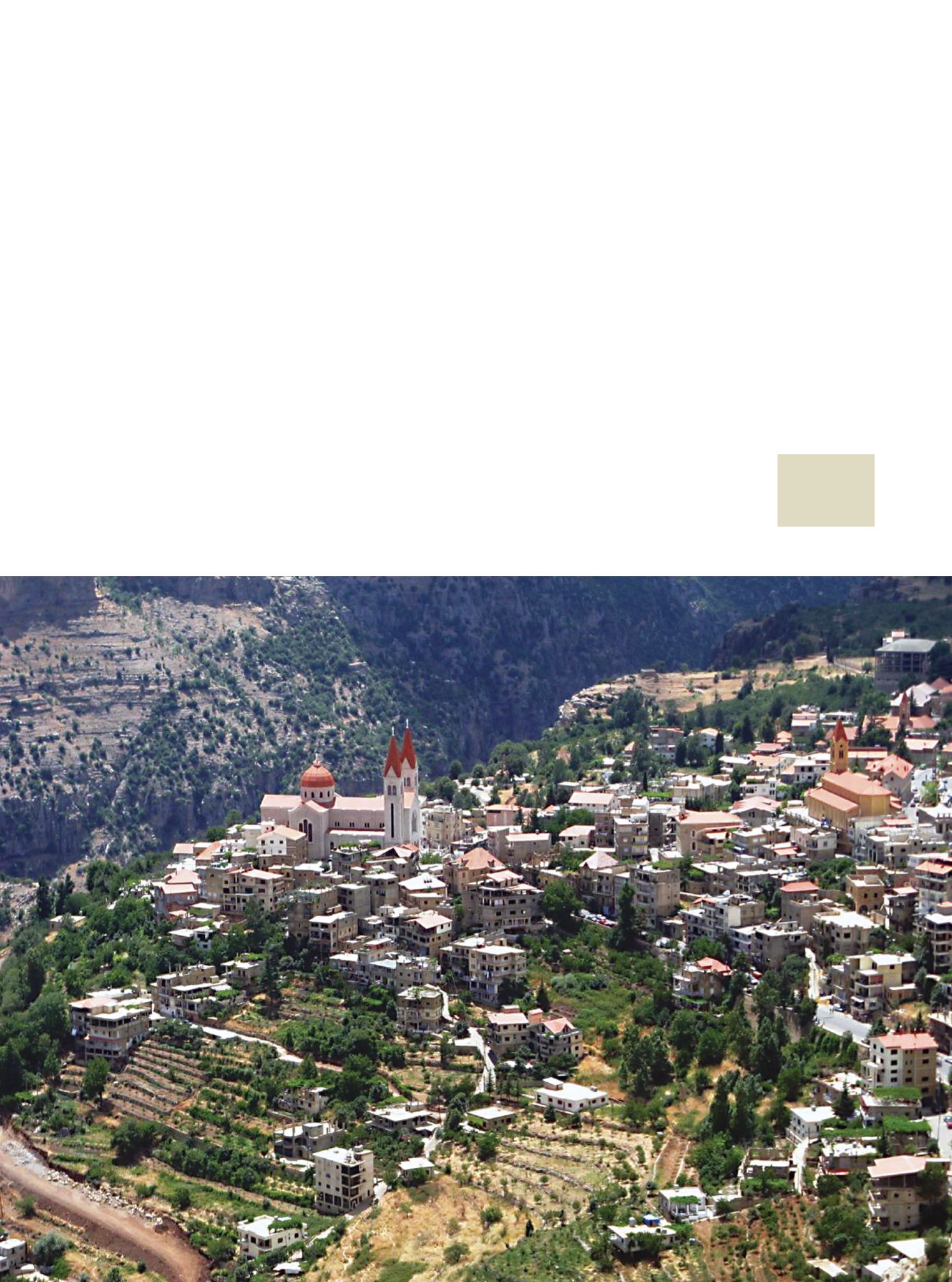
Bcharre: The Cradle of Gibran Kahlil Gibran
In northern Lebanon, very close to the sacred
redwood forest, lies the beautiful village of Bcharre,
birthplace of the poet Gibran Kahlil Gibran, which
is the most widely known writer of Lebanese lit-
erature in the West. “The Madman”, “The Prophet”
and “Jesus the son of man”, is his immortal trilogy,
which has been translated into 22 languages.
From the road you see the red roofs, lush veg-
etation and the two artistic towers of the church.
Bcharre was, for the Phoenicians, a religious center
and they called it the “center where the goddess
Astartedwells”. The area where it is located is quite
touristy, there are many places to visit and is per-
haps the most bound by ancient cedar forest.
Fond memories of beauty and intellectual hi-
erarchy attracts tourists after entering the house
of the poet and especially knowing his tomb and
museum, built in a former Carmelite monastery
in which the objects are stored. Furniture, clothes,
memories and nostalgia accompany the pictorial
treasure which is well-preserved, arranged, assem-
bled with love for it to be immortal, the tomb of the
poet is in the bottom. The coffin that preserves his
remains symbolically has the largest cedar roots
that led to its branches all over the world.
Becharre: La cuna de Gibran Kahlil Gibran
En el norte de Líbano, muy cercano al bosque de
los cedros sagrados, se encuentra el bellísimo pueblo
de Becharre, cuna del poeta Gibran Kahlil Gibran, que
es el escritor más difundido de la literatura libanesa
en Occidente. “El Loco”, “El Profeta” y “Jesús, el hijo
del Hombre”, constituyen su trilogía inmortal, que ha
sido traducida a 22 idiomas.
Desde la carretera se ven sus rojos tejados, fron-
dosa vegetación y las dos artísticas torres de su igle-
sia. Becharre fue, para los fenicios, un centro religioso
y le llamaban “centro donde mora la diosa Astarté”. El
área en que se ubica es completamente turística, hay
muchos sitios que visitar y es, quizá, la más obligada
por el bosque de cedros milenarios.
Gratos recuerdos de belleza y jerarquía intelectual
se lleva el turista luego de entrar en la casa del poeta y
especialmente al conocer su tumba y museo, construi-
dos en un antiguo monasterio carmelita y en el cual se
guardan sus objetos. Muebles, ropa, recuerdos y nos-
talgias acompañan al tesoro pictórico que se conserva
en salas bien preservadas, ordenadas, montadas con
amor a este ser inmortal, cuya tumba se encuentra en
la parte baja. Del féretro que conserva sus restos, bro-
tan, simbólicamente, las raíces del más grande cedro
que llevó su ramaje a todos los rincones del mundo.
48. Becharre, ciudad
hermosa entre
montañas.
/ Bcharre,
beautiful city
betweenmountains.
48
compás int • int compass


