·amura·
50
compás int • int compass
El Norte que no permite las puertas cerradas
Las provincias de Drenthe, Groninga y Frisia re-
presentan el norte al aire libre. Estas llanuras son el
hogar de algunos de los más impresionantes paisajes
naturales. Los lagos y canales en Friesland forman
el mayor humedal contiguo en Europa, mientras que
Groningen y Drenthe todavía tienen partes rurales del
país. Desde el ciclismo y el senderismo a la vela y el
surf, el norte al aire libre ofrece todo para que su es-
tancia sea activa. Groningen es la provincia nororien-
tal de los Países Bajos. Al este limita con el estado ale-
mán de Baja Sajonia, en el sur de Drenthe, en la Frisia
occidental y al norte del Mar de Wadden. Esta ciudad
universitaria es una bulliciosa ciudad ideal para ir de
compras, cultura y una animada vida nocturna.
Friesland es principalmente una provincia agrícola.
Las famosas vacas frisonas en blanco y negro, así como
el famoso caballo frisón negro se originaron aquí. El tu-
rismo, principalmente en los lagos en el sur oeste de la
provincia, y en las islas en el Mar de Wadden en el norte,
cuenta como una importante fuente de ingresos. Cada
año miles de entusiastas de los deportes acuáticos visi-
tan Friesland para explorar sus increíbles canales. La pro-
vincia también es famosa por sus patinadores de hielo,
con la participaciónmasiva en el patinaje de fondo.
Drenthe, a diferencia de muchas otras partes de
los Países Bajos, ha sido siempre una zona rural poco
poblada. Otras partes de los Países Bajos permiten
realmente ver este territorio como una parte que per-
tenecía al resto del país, como sui fuese un terreno
baldío. Este páramo, sin embargo, ha sido poblado por
gente desde la prehistoria, aunque sea solo un puña-
do. La evidencia más tangible de ello son los dólmenes
(hunebedden) construidos alrededor del año 3000 an-
tes de Cristo. Además del paisaje rural, la hunebedden
de Drenthe bien merece una visita.
The North does not allow closed doors
The provinces of Drenthe, Groningen and
Friesland represent the outdoors. These plains are
home to some of the most stunning natural land-
scapes. The lakes and canals in Friesland form the
largest contiguous wetland in Europe, while Gron-
ingen and Drenthe are still rural parts of the coun-
try. From biking and hiking to sailing and surfing,
the northern outdoors offers everything to make
your stay active. Groningen is the northeastern
province of the Netherlands. To the east borders
the German state of Lower Saxony, in the south
Drenthe, in the west Friesland and in the north the
Wadden Sea. This university town is a bustling city
for shopping, culture and nightlife.
Friesland is mainly an agricultural province.
The famous Friesian cows’ in black and white,
as well as the world known black Friesian horse
originated here. Tourism, mainly in the lakes in
the south west of the province, and on islands in
the Wadden Sea to the north, it counts as an im-
portant source of income. Every year thousands of
sports enthusiasts visit to explore its incredible
Friesland channels. The province is also famous
for its ice skaters.
Drenthe, unlike many other parts of the
Netherlands, has always been a sparsely popu-
lated rural area. Other parts of the Netherlands
allow see this area as a part belonging to the rest
of the country, as it used to be a wasteland. This
plateau, however, has been inhabited by people
since prehistoric times, if only a handful. The
most tangible evidence of this are the dolmens
(hunebedden) built around 3000 BC. Besides the
rural landscape, Drenthe hunebedden is well
worth a visit.
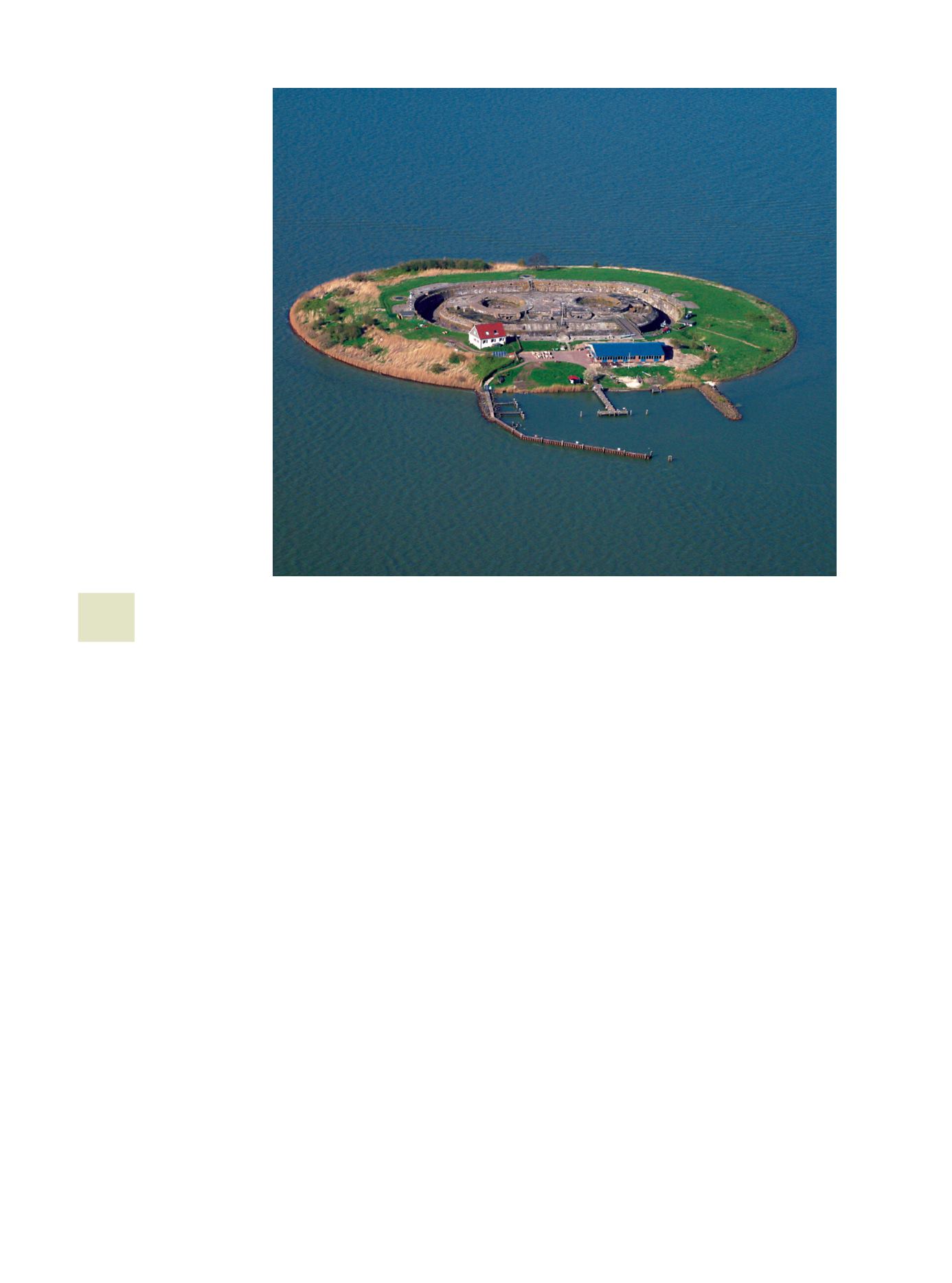
37. Holanda
escondida.
/
Hidden Holland.
37


